What to Eat on Semaglutide: A Practical Guide to Better Results
Semaglutide reduces appetite. That is how it works. But reduced appetite only sets the stage. What you choose to eat during that reduced-hunger window shapes how well the treatment works, how much mus
In this article
Semaglutide reduces appetite. That is how it works. But reduced appetite only sets the stage. What you choose to eat during that reduced-hunger window shapes how well the treatment works, how much muscle you preserve, and how you feel throughout the process.
This guide covers what to eat on semaglutide based on the current evidence, with practical guidance for real meals and real life.
*Compounded semaglutide is not FDA-approved. This article is for educational and informational purposes only and does not constitute medical advice. Individual results vary. Consult your licensed healthcare provider before starting any medication or making significant dietary changes.*
---
Why Food Choices Matter More on Semaglutide
When semaglutide suppresses your appetite, you naturally eat less. That is the mechanism driving weight loss. But eating less also means that every bite you do take carries more nutritional weight.
If your reduced-calorie intake comes primarily from protein and fiber-rich whole foods, your body has the raw materials it needs to preserve muscle, maintain energy, and support overall health. If those calories come from processed foods high in refined carbohydrates and low in nutrients, you will lose weight (likely including muscle) but miss the metabolic and body composition benefits that make the treatment worthwhile long-term.
The clinical trial programs supporting GLP-1 medications consistently paired medication with structured lifestyle counseling, including dietary guidance. Medication alone was not the model.
---
Protein: The Nutrient That Deserves Priority
If there is one dietary change that matters most while on semaglutide, it is eating enough protein. Research on protein intake during weight loss consistently shows that adequate protein helps preserve lean muscle mass, which is at risk any time you are in a caloric deficit.
A review published in the American Journal of Clinical Nutrition (Leidy et al., 2015) found that higher protein diets support satiety, preserve lean body mass during weight loss, and improve body composition outcomes compared to standard protein intakes. This matters because losing muscle during weight loss can reduce metabolic rate and make it harder to maintain results long-term.
How Much Protein
A practical target during active weight loss on a GLP-1 program is 1.2 to 1.6 grams of protein per kilogram of your body weight per day. Your provider or a registered dietitian can help you determine the right range for your specific situation.
For context: someone weighing 200 pounds (about 91 kg) would aim for roughly 110 to 145 grams of protein daily. That is meaningful, especially when overall food intake is lower than usual.
Best Protein Sources
Because stomach capacity and appetite are reduced on semaglutide, dense protein sources are your best friends. You get the most protein per bite from:
- Eggs and egg whites
- Chicken breast and turkey
- Lean beef and pork tenderloin
- Fish and shrimp
- Greek yogurt and cottage cheese
- Edamame and tofu
- Protein shakes (useful when appetite is very low)
---
Fiber and Vegetables: Satiety Without the Volume
Dietary fiber supports two things you need while on semaglutide: digestive health and lasting fullness between meals. A review in the journal Nutrition (Slavin, 2005) found that dietary fiber helps moderate appetite and supports healthy body weight management through multiple mechanisms, including slowing gastric emptying and promoting satiety hormones.
The practical challenge is that high-fiber foods take up stomach space, and your capacity is already reduced. The solution is to prioritize fiber-rich foods that are nutrient-dense without requiring large volumes.
Practical Fiber Approach
- Non-starchy vegetables (leafy greens, broccoli, zucchini, bell peppers) offer fiber with minimal calories
- Legumes (lentils, black beans, chickpeas) provide fiber and protein together
- Berries offer antioxidants and fiber with modest sugar content
- Oats and quinoa provide fiber alongside carbohydrates
---

---
Foods to Limit While on Semaglutide
Semaglutide reduces appetite, but it does not eliminate cravings or preferences built over years. Understanding which foods tend to undermine progress helps you make intentional choices.
Processed and Hyper-Palatable Foods
Ultra-processed foods, things like chips, crackers, fast food, and sugary snacks, are engineered to override fullness signals. They deliver calories quickly, often without meaningful protein or fiber, and many people find they can still eat significant quantities even when GLP-1 medication has reduced hunger for nutritious food. These foods can blunt the appetite-suppressing effect of semaglutide.
A practical approach: fill your plate with protein and vegetables first. If there is room for something else, choose it intentionally.
Alcohol
Alcohol warrants specific attention on semaglutide. Beyond being nutritionally empty, alcohol can increase the risk of gastrointestinal discomfort (which is already common in the early weeks of treatment), may lower inhibitions around food choices, and can complicate blood sugar regulation.
If you drink, speak with your provider about what is appropriate for your specific health profile and treatment plan.
High-Fat or Greasy Foods
Foods high in fat slow gastric emptying. Since semaglutide already slows gastric emptying as part of its mechanism, adding high-fat meals can significantly worsen nausea. Many people find that greasy foods are the most reliable trigger for GI side effects. Keeping meals lower in fat, particularly during dose escalation, can meaningfully improve comfort.
---
Managing Nausea Through Smart Food Choices
Nausea is the most common side effect of semaglutide, especially during the first few weeks of treatment and after dose increases. What you eat can substantially affect how severe it is.
Foods That Tend to Be Better Tolerated
- Bland, lower-fat options: plain crackers, toast, plain rice, baked potato
- Cold or room-temperature foods (cold foods have less aroma, which can trigger nausea)
- Small, frequent snacks rather than full meals
- Ginger in any form (ginger tea, ginger chews) has evidence for reducing nausea generally
- Protein smoothies when solid food feels unappealing
Eating Patterns That Help
- Eat slowly and chew thoroughly
- Sit upright after meals; do not lie down immediately after eating
- Avoid skipping meals entirely, even when appetite is very low (very empty stomach can worsen nausea)
- Time your meals away from your injection schedule if nausea peaks at predictable times
---
Hydration: Often Overlooked, Always Important
Adequate hydration supports every aspect of your health and is easy to neglect when appetite and thirst signals are both suppressed. Dehydration can worsen fatigue, headaches, and constipation (another potential side effect of semaglutide).
Aim for at least 8 cups (about 2 liters) of water daily. Plain water is best. Sparkling water works for most people. Electrolyte drinks without added sugar can be helpful if you are experiencing nausea and not eating much. Caffeine is fine in moderation but does not count toward your hydration target.
A useful habit: keep a water bottle visible and accessible throughout the day. Thirst signals are easy to miss when hunger is suppressed.
---
Practical Meal Ideas
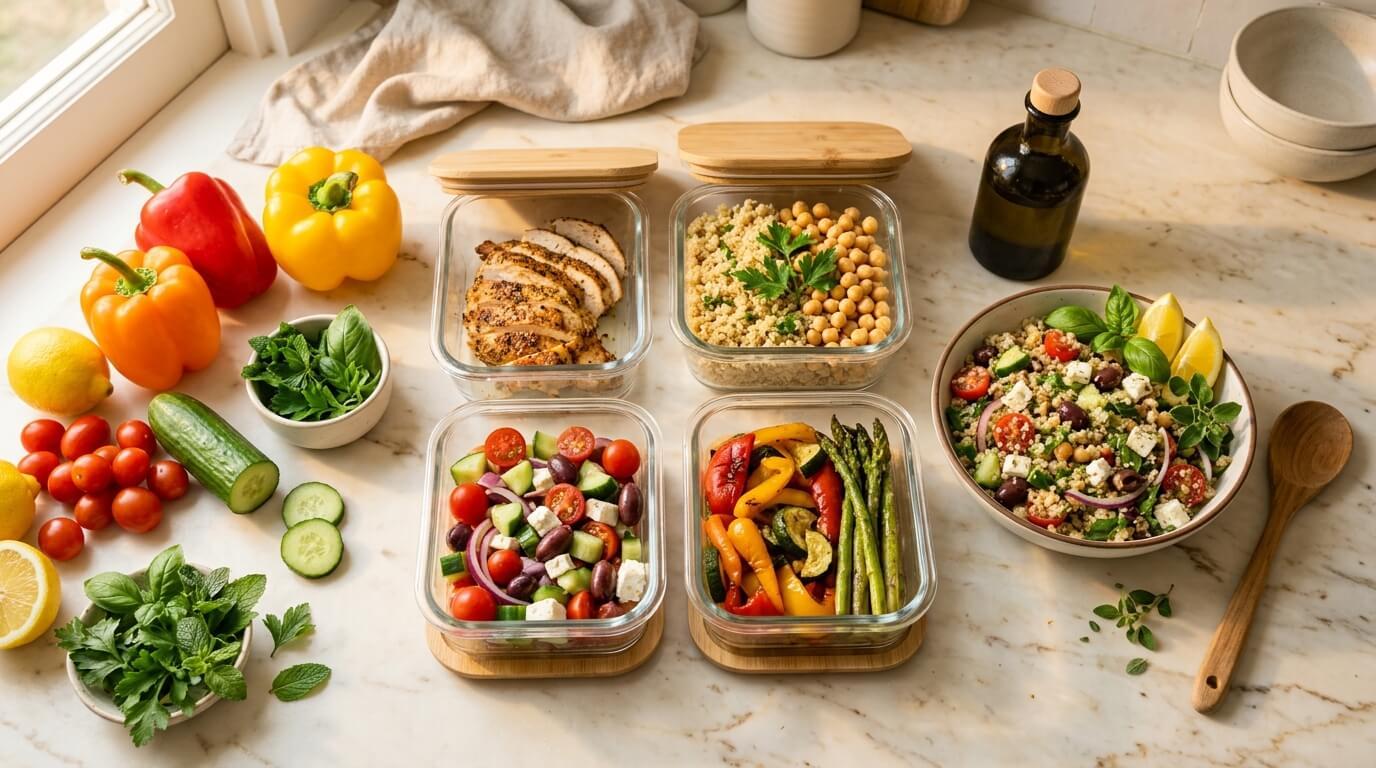
Eating well on semaglutide does not require elaborate meal preparation. The goal is simple, satisfying, protein-first meals that keep you comfortable and nourished.
Breakfast options:
- 2-3 scrambled eggs with sauteed vegetables (low volume, high protein)
- Greek yogurt with a small handful of berries
- Protein smoothie (whey or plant protein, frozen spinach, frozen berries, water or unsweetened almond milk)
- Grilled chicken over a small bed of mixed greens with olive oil and lemon
- Cottage cheese with sliced cucumber and cherry tomatoes
- Lentil soup (protein and fiber together)
- Baked salmon with roasted broccoli and a small portion of quinoa
- Turkey meatballs with zucchini noodles
- Shrimp stir-fry with bok choy and a small amount of brown rice
- Hard-boiled eggs
- String cheese
- A small handful of nuts
- Edamame
---
Frequently Asked Questions
Can I eat whatever I want as long as I take semaglutide? GLP-1 medications reduce appetite but do not control what you eat when you do eat. The quality of your food choices significantly affects body composition outcomes, how you feel, and long-term results. Treating food quality as unimportant undermines the benefits of treatment.
Do I need to count calories? Not necessarily. Most people on semaglutide naturally eat fewer calories because appetite is suppressed. However, if your weight loss has stalled, tracking protein intake for a period can be useful to confirm you are getting enough. A registered dietitian can help if you want structured guidance.
What if I am not hungry at all and struggle to eat? This is common, especially in the first few weeks. Prioritize protein above all else. Protein shakes and high-protein snacks are useful when solid food feels unappealing. Do not go the entire day without eating. Speak with your provider if appetite suppression is severe enough that you are having difficulty meeting basic nutritional needs.
Should I take supplements on semaglutide? When eating less overall, micronutrient gaps are possible. A daily multivitamin is a reasonable baseline. Some people benefit from additional vitamin D, magnesium, or electrolytes. Discuss any supplementation with your provider.
How long should I maintain these dietary changes? The dietary habits you build during GLP-1 treatment are intended to be lasting, not temporary. Research from the STEP 1 extension study shows that weight tends to return after stopping medication without sustained lifestyle changes. The food quality habits built during treatment are one of your best tools for long-term success (Wilding et al., Diabetes Obes Metab. 2022, PMID [35441470](https://pubmed.ncbi.nlm.nih.gov/35441470/)).
---
Working With Your Provider
Your prescribing provider and their clinical team are your most important resource for personalized guidance. Dietary needs vary significantly based on starting weight, health history, activity level, and how your body responds to treatment. The guidance in this article provides a practical framework; your provider can help tailor it to your specific situation.
---
Sources
- Leidy HJ, Clifton PM, Astrup A, et al. The role of protein in weight loss and maintenance. *Am J Clin Nutr.* 2015;101(6):1320S-1329S. [PMID: 25926512](https://pubmed.ncbi.nlm.nih.gov/25926512/). doi:10.3945/ajcn.114.084038
- Slavin JL. Dietary fiber and body weight. *Nutrition.* 2005;21(3):411-418. [PMID: 15797686](https://pubmed.ncbi.nlm.nih.gov/15797686/). doi:10.1016/j.nut.2004.08.018
- Wilding JPH, Batterham RL, Davies M, et al. Weight regain and cardiometabolic effects after withdrawal of semaglutide: the STEP 1 trial extension. *Diabetes Obes Metab.* 2022;24(8):1553-1564. [PMID: 35441470](https://pubmed.ncbi.nlm.nih.gov/35441470/). doi:10.1111/dom.14725
Medical Disclaimer: This article is for informational purposes only and does not constitute medical advice. Consult a licensed healthcare provider before starting any medication or making significant changes to your diet.
Compounding Disclaimer: Compounded semaglutide is not an FDA-approved medication. Compounded drugs are not reviewed by the FDA for safety, efficacy, or quality. Compounded semaglutide is not the same as, equivalent to, or interchangeable with FDA-approved semaglutide products (Ozempic, Wegovy, or Rybelsus). Clinical research cited in this article refers to FDA-approved semaglutide formulations and may not reflect outcomes from [compounded semaglutide](/resources/compounded-semaglutide-what-it-is).
Results Disclaimer: Individual results vary. Weight management outcomes depend on adherence to your prescribed treatment plan, diet, exercise, starting weight, and other individual health factors. Results are not guaranteed.
Provider Disclaimer: All medical services, including prescribing, are provided by independently licensed healthcare providers. Prescriva LLC is a management services organization and does not practice medicine or make clinical decisions.
Brand Disclaimer: Ozempic and Wegovy are registered trademarks of Novo Nordisk A/S. Prescriva is not affiliated with, endorsed by, or sponsored by Novo Nordisk A/S.
Stay informed
Weekly research updates and health guides. No spam.
References
- Leidy HJ, Clifton PM, Astrup A, et al. The role of protein in weight loss and maintenance. Am J Clin Nutr. (2015).
- Slavin JL. Dietary fiber and body weight. Nutrition. (2005).
- Wilding JPH, Batterham RL, Davies M, et al. Weight regain and cardiometabolic effects after withdrawal of semaglutide: the STEP 1 trial extension. Diabetes Obes Metab. (2022).
Ready to get started?
Check if you qualify for a personalized treatment plan.
Check Your Eligibility →Continue reading

GLP-1 Medications After Bariatric Surgery: What the Research Shows About Weight Regain

Tirzepatide and Birth Control: What You Need to Know About Oral Contraceptives