Tirzepatide and Birth Control: What You Need to Know About Oral Contraceptives
If you use tirzepatide for weight management and also take oral birth control, you should know that this specific combination deserves more attention than most people give it.

In this article
If you use tirzepatide for weight management and also take oral birth control, you should know that this specific combination deserves more attention than most people give it.
Unlike semaglutide and other GLP-1 receptor agonists, tirzepatide has been shown to meaningfully reduce peak levels of oral contraceptive hormones in your bloodstream. The total hormonal exposure drops modestly, but the peak concentration falls by more than half. That pharmacokinetic reality is why the FDA-approved prescribing information for tirzepatide (marketed as Mounjaro and Zepbound) includes specific guidance about backup contraception.
This article explains what the research shows, how tirzepatide differs from semaglutide in this regard, which contraceptive methods are not affected, and what practical steps to discuss with your provider.
*This article is for educational purposes only and does not constitute medical advice. Compounded tirzepatide is not FDA-approved. Compounded medications are not reviewed by the FDA for safety, efficacy, or quality. Always consult your licensed healthcare provider before starting, stopping, or adjusting any medication.*
---
How Tirzepatide Affects Your Digestive System
To understand why tirzepatide interacts with oral contraceptives, it helps to understand what tirzepatide does in your body.
Tirzepatide is a dual agonist that activates both GLP-1 (glucagon-like peptide-1) and GIP (glucose-dependent insulinotropic polypeptide) receptors. This dual mechanism is part of what makes tirzepatide particularly effective for weight management. In the SURMOUNT-1 trial, participants taking tirzepatide 15 mg lost an average of 22.5% of their body weight over 72 weeks, a degree of weight loss that had not been seen with prior anti-obesity medications (Jastreboff AM et al., *N Engl J Med*. 2022; PMID: [35658024](https://pubmed.ncbi.nlm.nih.gov/35658024/)).
One of tirzepatide's key mechanisms is slowing gastric emptying: food, liquids, and medications you swallow move from your stomach into your small intestine more slowly than usual. This slowdown reduces appetite, extends feelings of fullness, and blunts postmeal blood sugar spikes. But it also changes the absorption profile of oral medications taken around the same time, including hormonal birth control pills.
This is not unique to tirzepatide. All GLP-1 receptor agonists slow gastric emptying to some degree. What makes tirzepatide distinct is the magnitude of its effect on oral contraceptive hormone levels, and how that effect compares to other medications in the same drug class.
---
What the Research Actually Shows
The most comprehensive published review of this question examined six clinical trials of GLP-1 receptor agonists and their effects on oral hormonal contraceptives (Skelley JW et al., *J Am Pharm Assoc*. 2024; PMID: [37940101](https://pubmed.ncbi.nlm.nih.gov/37940101/)).
The findings were strikingly different depending on which medication was studied.
For tirzepatide specifically, a pharmacokinetic study evaluated a combined oral contraceptive containing 0.035 mg ethinyl estradiol and 0.25 mg norgestimate, administered alongside a single 5 mg dose of tirzepatide. The results showed:
- Peak concentration (Cmax) of ethinyl estradiol fell by approximately 59%
- Peak concentration of norgestimate fell by approximately 66%
- Peak concentration of norelgestromin (an active metabolite of norgestimate) fell by approximately 55%
- Total 24-hour hormonal exposure (AUC) fell by approximately 20 to 23% for all three hormones
- The time to reach peak concentration was delayed by 2.5 to 4.5 hours
The Skelley et al. review found that a 2025 comprehensive pharmacokinetic analysis of approved GLP-1 receptor agonists also flagged tirzepatide's effect on oral contraceptives as "clinically meaningful," in contrast to interactions with other drugs in the class that were generally not considered significant (Min JS et al., *Drug Des Devel Ther*. 2025; PMID: [40330819](https://pubmed.ncbi.nlm.nih.gov/40330819/)).

---
How Tirzepatide Differs from Semaglutide
This distinction matters because many women switching from semaglutide to tirzepatide may assume the same considerations apply. They do not.
Semaglutide was evaluated in a dedicated pharmacokinetic drug interaction study in postmenopausal women using a combination oral contraceptive. When researchers measured hormonal exposure during steady-state semaglutide treatment, they found that bioequivalence was maintained for both ethinyl estradiol and levonorgestrel (PMID: [25475122](https://pubmed.ncbi.nlm.nih.gov/25475122/)). Total hormonal exposure was not meaningfully reduced. The Ozempic and Wegovy prescribing information includes a general note about gastric emptying effects on oral medications, but semaglutide is not considered to pose the same risk to oral contraceptive efficacy as tirzepatide.
Liraglutide and dulaglutide, two other GLP-1 receptor agonists, similarly showed no clinically significant impact on oral contraceptive bioavailability in their respective pharmacokinetic evaluations (PMIDs: [21228406](https://pubmed.ncbi.nlm.nih.gov/21228406/), [28357715](https://pubmed.ncbi.nlm.nih.gov/28357715/)).
The Skelley et al. review concluded that tirzepatide's unique impact on oral contraceptives likely stems from its dual GLP-1/GIP mechanism and more rapid dose titration schedule, both of which may create a stronger and faster gastric emptying effect compared to single-receptor GLP-1 agonists.
---
What the FDA Prescribing Information Recommends
The tirzepatide prescribing information (Section 7.1 of the Mounjaro and Zepbound labels) states the following regarding oral contraceptives:
When starting tirzepatide or escalating the dose, the manufacturer recommends that women using oral contraceptives either switch to a non-oral method or add a barrier method for four weeks following initiation and for four weeks after each dose increase.
This recommendation applies to all dose escalations. Because tirzepatide is typically titrated from 2.5 mg up through 5 mg, 7.5 mg, 10 mg, 12.5 mg, and potentially 15 mg, the four-week backup window applies each time the dose increases.
---
Which Contraceptive Methods Are Not Affected
The interaction is specific to oral contraceptives, because it is a gastric absorption interaction. Contraceptive methods that do not rely on gastrointestinal absorption are not affected. These include:
Intrauterine devices (IUDs): Both hormonal IUDs (such as Mirena, Kyleena, or Liletta) and non-hormonal copper IUDs work locally in the uterus and are not absorbed through the gut. Tirzepatide has no pharmacokinetic interaction with IUDs.
Contraceptive implants: The subdermal implant (Nexplanon) releases etonogestrel directly into the bloodstream through the skin, bypassing the gastrointestinal tract entirely. It is not affected by tirzepatide's impact on gastric emptying.
Contraceptive injections: Depo-Provera (medroxyprogesterone acetate) is given as an intramuscular injection. Its absorption is independent of gastric function.
Vaginal rings: The NuvaRing and other vaginal ring systems absorb hormones through vaginal tissue, not through the digestive system. They are not subject to the tirzepatide interaction.
Contraceptive patches: Transdermal patches like Xulane deliver hormones through the skin. They are not affected.
Barrier methods: Condoms, diaphragms, and cervical caps have no pharmacokinetic interaction with any medication.
If you are currently using oral contraceptive pills and starting or escalating tirzepatide, any of these non-oral methods could serve as either a primary contraceptive or as the backup method during your four-week transition windows.
---
Practical Guidance for Common Scenarios
If you are starting tirzepatide and currently use the pill: Talk to your prescriber before your first injection. They may recommend adding a barrier method for at least four weeks, switching to a non-oral contraceptive method, or both. This conversation ideally happens before day one of tirzepatide treatment.
If you are already on tirzepatide and have been on the pill without backup contraception: Let your prescriber know. The interaction may have been less relevant at lower doses, but each dose escalation restarts the four-week window. Review your contraceptive plan at your next visit.
If you are considering pregnancy in the near future: GLP-1 medications including tirzepatide are generally not recommended during pregnancy. Current guidance recommends stopping tirzepatide at least two months before attempting conception. If you are planning pregnancy, discuss the timing with both your prescribing provider and your OB or midwife.
If you have PCOS and are using tirzepatide: Weight loss of 5 to 15% can improve hormonal regulation and restore ovulation in some people with polycystic ovary syndrome, even if your cycles had been irregular before. This means pregnancy risk may be higher than you assumed. Reliable contraception is especially important during weight loss treatment if you are not planning a pregnancy.
---
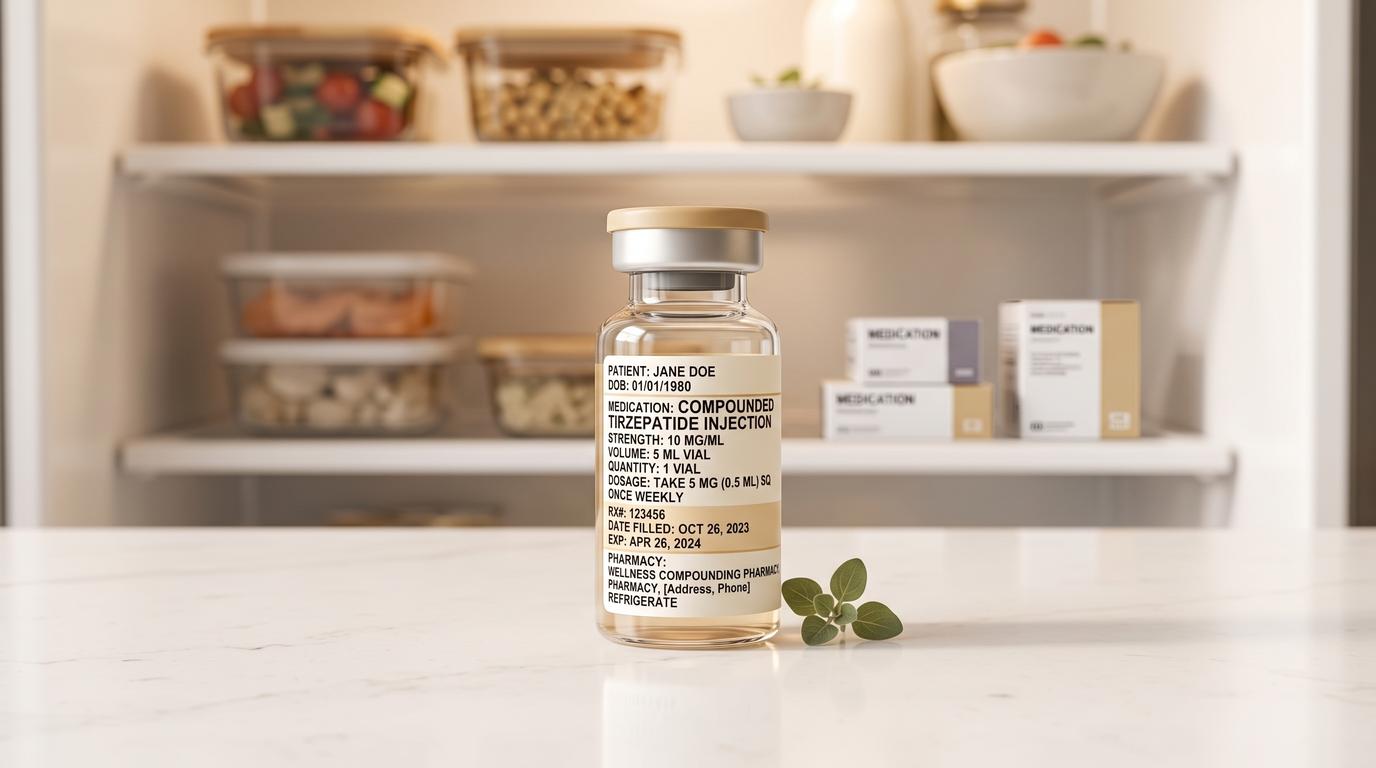
A Note on Compounded Tirzepatide
The pharmacokinetic study described in this article was conducted using FDA-approved branded tirzepatide (Mounjaro). Prescriva uses compounded tirzepatide, which is prepared by licensed 503A compounding pharmacies based on individual prescriptions from licensed providers.
Compounded tirzepatide is not FDA-approved and has not been independently studied for drug interactions, including interactions with oral contraceptives. The prescribing information for branded tirzepatide applies to that specific formulation. Providers typically apply the same precautionary guidance to compounded tirzepatide given that the active ingredient and mechanism are the same, but this extrapolation has not been formally validated in clinical trials.
Discuss your specific situation with your Prescriva provider to determine what contraceptive approach is appropriate for you.
---
Key Takeaways
Tirzepatide is meaningfully different from semaglutide and other GLP-1 receptor agonists when it comes to oral contraceptive interactions. Pharmacokinetic studies show that tirzepatide significantly reduces peak oral contraceptive hormone levels, by roughly 55 to 66% for peak concentrations, even as it reduces total hormonal exposure by about 20%.
The FDA prescribing information for both Mounjaro and Zepbound recommends using a non-oral contraceptive or adding a barrier method for four weeks following initiation and four weeks after each dose escalation. IUDs, implants, injections, rings, and patches are not affected by this interaction.
If you use oral contraceptive pills and are starting or increasing your tirzepatide dose, talk to your healthcare provider before your next injection. Getting ahead of this question is far simpler than navigating an unintended pregnancy.
---
Medical Disclaimer: This article is for informational purposes only and does not constitute medical advice. Consult a licensed healthcare provider before starting any medication or making changes to your contraceptive method.
Compounding Disclaimer: Compounded tirzepatide is not an FDA-approved medication. Compounded drugs are not reviewed by the FDA for safety, efficacy, or quality. Compounded tirzepatide is not the same as, equivalent to, or interchangeable with FDA-approved tirzepatide products (Mounjaro or Zepbound).
Results Disclaimer: Individual results vary. Weight management outcomes depend on adherence to your prescribed treatment plan, diet, exercise, starting weight, and other individual health factors. Results are not guaranteed.
Provider Disclaimer: All medical services, including prescribing, are provided by independently licensed healthcare providers. Prescriva LLC (DBA Prescriva) is a management services organization and does not practice medicine or make clinical decisions.
Brand Disclaimer: Mounjaro and Zepbound are registered trademarks of Eli Lilly and Company. Ozempic and Wegovy are registered trademarks of Novo Nordisk A/S. Prescriva is not affiliated with, endorsed by, or sponsored by these companies.
Stay informed
Weekly research updates and health guides. No spam.
Ready to get started?
Check if you qualify for a personalized treatment plan.
Check Your Eligibility →Continue reading

GLP-1 Medications After Bariatric Surgery: What the Research Shows About Weight Regain

GLP-1 Medications and Inflammatory Bowel Disease: What Patients Need to Know