Compounded Tirzepatide Shelf Life and Expiration: What Patients Need to Know
Understanding compounded tirzepatide expiration dates is not just a technical detail. It is a patient safety issue that affects the quality and effectiveness of your treatment.
In this article
Understanding compounded tirzepatide expiration dates is not just a technical detail. It is a patient safety issue that affects the quality and effectiveness of your treatment.
*Compounded tirzepatide is not FDA-approved. This article is for informational and educational purposes only and does not constitute medical advice. Always follow the storage and handling instructions provided by your compounding pharmacy and licensed healthcare provider. Beyond-use dates for compounded medications vary by formulation and pharmacy; figures in this article are general references only.*
---
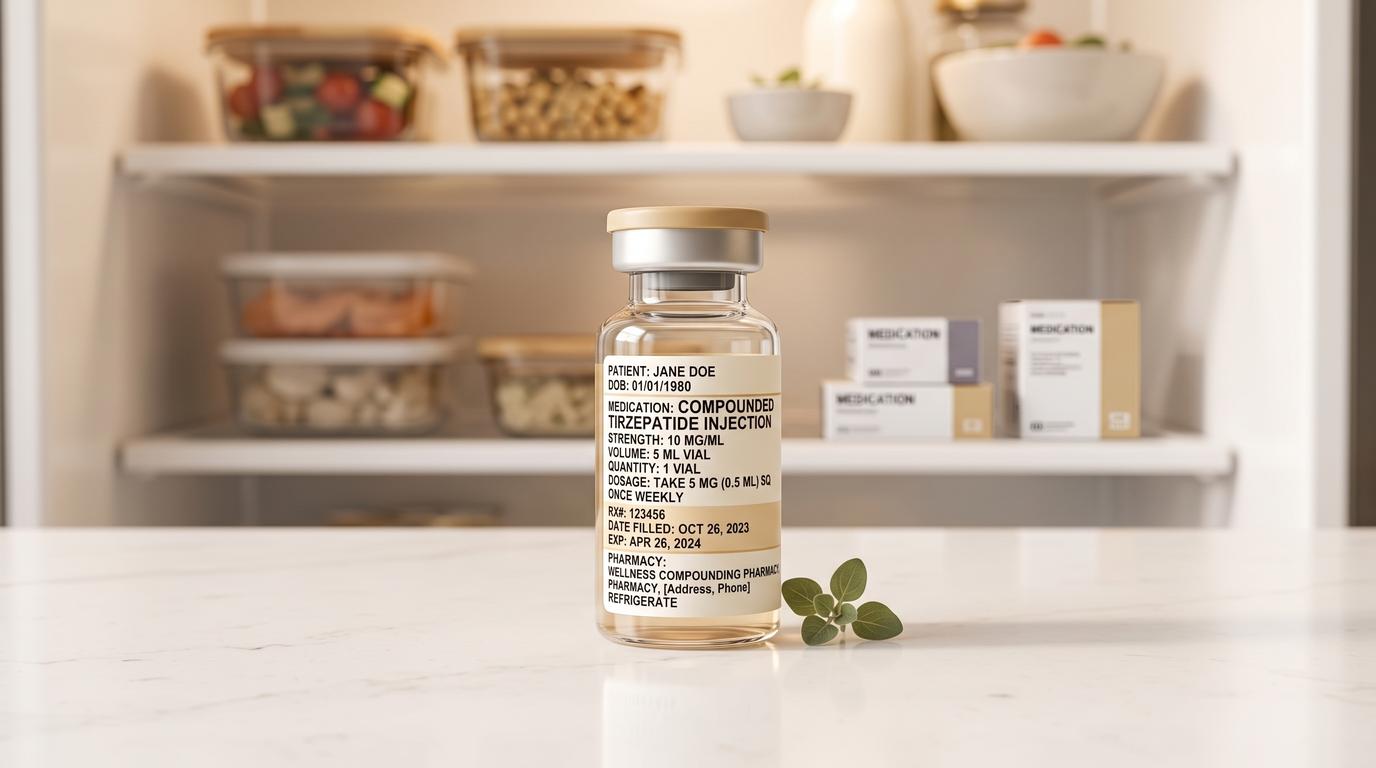
If you have received compounded tirzepatide as a multi-dose vial, you may have noticed a label listing a "beyond-use date" rather than the standard expiration date you see on over-the-counter medications. These two terms serve the same protective purpose - protecting you from degraded medication - but they arrive at their conclusions through very different processes.
This guide explains what that date means, how long compounded tirzepatide typically remains stable under proper conditions, what happens when storage conditions are not met, and how to recognize when a vial should not be used.
---
Beyond-Use Date vs. Manufacturer Expiration Date
A manufacturer expiration date on a brand-name drug like Mounjaro or Zepbound reflects extensive stability testing conducted under FDA-regulated manufacturing conditions. The manufacturer runs accelerated and real-time stability studies over years, measuring chemical integrity at defined intervals to determine how long the product remains safe and effective.
A beyond-use date (BUD) on compounded tirzepatide is different. Compounding pharmacies assign BUDs based on:
- The type of preparation (sterile versus non-sterile)
- Whether the pharmacy has conducted its own stability testing on the specific formulation
- USP Chapter 797 standards for sterile compounded preparations (the governing regulatory chapter for sterile injectables)
- The storage conditions specified on the label
---
How Long Does Compounded Tirzepatide Last?
The specific BUD assigned to your compounded tirzepatide depends on the formulation type, the pharmacy's stability testing data, and the storage conditions. Most 503A compounding pharmacies shipping tirzepatide in the United States work with one of two formats:
Lyophilized powder (freeze-dried): Some pharmacies ship tirzepatide as a freeze-dried powder that you reconstitute with bacteriostatic water or sterile water before use. Lyophilized peptides are generally more stable during shipping and can tolerate temperature variations better than pre-mixed solutions.
Pre-mixed aqueous solution: Other pharmacies prepare tirzepatide in solution form, ready to inject after drawing the correct dose. These solutions require strict refrigeration throughout their shelf life.
For refrigerated compounded tirzepatide solutions stored consistently at 36 to 46 degrees Fahrenheit (2 to 8 degrees Celsius):
- Most 503A pharmacies assign BUDs of 30 to 90 days from the preparation date
- Some pharmacies with proprietary stability data may assign up to 90 to 120 days
- Reconstituted lyophilized tirzepatide is typically assigned 28 days refrigerated after mixing, regardless of the powder's original BUD
---
Why Tirzepatide Stability Matters
Tirzepatide is a large synthetic peptide - a chain of 39 amino acids - that acts on both GLP-1 and GIP receptors simultaneously. Its chemical complexity is part of what makes it effective, but it also makes it vulnerable to degradation when exposed to heat, light, or repeated freeze-thaw cycles.
Research on peptide drug stability shows that temperature is the most influential factor in how quickly degradation occurs. A 2025 study published in the *Journal of Peptide Science* examined how temperature, pH, and buffering conditions affect the structural integrity of GLP-1 receptor agonist peptides. Elevated temperatures dramatically accelerated the rate of chemical breakdown, with key degradation products forming at rates that were nearly undetectable at refrigerated temperatures but measurable within days at room temperature. [2]
A related 2025 study using high-resolution mass spectrometry to track semaglutide (a similarly structured GLP-1 peptide) found that even modest increases in temperature or changes in pH could accelerate the formation of degradation products that would not be visible to the naked eye. [3]
For tirzepatide specifically, the chemical vulnerability includes a process called diketopiperazine formation, a type of cyclization reaction at the N-terminal end of the peptide chain. Research published in *ACS Omega* identified this as a key degradation pathway for tirzepatide under stress conditions. [4] In a clinically prepared and properly stored vial, this process is slowed to negligible rates. But improper storage can accelerate it, potentially reducing the potency of your medication.
The same principles apply to photodegradation. Research examining liraglutide (another GLP-1 peptide analog) under photolytic stress found that light exposure caused structural changes at specific points in the peptide chain - changes that cannot be reversed and that reduce biological activity. [5]
These findings reinforce a practical takeaway: proper storage is not optional. It is part of what makes your medication work.
---
Proper Storage Conditions for Compounded Tirzepatide
Your pharmacy's label is the authority on storage conditions for your specific product. The following guidance reflects general best practices for sterile injectable peptide medications and mirrors the conditions recommended for branded tirzepatide products.
Temperature: Store compounded tirzepatide in the refrigerator at 36 to 46 degrees Fahrenheit (2 to 8 degrees Celsius). Place the vial away from the refrigerator door, where temperatures fluctuate more with each opening. The back of the main shelf or the crisper compartment (if not used for produce) typically maintains the most stable temperature.
Do not freeze: Freezing and thawing creates ice crystals that can damage the peptide's molecular structure and potentially compromise sterility if the vial seal is stressed. Some compounding pharmacies ship tirzepatide lyophilized powder frozen, but once reconstituted in solution, freezing is generally not advised. Always follow your pharmacy's specific instructions.
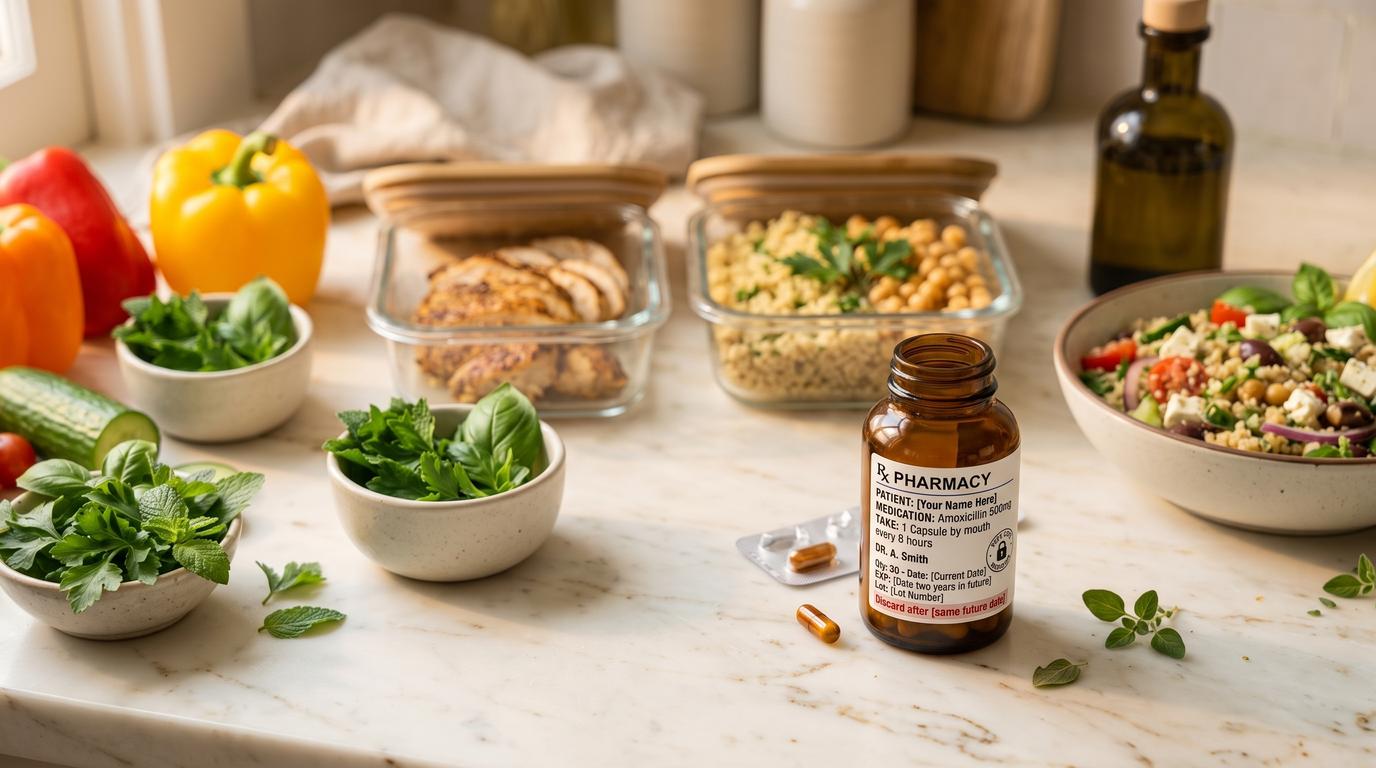
Light: Store the vial in its original packaging or in a dark location. The amber or opaque vials many pharmacies use are not decorative. They are a practical barrier against light-induced degradation.
Handling: When drawing a dose, use a clean technique. Wipe the rubber stopper with an alcohol swab and allow it to dry before inserting the needle. Minimize the number of times you puncture the stopper. Bacterial contamination introduced through repeated or careless access can compromise sterility before the BUD is reached.
---
What Happens If Tirzepatide Is Stored Incorrectly
When tirzepatide is exposed to temperatures above refrigerator range, degradation accelerates. At room temperature (around 68 to 77 degrees Fahrenheit), most compounding pharmacies consider tirzepatide solutions stable for no more than a few hours to one day. This matters for transit, travel, and accidental out-of-refrigerator exposure.
The Mounjaro prescribing information from Eli Lilly - which reflects formal stability testing on branded tirzepatide pens - states that pens removed from the refrigerator may be stored at room temperature for up to 21 days. Compounded tirzepatide solutions may have different stability profiles due to their different formulation and manufacturing process. The safest assumption is to return your vial to the refrigerator promptly after use, every time.
At temperatures above 86 degrees Fahrenheit (30 degrees Celsius), degradation accelerates significantly. Medication left in a hot car, near a stove, or in a bag in direct sunlight during warm weather has likely been compromised, even if it looks unchanged.
Degraded tirzepatide may:
- Produce reduced weight loss results over time, as potency has declined
- Cause unexpected injection site reactions if degradation products are present
- Not show any visible sign of change at all
---
Recognizing Signs That a Vial Should Not Be Used
While visual inspection cannot confirm potency, certain visible changes are always a sign to discard the medication:
Cloudiness or haziness: Compounded tirzepatide solutions should be clear. Cloudiness may indicate particulate contamination, protein aggregation, or bacterial growth.
Visible particles: Any floating particles, specks, or sediment at the bottom of the vial indicate the medication should not be used.
Color change: Fresh compounded tirzepatide solution is typically colorless to very faintly yellow. A pronounced yellow, brown, or orange tint is a sign of degradation.
Unusual odor: If you detect any smell beyond what your medication normally has when opening the vial, that is a concern.
Damage to the vial or cap: Cracks, chips, or a compromised rubber stopper can introduce contamination regardless of how well the medication was stored.
If you observe any of these signs, do not use the medication. Contact your compounding pharmacy immediately. Most pharmacies have a replacement policy for defective preparations.
---
Temperature Excursions: What to Do
A temperature excursion is any period when your medication was stored outside its required temperature range. Common causes include power outages, shipping delays, a refrigerator that was accidentally left open, or leaving the vial out too long after a dose.
When an excursion occurs:
- Note how long the medication was outside the recommended range and estimate the temperature it reached
- Do not freeze the medication in an attempt to compensate - this can cause additional damage
- Contact your compounding pharmacy with the details
- Follow the pharmacy's guidance on whether to continue using the medication or to request a replacement
---
Traveling With Compounded Tirzepatide
Traveling with compounded tirzepatide requires advance planning. For air travel, keep the vial in your carry-on luggage, never in checked baggage where cargo hold temperatures are uncontrolled and freezing is possible. Most airports and TSA checkpoints recognize injectable medications with a valid pharmacy label.
Use an insulated travel case with a cooling element to maintain temperature during transit. Several pharmaceutical travel coolers are designed specifically for injectable medications and can maintain 2-8°C for 24 to 48 hours without a power source. For longer trips, plan for refrigerator access at your destination.
For more detailed guidance on traveling with compounded GLP-1 medications, see our full [traveling with GLP-1 medications guide](/resources/traveling-with-glp1-medications-storage-guide).
---
When to Contact Your Pharmacy
Reach out to your compounding pharmacy if:
- The vial's beyond-use date has passed or is approaching
- The medication was exposed to temperature extremes
- You notice any visual changes in the solution
- You are having unexpected results or side effects that could suggest medication quality issues
- You need to confirm storage conditions for an unusual situation
---
Frequently Asked Questions
Can I use compounded tirzepatide after the beyond-use date?
No. The BUD represents the pharmacy's determination of how long the medication remains within its quality specifications. Using medication after this date means you cannot rely on its potency or sterility.
How do I dispose of expired compounded tirzepatide?
Check with your pharmacy or local municipal waste program for medication disposal guidance. Many pharmacies offer take-back programs. Do not flush injectable medications down the toilet or place needles in regular trash.
Does the BUD change once I start using the vial?
No. The BUD is fixed from the date of preparation, regardless of when you first open the vial or begin drawing doses. Some pharmacies also specify a shorter in-use period - for example, 28 days from first puncture - which may be shorter than the original BUD. Check your label carefully.
Is compounded tirzepatide the same as Mounjaro or Zepbound?
Compounded tirzepatide contains the same active pharmaceutical ingredient as Mounjaro and Zepbound, but it is not the same as those brand-name products. Compounded tirzepatide is not FDA-approved, has not undergone FDA review for safety, efficacy, or manufacturing quality, and is not interchangeable with branded products. Stability and storage data from branded tirzepatide products do not necessarily apply to compounded formulations.
Ready to explore your options? [Check your eligibility](/assessment) for a medically supervised weight management program.
---
Sources
- United States Pharmacopeia. USP Chapter \<797\>: Pharmaceutical Compounding - Sterile Preparations. 2023 revision.
- Malgave A, et al. Influence of buffering capacity, pH, and temperature on the stability of semaglutide. *Journal of Peptide Science*. 2025. PMID 40635175.
- Malgave A, et al. Effect of pH, buffers, molarity, and temperature on solution state degradation of semaglutide using LC-HRMS. *European Journal of Pharmaceutics and Biopharmaceutics*. 2025. PMID 40490042.
- Wang J, et al. Mechanistic study of diketopiperazine formation during solid-phase peptide synthesis of tirzepatide. *ACS Omega*. 2022. PMID 36570276.
- Badgujar D, et al. Assessment of thermal and photolytic stress effects on the stability of primary structure of synthetic liraglutide. *Journal of Peptide Science*. 2025. PMID 40814845.
Stay informed
Weekly research updates and health guides. No spam.
References
- United States Pharmacopeia. USP Chapter \<797\>: Pharmaceutical Compounding - Sterile Preparations. 2023 revision.. Published Research (2023).
- Malgave A, et al. Influence of buffering capacity, pH, and temperature on the stability of semaglutide. Journal of Peptide Science (2025).
- Malgave A, et al. Effect of pH, buffers, molarity, and temperature on solution state degradation of semaglutide using LC-HRMS. European Journal of Pharmaceutics and Biopharmaceutics (2025).
- Wang J, et al. Mechanistic study of diketopiperazine formation during solid-phase peptide synthesis of tirzepatide. ACS Omega (2022).
- Badgujar D, et al. Assessment of thermal and photolytic stress effects on the stability of primary structure of synthetic liraglutide. Journal of Peptide Science (2025).
Ready to get started?
Check if you qualify for a personalized treatment plan.
Check Your Eligibility →Continue reading

GLP-1 Medications and Rosacea: What Early Research Shows
GLP-1 Medications and Type 1 Diabetes: What the Research Shows