Resistance Training on GLP-1 Medications: Can You Build Muscle While Losing Weight?
If you are on semaglutide or tirzepatide and wondering whether you can still build strength, protect your muscle, or improve your body composition, you are asking exactly the right question. GLP-1 med
In this article
If you are on semaglutide or tirzepatide and wondering whether you can still build strength, protect your muscle, or improve your body composition, you are asking exactly the right question. GLP-1 medications are powerful tools for weight loss. But rapid weight loss, from any cause, carries a risk: losing muscle along with fat.
Resistance training is the most effective countermeasure available. This article explains what the research shows about muscle loss on GLP-1 therapy, why resistance training matters more than ever when you are on these medications, and how to structure a program that actually works.
*Compounded semaglutide and tirzepatide are not FDA-approved. This article is for educational and informational purposes only and does not constitute medical advice. Individual results vary. Consult your licensed healthcare provider before starting or changing any exercise program while on medication.*
---
Why GLP-1 Medications Make Muscle Preservation Harder
GLP-1 receptor agonists like semaglutide and tirzepatide reduce appetite significantly. That appetite suppression is the mechanism behind the weight loss. But when you eat less, your body does not just burn fat. It draws from all available energy stores, including lean tissue.
The STEP 1 trial, the landmark clinical study of semaglutide 2.4 mg for weight management, showed an average body weight reduction of 14.9% over 68 weeks. [1] That is meaningful, sustained weight loss. Body composition analysis from the trial showed that most of the weight lost was fat, but a clinically significant portion was lean mass.
A 2026 systematic review and meta-analysis published in *Diabetes, Obesity and Metabolism* quantified this more precisely. The review, by Eisa and colleagues, analyzed body composition data across GLP-1 and dual incretin therapy trials and found that lean mass loss accounted for a significant portion of total weight lost, with the proportion varying by duration, dose, and baseline patient characteristics. [2] The authors concluded that the speed and magnitude of weight loss on these medications creates a meaningful lean mass risk that is not fully mitigated by the medications themselves.
A 2026 review in the *European Heart Journal* framed the issue in terms of cardiovascular risk: lean mass loss during GLP-1 therapy is multifactorial, tied to caloric restriction, anabolic resistance, and hormonal changes. The authors describe muscle preservation as "a central therapeutic goal alongside fat loss," rather than an afterthought. [3]
The practical implication is straightforward. GLP-1 therapy accelerates weight loss, which compresses the window in which your muscles are at risk. Without a deliberate strategy, you may lose more muscle than you realize.
---
Can You Actually Build Muscle on GLP-1 Medications?
The honest answer is: it depends on your starting point.
For most people already carrying excess weight, true muscle hypertrophy (increasing the size of muscle fibers) is difficult to achieve simultaneously with rapid caloric restriction. Your body needs both adequate protein and sufficient calories to build new muscle. GLP-1-driven appetite suppression makes both harder to achieve consistently.
What is achievable, and what research supports, is body recomposition: losing fat while maintaining or slightly increasing lean mass. For people who are new to resistance training, this is especially realistic. Beginners often gain lean mass even in a moderate caloric deficit because their muscles respond strongly to the novel stimulus of structured exercise. For experienced lifters, the priority shifts from building new muscle to protecting what they already have.
The key insight from the research is that the question should not be "can I build muscle?" but rather "how much lean mass can I preserve?" Getting that answer right is where the long-term outcome of your GLP-1 program depends.
---
What the Research Shows About Combining GLP-1 Therapy with Exercise
A 2026 narrative review in the *International Journal of Obesity* by Olumuyide and colleagues examined what happens when structured exercise is integrated with GLP-1 therapy. The authors found that combining incretin-based medications with a progressive resistance training program produced more favorable body composition outcomes than medication alone, with greater fat mass reduction and significantly better lean mass preservation. The review described resistance training as "a necessary adjunct" to pharmacologic weight loss therapy, not optional supplementation. [4]
A 2026 review in *Pharmaceuticals* by Sancho-Haro and colleagues reached similar conclusions. In their analysis of GLP-1 therapy combined with structured exercise protocols, resistance training consistently produced superior lean mass retention compared to aerobic exercise alone or no exercise. The authors recommended prioritizing resistance training over cardio when exercise volume is limited, specifically because of its muscle-preserving effect during caloric deficit. [5]
A 2026 systematic review in the *International Journal of Obesity* by Laverde and colleagues, which specifically focused on muscle health outcomes with GLP-1 receptor agonists at obesity doses, confirmed that functional decline in muscle can occur even with moderate lean mass loss, and that structured exercise intervention significantly reduces this risk. [6]
These are not hypothetical projections. They are conclusions from peer-reviewed research published in 2026, examining exactly the patient population most people reading this article belong to.
---
The Evidence for Resistance Training During Caloric Restriction
The foundational research on exercise and weight loss does not come from GLP-1 trials. It comes from earlier work on dietary weight loss in older adults.
A landmark 2017 study by Villareal and colleagues, published in the *New England Journal of Medicine*, randomized older adults with obesity into four groups: diet only, aerobic exercise only, resistance training only, and combined aerobic plus resistance. All groups lost a similar total amount of weight. But the groups doing resistance training, and especially the combined group, lost significantly less lean mass and preserved significantly more strength and physical function. [7]
The Villareal study is important because it established the mechanism, not just the correlation. Resistance training sends a signal to muscle fibers to remain active and repair themselves, even when the body is in an energy deficit. That signal competes directly with the catabolic pressure of caloric restriction.
A foundational review by Cava and colleagues in *Advances in Nutrition* (2017) analyzed protein intake and exercise strategies for preserving lean mass during weight loss. The authors found that resistance training was the most consistent and effective intervention across all populations studied, with the effect strongest when combined with adequate protein intake. [8]

The research consensus is clear: if you are losing weight on GLP-1 medications, resistance training is the most powerful thing you can do to protect your lean mass. Not the most powerful thing in combination with other strategies. The most powerful single intervention available to you.
---
How to Structure Resistance Training on GLP-1 Medications
Frequency and Volume
Aim for two to three resistance training sessions per week on non-consecutive days. This frequency is enough to stimulate muscle protein synthesis and protect lean mass without creating excessive fatigue on a reduced calorie intake.
Each session should include six to ten exercises, with two to four sets per exercise. Work in the moderate rep range of eight to fifteen reps per set. This range builds both strength and lean mass while limiting the joint stress that comes with very heavy, low-rep training.
Prioritize Compound Movements
Compound exercises, those that work multiple muscle groups at once, give you the most muscle stimulus per unit of effort. When appetite suppression is limiting your calorie intake, efficiency matters. The following movements should anchor your program:
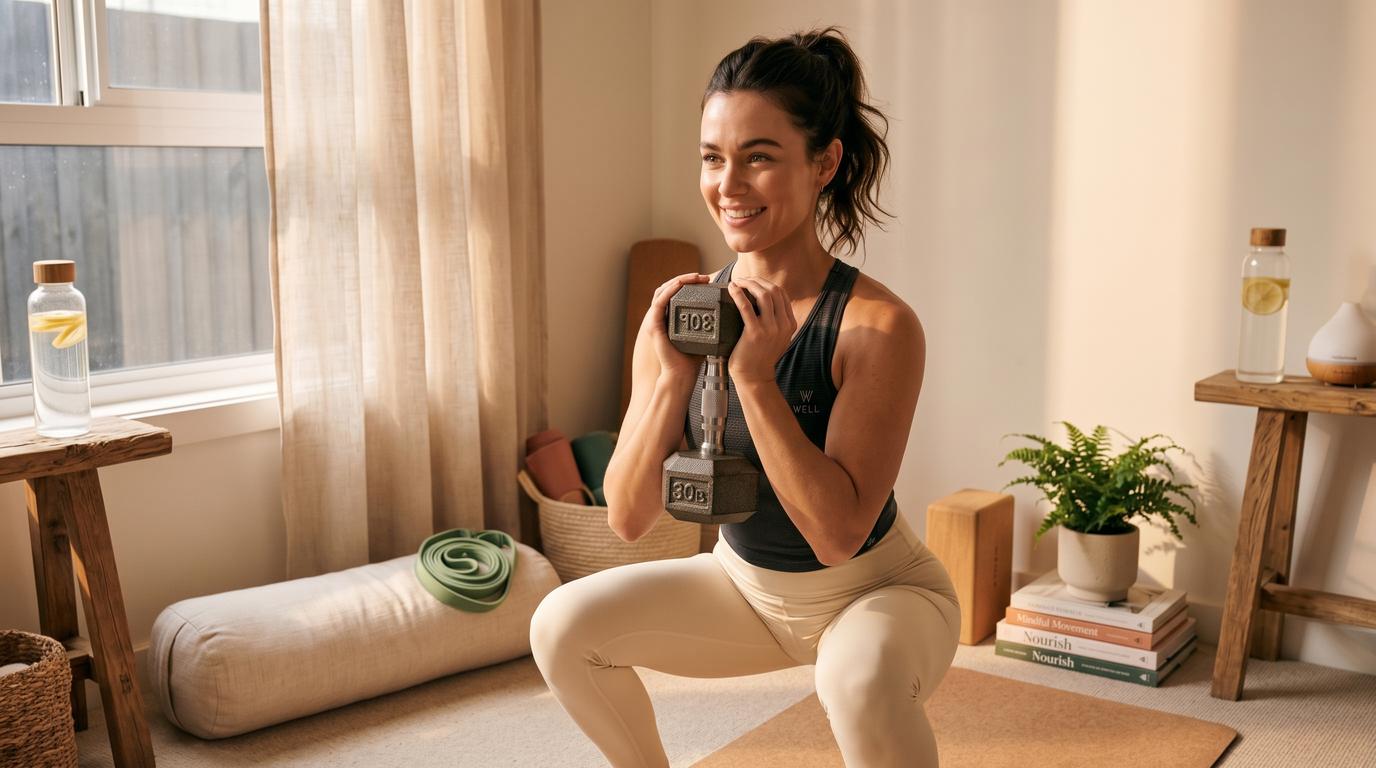
- Squats or goblet squats: quadriceps, glutes, hamstrings, core
- Deadlifts or Romanian deadlifts: hamstrings, glutes, lower back, core
- Rows (dumbbell or cable): upper back, lats, biceps
- Chest press (dumbbell or barbell): chest, shoulders, triceps
- Overhead press: shoulders, triceps, upper traps
- Hip hinge or kettlebell swings: posterior chain, power
Apply Progressive Overload
Progressive overload is the principle of gradually increasing the demand on your muscles over time. Your muscles adapt to a given stimulus. Once adapted, they will not continue to grow or maintain without a new challenge.
You do not need to add weight every session. Progressive overload can come from adding reps, adding sets, reducing rest time, or improving technique. Track your sessions so you can see progress over time.
---
Protein: The Other Half of the Equation
Resistance training without adequate protein is significantly less effective. Protein is the raw material for muscle repair and synthesis. When you are in a caloric deficit, and especially when GLP-1-driven appetite suppression is reducing your total food intake, getting enough protein requires deliberate planning.
Research supports a target of 1.2 to 1.6 grams of protein per kilogram of body weight per day for people in a caloric deficit who are doing resistance training. For a 180-pound (82 kg) person, that is roughly 98 to 131 grams of protein per day.
The practical challenge on GLP-1 medications is that appetite suppression can make hitting this target feel difficult. Strategies that help include prioritizing protein-dense foods at the start of meals before appetite fades, choosing higher-protein options when volume is limited (eggs, Greek yogurt, cottage cheese, lean meats, protein shakes), and distributing protein across three to four meals rather than trying to eat it all at once.
For a more detailed breakdown of protein needs and food sources during GLP-1 therapy, see our guide on [protein intake on GLP-1 medications](/resources/protein-intake-glp1-medications).
---
Managing Energy During GLP-1 Therapy
One real challenge with resistance training on GLP-1 medications is that reduced calorie intake affects workout performance. You may feel less energetic during sessions, especially during dose escalation phases when appetite suppression is strongest.
A few practical adjustments help:
- Time workouts around meals. Training one to two hours after a protein-rich meal, when blood glucose and amino acid levels are higher, generally produces better performance than training fasted.
- Stay hydrated. GLP-1 medications can reduce thirst cues alongside hunger cues. Dehydration amplifies fatigue. Aim for at least two liters of water daily, more on training days.
- Reduce intensity during side effect peaks. If you experience nausea or fatigue during dose increases, it is appropriate to reduce training intensity temporarily. Consistency over weeks and months matters more than any individual session.
- Give yourself recovery time. On a caloric deficit, recovery from training takes longer. Spacing sessions by at least 48 hours and prioritizing sleep supports muscle repair.
---
What Realistic Outcomes Look Like
Here is what to expect at different experience levels:
Beginners (new to resistance training): Good chance of true body recomposition. You may lose fat while gaining or maintaining lean mass over the first three to six months, even on a caloric deficit. This is one of the few situations where simultaneous fat loss and muscle gain is reliably achievable.
Intermediate lifters (one to three years of consistent training): More modest gains. Muscle preservation is the realistic primary goal. Well-structured training and adequate protein intake can protect most of your lean mass.
Advanced lifters (three-plus years of consistent training): Expect some lean mass loss during aggressive caloric restriction. The goal is to minimize it. Maintaining training volume and intensity, even if load needs to decrease temporarily, is the most effective strategy.
For all groups, the benefit of resistance training extends beyond lean mass. Strength, bone density, insulin sensitivity, functional capacity, and mental health all improve with regular resistance training. These are meaningful outcomes regardless of what the scale says.
---
Your Next Step
GLP-1 medications are one of the most effective pharmacologic tools available for weight loss. Resistance training is the most effective behavioral tool for preserving the muscle that makes that weight loss metabolically meaningful.
The two work better together than either does alone. Starting a simple two-to-three-day resistance training program now, focused on compound movements and adequate protein, will change the body composition trajectory of your GLP-1 program significantly.
To learn more about Prescriva's medically supervised approach to GLP-1 therapy, check your eligibility and [explore your treatment options](/start).
---
*This article is for educational and informational purposes only. Compounded semaglutide and tirzepatide are not FDA-approved. The information here does not constitute medical advice and should not be used as a substitute for consultation with a licensed healthcare provider. Individual results vary. Always consult your provider before starting a new exercise program, particularly if you have underlying health conditions.*
---
References
- Wilding JPH, Batterham RL, Calanna S, et al. Once-Weekly Semaglutide in Adults with Overweight or Obesity. *N Engl J Med.* 2021;384(11):989-1002. [PMID: 33567185](https://pubmed.ncbi.nlm.nih.gov/33567185/)
- Eisa N, et al. Lean Mass Changes With Incretin Therapy Versus Lifestyle Intervention: A Systematic Review and Meta-Analysis. *Diabetes Obes Metab.* 2026. [PMID: 41877354](https://pubmed.ncbi.nlm.nih.gov/41877354/)
- Khan MS, et al. Fat, muscle, and anti-obesity medications in cardiovascular disease prevention. *Eur Heart J.* 2026. [PMID: 41914150](https://pubmed.ncbi.nlm.nih.gov/41914150/)
- Olumuyide E, et al. Integrating metabolic rehabilitation with incretin-based anti-obesity therapy: a narrative review of exercise strategies. *Int J Obes (Lond).* 2026. [PMID: 42365122](https://pubmed.ncbi.nlm.nih.gov/42365122/)
- Sancho-Haro E, et al. Optimizing Weight Loss in the GLP-1 Era: Preserving Muscle Mass, Function and Metabolic Health Through Resistance Training. *Pharmaceuticals (Basel).* 2026. [PMID: 42356514](https://pubmed.ncbi.nlm.nih.gov/42356514/)
- Laverde LP, et al. Effect of GLP-1 receptor agonists at doses for obesity management on muscle health: systematic review. *Int J Obes (Lond).* 2026. [PMID: 42321502](https://pubmed.ncbi.nlm.nih.gov/42321502/)
- Villareal DT, Aguirre L, Gurney AB, et al. Aerobic or Resistance Exercise, or Both, in Dieting Obese Older Adults. *N Engl J Med.* 2017;376(20):1943-1955. [PMID: 28514618](https://pubmed.ncbi.nlm.nih.gov/28514618/)
- Cava E, Yeat NC, Mittendorfer B. Preserving Healthy Muscle during Weight Loss. *Adv Nutr.* 2017;8(3):511-519. [PMID: 28507015](https://pubmed.ncbi.nlm.nih.gov/28507015/)
Stay informed
Weekly research updates and health guides. No spam.
References
- Wilding JPH, Batterham RL, Calanna S, et al. Once-Weekly Semaglutide in Adults with Overweight or Obesity. N Engl J Med. (2021).
- Eisa N, et al. Lean Mass Changes With Incretin Therapy Versus Lifestyle Intervention: A Systematic Review and Meta-Analysis. Diabetes Obes Metab. (2026).
- Khan MS, et al. Fat, muscle, and anti-obesity medications in cardiovascular disease prevention. Eur Heart J. (2026).
- Olumuyide E, et al. Integrating metabolic rehabilitation with incretin-based anti-obesity therapy: a narrative review of exercise strategies. Int J Obes (Lond). (2026).
- Sancho-Haro E, et al. Optimizing Weight Loss in the GLP-1 Era: Preserving Muscle Mass, Function and Metabolic Health Through Resistance Training. Pharmaceuticals (Basel). (2026).
- Laverde LP, et al. Effect of GLP-1 receptor agonists at doses for obesity management on muscle health: systematic review. Int J Obes (Lond). (2026).
- Villareal DT, Aguirre L, Gurney AB, et al. Aerobic or Resistance Exercise, or Both, in Dieting Obese Older Adults. N Engl J Med. (2017).
- Cava E, Yeat NC, Mittendorfer B. Preserving Healthy Muscle during Weight Loss. Adv Nutr. (2017).
Ready to get started?
Check if you qualify for a personalized treatment plan.
Check Your Eligibility →