GLP-1 Medications and Inflammatory Bowel Disease: What Patients Need to Know
For people living with inflammatory bowel disease, managing weight is rarely straightforward. Crohn's disease and ulcerative colitis bring unpredictable flares, nutrient absorption challenges, and oft

In this article
For people living with inflammatory bowel disease, managing weight is rarely straightforward. Crohn's disease and ulcerative colitis bring unpredictable flares, nutrient absorption challenges, and often a complicated relationship with food. Add the metabolic effects of long-term corticosteroid use, and many IBD patients find themselves dealing with obesity on top of everything else.
GLP-1 medications have changed the landscape of weight management over the past several years. As their use has expanded, researchers have started asking a specific question: what happens when patients with IBD take these medications? Can GLP-1 receptor agonists address the metabolic burden of IBD, and do they affect the disease itself?
The evidence base is still developing, but several well-designed studies published in 2024 and 2025 offer meaningful answers. Here is what the current research shows.
*Compounded semaglutide and [compounded tirzepatide](/resources/compounded-tirzepatide-guide) are not FDA-approved medications. This article is for informational and educational purposes only and does not constitute medical advice. Patients with inflammatory bowel disease should consult with both their gastroenterologist and a licensed prescribing provider before starting any new medication.*
---
The IBD-Obesity Overlap: Why This Matters
Inflammatory bowel disease affects roughly 3.1 million adults in the United States. For decades, clinical thinking associated IBD with malnutrition and underweight, not obesity. That picture has shifted.
Obesity rates in IBD patients now mirror those in the general population, and in some studies, they exceed them. Several factors drive this:
Corticosteroids. Prednisone and budesonide are cornerstones of IBD flare management, but they promote fat accumulation, insulin resistance, and increased appetite. Many patients who rely on frequent steroid courses gain significant weight over time.
Physical inactivity during flares. Active disease often forces extended periods of reduced movement, which shifts energy balance and alters body composition.
Inflammatory cytokines. Chronic inflammation in IBD dysregulates leptin and ghrelin, hormones that control hunger and satiety. This disruption can increase appetite and reduce the natural feedback that signals fullness.
Gut microbiome changes. IBD fundamentally alters the intestinal microbiome. Emerging research suggests these shifts affect how efficiently patients extract energy from food and how their metabolic hormones function.
The result is a population with a significant unmet need for effective, safe weight management tools. Traditional approaches can be harder to implement during active disease, and some weight loss interventions carry risks for people with gut conditions. GLP-1 medications are now being studied as a potential fit.
---
GLP-1 Receptors and the Gut Connection
GLP-1, or glucagon-like peptide-1, is a hormone produced naturally in the intestinal lining in response to food. It tells the pancreas to release insulin only when blood sugar is rising, slows gastric emptying, and signals the brain that the body has eaten. GLP-1 medications like semaglutide and tirzepatide mimic and amplify this signal over an extended period.
What makes GLP-1 particularly relevant in the IBD context is where its receptors are found. GLP-1 receptors are expressed not just in the pancreas and brain, but throughout the gastrointestinal tract, including intestinal epithelial cells and immune cells within the gut. This distribution has led researchers to explore whether GLP-1 receptor activation might have direct anti-inflammatory effects beyond its metabolic functions.
In preclinical models, GLP-1 receptor activation has been associated with reductions in pro-inflammatory cytokines including TNF-alpha and interleukins that drive gut inflammation in IBD. Whether this translates meaningfully to human disease activity is the question driving current clinical research.
---
What the Clinical Research Shows
The evidence base on GLP-1 medications in IBD patients has grown substantially since 2024. Here is what the strongest studies have found.
Metabolic Improvements in IBD Patients
A systematic review and meta-analysis published in *BMC Gastroenterology* in November 2025 examined the effects of GLP-1 receptor agonists specifically on obesity and metabolic parameters in IBD patients. Researchers found significant improvements in body weight, BMI, waist circumference, and fasting glucose in IBD patients treated with GLP-1 medications compared to controls. Critically, these benefits occurred without evidence of worsening disease activity. [1]
A separate study published in *Digestive Disease Sciences* in December 2024 looked specifically at non-diabetic IBD patients receiving GLP-1 agonists. It found improvements in metabolic parameters including weight, lipid profiles, and insulin resistance in this population - evidence that the metabolic benefits extend beyond patients with concurrent diabetes. [2]
Effects on IBD Disease Activity
The question of whether GLP-1 medications affect IBD itself is more nuanced. A systematic review and meta-analysis published in the *Journal of Crohn's and Colitis* in November 2025 pooled data across multiple studies examining GLP-1 receptor agonists and IBD clinical outcomes. The analysis found that GLP-1 use was associated with reduced risk of IBD-related hospitalizations and corticosteroid use compared to non-use in obese or diabetic IBD patients. [3]
A target trial emulation study published in *Clinical Gastroenterology and Hepatology* in 2026 examined adjunctive GLP-1 receptor agonist use specifically in IBD patients with obesity and/or diabetes. The results provided additional support for IBD-related outcome improvements, though researchers emphasized that randomized controlled trial data are still needed to establish causality. [4]
GLP-1 Versus Bariatric Surgery for IBD Patients
One of the most practically useful studies compared IBD-related outcomes in obese patients treated with GLP-1 receptor agonists versus bariatric surgery. Published in *Crohn's and Colitis 360* in 2026, the research found that both interventions were associated with favorable IBD-related outcomes. GLP-1 medications represent a non-surgical option that may be more accessible and carry a different risk profile for patients who need to avoid major abdominal surgery. [5]
---
An Inline Look at the Mechanism
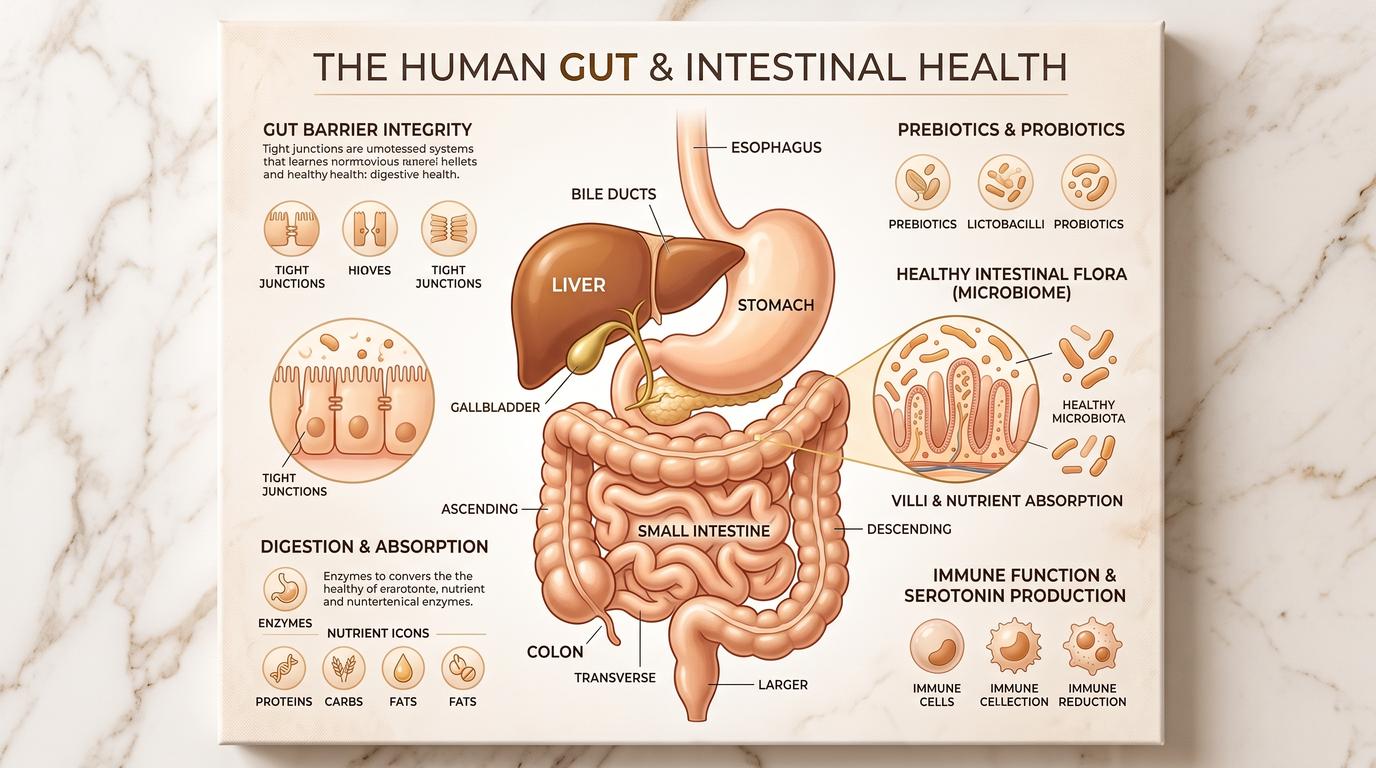
The metabolic and potential inflammatory effects of GLP-1 medications in IBD likely work through several overlapping pathways:
- Weight reduction reduces systemic inflammation. Adipose tissue, particularly visceral fat, is metabolically active and releases pro-inflammatory cytokines. Reducing body weight through GLP-1 treatment lowers this background inflammatory burden, which may benefit IBD disease activity indirectly.
- Improved insulin sensitivity. Insulin resistance, common in IBD patients on steroids or with obesity, worsens systemic inflammation. GLP-1 medications improve insulin sensitivity, which may reduce downstream inflammatory signaling.
- Direct gut receptor activation. GLP-1 receptors on intestinal epithelial and immune cells may modulate local inflammatory responses. This direct pathway is the subject of ongoing research.
- Reduced corticosteroid dependence. If GLP-1 medications help patients achieve and maintain remission through metabolic improvement, corticosteroid exposure may decrease over time, which would itself reduce steroid-related weight gain.
Important Safety Considerations for IBD Patients
The overlap between GLP-1 medication side effects and IBD symptoms requires careful consideration.
Gastrointestinal side effects are common. Nausea, vomiting, diarrhea, and abdominal discomfort affect a meaningful proportion of people starting GLP-1 medications, particularly in the first weeks. For IBD patients already managing intestinal symptoms, these effects can be harder to distinguish from disease activity or can compound existing symptoms.
Gastric emptying and motility changes. GLP-1 medications slow gastric emptying. For patients with IBD who have strictures, significant motility dysfunction, or post-surgical anatomy, this effect requires evaluation by a gastroenterologist before starting treatment.
Monitoring requirements. IBD patients on GLP-1 medications should maintain regular communication with their gastroenterologist, particularly in the first months. Changes in stool frequency, abdominal pain patterns, or other symptoms should be assessed in context - determining whether a symptom represents a medication side effect or a disease flare requires clinical evaluation.
Drug interactions. Some IBD medications affect absorption or metabolism. Discuss all current medications with your prescribing provider before starting a GLP-1 medication.
The available research has not identified GLP-1 medications as contraindicated in IBD. The studies reviewed above generally found a favorable safety profile in this population. However, the evidence base remains emerging, and individual patient circumstances vary considerably.
---
What the Research Does Not Yet Answer
The studies described here are observational, retrospective, or based on surrogate endpoints. No large randomized controlled trial has specifically enrolled IBD patients to test GLP-1 medications against placebo for IBD outcomes. That means several questions remain open:
- Whether the improvements in IBD-related outcomes observed in studies reflect direct anti-inflammatory effects of GLP-1 medications or indirect benefits from weight loss and metabolic improvement
- How GLP-1 medications perform across different IBD subtypes (Crohn's versus ulcerative colitis; luminal versus penetrating disease)
- Whether patients in IBD remission experience different effects than those with active disease
- Long-term outcomes data for IBD patients on GLP-1 medications
---
What to Discuss With Your Provider
If you have IBD and are considering GLP-1 medications for weight management, a coordinated conversation with both your gastroenterologist and your primary care or telehealth provider is essential. Key topics include:
- Your current IBD activity and recent disease course
- Current medications, including any immunosuppressants or biologics
- Your surgical history and current gut anatomy
- How to distinguish GLP-1 side effects from IBD symptoms during the initial weeks of treatment
- A monitoring plan that accounts for both your metabolic and inflammatory condition
---
Ready to Explore Your Options?
If you are living with IBD and struggling with weight management, medically supervised GLP-1 treatment through a telehealth platform may be worth discussing with your healthcare team.
[Check your eligibility for Prescriva's GLP-1 program](/assessment)
*Individual results vary. Compounded semaglutide and tirzepatide are not FDA-approved. Prescriva connects patients with independently licensed healthcare providers. This content is for educational purposes and does not replace individualized medical advice from a provider familiar with your complete health history.*
---
Sources
- Shirmard FO, et al. "Efficacy of GLP-1 receptor agonists on obesity and metabolic profile in patients with inflammatory bowel disease: a systematic review and meta-analysis." *BMC Gastroenterology*. 2025 Nov 22. PMID: 41275083
- St-Pierre J, et al. "Efficacy and Safety of GLP-1 Agonists on Metabolic Parameters in Non-diabetic Patients with Inflammatory Bowel Disease." *Digestive Disease Sciences*. 2024 Dec;69(12). PMID: 39516435
- Bayoumy AB, et al. "Glucagon-like peptide 1 receptor agonists and the clinical outcomes of inflammatory bowel disease: a systematic review and meta-analysis." *Journal of Crohn's and Colitis*. 2025 Nov 8;19(10). PMID: 41071055
- Yeh KH, et al. "Adjunctive GLP1 Receptor Agonists in Patients with Inflammatory Bowel Diseases and Obesity and/or Diabetes: A Target Trial Emulation." *Clinical Gastroenterology and Hepatology*. 2026 Jun 17. PMID: 42309434
- Nanah MH, et al. "Comparison of IBD-related outcomes in patients with obesity treated with GLP-1 receptor agonists versus bariatric surgery." *Crohn's and Colitis 360*. 2026 Apr. PMID: 42117113
Stay informed
Weekly research updates and health guides. No spam.
References
- Shirmard FO, et al. "Efficacy of GLP-1 receptor agonists on obesity and metabolic profile in patients with inflammatory bowel disease: a systematic review and meta-analysis." *BMC Gastroenterology*. 2025 Nov 22. PMID: 41275083. Published Research (2025).
- St-Pierre J, et al. "Efficacy and Safety of GLP-1 Agonists on Metabolic Parameters in Non-diabetic Patients with Inflammatory Bowel Disease." *Digestive Disease Sciences*. 2024 Dec;69(12). PMID: 39516435. Published Research (2024).
- Bayoumy AB, et al. "Glucagon-like peptide 1 receptor agonists and the clinical outcomes of inflammatory bowel disease: a systematic review and meta-analysis." *Journal of Crohn's and Colitis*. 2025 Nov 8;19(10). PMID: 41071055. Published Research (2025).
- Yeh KH, et al. "Adjunctive GLP1 Receptor Agonists in Patients with Inflammatory Bowel Diseases and Obesity and/or Diabetes: A Target Trial Emulation." *Clinical Gastroenterology and Hepatology*. 2026 Jun 17. PMID: 42309434. Published Research (2026).
- Nanah MH, et al. "Comparison of IBD-related outcomes in patients with obesity treated with GLP-1 receptor agonists versus bariatric surgery." *Crohn's and Colitis 360*. 2026 Apr. PMID: 42117113. Published Research (2026).
Ready to get started?
Check if you qualify for a personalized treatment plan.
Check Your Eligibility →Continue reading
Compounded Tirzepatide Shelf Life and Expiration: What Patients Need to Know

GLP-1 Medications and Cancer Risk Reduction: Colorectal, Liver, and Endometrial