Tirzepatide Dosing Schedule: A Complete Titration Guide
Tirzepatide is a weekly injection, but the dose you start with is not the dose you will stay on. Getting from 2.5mg to your maintenance level takes several months of deliberate, step-by-step escalatio
In this article
Tirzepatide is a weekly injection, but the dose you start with is not the dose you will stay on. Getting from 2.5mg to your maintenance level takes several months of deliberate, step-by-step escalation. That process is called titration, and it is one of the most important parts of treatment.
This guide explains the standard tirzepatide titration schedule, why each step exists, what you are likely to experience as doses increase, and how to manage the process if your body needs more time.
*Compounded tirzepatide is not FDA-approved. This article is for informational purposes only and does not constitute medical advice. Always follow the specific dosing instructions provided by your prescribing healthcare provider. Individual results vary.*
---
The Standard Tirzepatide Titration Schedule
The tirzepatide titration protocol follows six dose levels, each lasting four weeks. The full schedule reaches a maximum of 15mg weekly, which is the dose associated with peak efficacy in clinical trials.
| Weeks | Dose |
|---|---|
| Weeks 1-4 | 2.5 mg once weekly |
| Weeks 5-8 | 5 mg once weekly |
| Weeks 9-12 | 7.5 mg once weekly |
| Weeks 13-16 | 10 mg once weekly |
| Weeks 17-20 | 12.5 mg once weekly |
| Week 21 onward | 15 mg once weekly (maintenance) |
The 15mg maintenance dose is where tirzepatide's full effect on appetite and metabolism becomes most pronounced. In SURMOUNT-1, the landmark Phase 3 obesity trial published in the New England Journal of Medicine, participants on 15mg lost an average of 22.5% of their body weight over 72 weeks, compared to 2.4% with placebo. (PMID: 35658024)
Not everyone will reach or need to stay at 15mg. Your therapeutic dose is the highest level you tolerate well while seeing meaningful progress.
---
Why Tirzepatide Starts So Low
Tirzepatide works on two hormone pathways at once: GLP-1 (glucagon-like peptide-1) and GIP (glucose-dependent insulinotropic polypeptide). Both receptors influence gut motility, gastric emptying, and appetite centers in the brain.
That dual-action profile is what makes tirzepatide particularly effective. It is also why GI effects during the early weeks of treatment can be more noticeable than with single-agonist medications. Your digestive system needs time to adapt to slower gastric emptying and shifts in how your gut signals fullness.
Starting at 2.5mg and escalating in 2.5mg increments every four weeks gives your body that adaptation window. The SURPASS-1 trial, which evaluated tirzepatide across dose levels in adults with type 2 diabetes not on other glucose-lowering therapy, confirmed this schedule produces acceptable tolerability while maintaining efficacy. (PMID: 34186022)
The four-week interval between each increase is not arbitrary. It reflects how long most people take to reach a steady state at a given dose. Skipping steps or rushing escalation produces more side effects and increases the likelihood of stopping treatment before you have had the chance to benefit from it.
---
What to Expect at Each Dose Level
Knowing what a dose change typically feels like helps you distinguish normal adaptation from a signal to slow down.
2.5mg (Weeks 1-4)
This is a tolerability dose. Most people experience minimal side effects and minimal appetite suppression. Some people notice very mild nausea, particularly in the first day or two after each injection. Energy levels and eating patterns usually feel largely unchanged.
Do not be concerned if you see no obvious change in hunger or weight during this phase. That is normal. The medication is working at a foundational level even before its appetite effects become noticeable.
5mg (Weeks 5-8)
Five milligrams is the first dose with meaningful therapeutic activity. Many people begin to notice a reduction in appetite and an increased sense of fullness after smaller meals. Some degree of nausea is common during the transition from 2.5mg, especially in the first week at the new dose.
The SURMOUNT-1 trial showed a mean body weight reduction of approximately 16.0% with 5mg over 72 weeks, which confirms that even the starting maintenance-level dose produces substantial weight loss for most participants in a long-term treatment context.
7.5mg (Weeks 9-12)
The 7.5mg level typically brings a more pronounced reduction in food noise, which is the persistent background preoccupation with food that many people on GLP-1 medications describe as one of the most meaningful changes they experience. Meal portions often decrease noticeably. Cravings, especially for high-calorie foods, tend to become easier to manage.
GI symptoms, if present, are usually most frequent during the dose-increase weeks at this stage. Most people find that once they are several days into each new dose, tolerability stabilizes.
10mg (Weeks 13-16)
By 10mg, most people are well into active weight loss. SURMOUNT-1 reported a mean body weight reduction of approximately 20.9% at the 10mg dose over 72 weeks. Energy expenditure data from the trial also supported a meaningful metabolic effect beyond simple appetite suppression.
This is often where people notice that satiety arrives much earlier in meals and that the drive to overeat, even in social situations or during stress, is significantly reduced.
12.5mg (Weeks 17-20)
The 12.5mg dose is a transitional step between 10mg and the full 15mg maintenance target. Side effects at this level are generally similar to or less than what you experienced during prior transitions, since your GI system has now adapted substantially.
Some people choose to stay at 12.5mg long-term if they are achieving good results and tolerating this dose well. That is a clinical decision to make with your provider.
15mg (Week 21 onward)
Fifteen milligrams represents the target maintenance dose in the clinical trial protocols and FDA prescribing information. For those who reach it, efficacy data from SURMOUNT-1 shows sustained mean weight loss of 22.5% over 72 weeks.
Tolerability at steady-state 15mg is typically better than during the escalation phase. Your body has had 20 weeks to adapt, and the incremental increase from 12.5mg is modest relative to the earlier transitions.
---
When to Stay at a Lower Dose Longer
Your provider may recommend extending your time at any given dose before moving to the next level. This is a standard and clinically appropriate adjustment, not a setback.
Contact your provider or care team if you are experiencing any of the following at your current dose:
- Nausea that disrupts normal eating, daily activities, or sleep
- Vomiting more than once or twice per week
- Diarrhea or stomach cramping that is difficult to manage
- Significant fatigue, weakness, or dizziness
- Signs of dehydration: dark urine, dry mouth, reduced urination, lightheadedness when standing

---
Managing Side Effects During Escalation
GI side effects are the most common challenge during tirzepatide titration. In SURMOUNT-1, nausea was reported in approximately 41% of participants on tirzepatide, diarrhea in approximately 30%, vomiting in approximately 17%, and constipation in approximately 12%. The large majority of these events were classified as mild to moderate in severity, and most occurred during dose-increase weeks rather than at steady state. (PMID: 35658024)
SURMOUNT-2, which enrolled adults with both obesity and type 2 diabetes, showed similar tolerability patterns, confirming that the GI profile is consistent across patient populations. (PMID: 37385275)
Several practical approaches can help manage GI symptoms during escalation:
Timing your injection strategically. Many people find that injecting on a day when they can take it easy and monitor how they feel (a weekend morning, for example) helps them calibrate to each new dose without disrupting work or other obligations.
Adjusting what and how you eat. In the days following a dose increase, smaller and more frequent meals tend to produce less nausea than larger ones. Avoiding high-fat, high-sugar, or heavily processed foods during the transition weeks also helps. These foods slow gastric emptying further at a time when the medication is already doing that.
Staying hydrated. Nausea and vomiting can lead to dehydration. Sipping water consistently throughout the day is more effective than trying to drink large amounts at once when you are already feeling unwell.
Ginger for nausea. Ginger tea, ginger chews, and ginger capsules have reasonable support in the literature for reducing mild to moderate nausea. They are not a replacement for clinical guidance if symptoms are severe, but many people find them helpful for the first few days after a dose increase.
Anti-nausea medication if prescribed. Your provider may recommend or prescribe a short course of an anti-nausea medication, such as ondansetron, during dose transitions. This is a reasonable clinical option for people who experience significant nausea during escalation.
If GI symptoms are severe, persistent, or accompanied by signs of dehydration, contact your provider. Do not try to push through severe symptoms on your own.
---
Compounded Tirzepatide vs FDA-Approved Formulations
Tirzepatide is available under two FDA-approved brand names for specific indications. Mounjaro (tirzepatide, Eli Lilly) is FDA-approved for blood glucose management in adults with type 2 diabetes. Zepbound (tirzepatide, Eli Lilly) is FDA-approved for chronic weight management in adults with obesity or overweight with at least one weight-related health condition.
Both branded formulations come as single-use subcutaneous injection pens in doses of 2.5mg, 5mg, 7.5mg, 10mg, 12.5mg, and 15mg.
Compounded tirzepatide is prepared by licensed compounding pharmacies using the same active molecule. It is not FDA-approved and has not gone through the FDA's pre-market review process. The key practical differences between compounded and branded tirzepatide include:
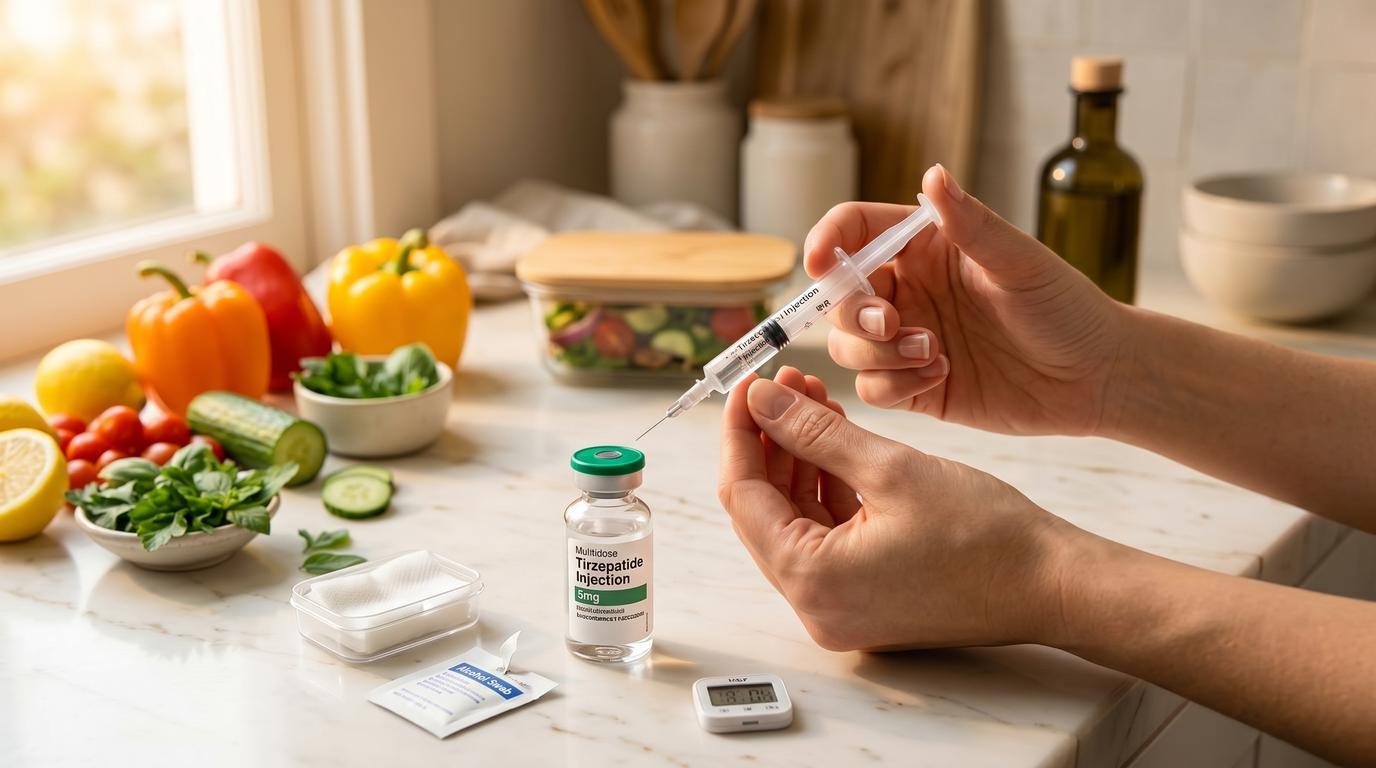
Formulation format. Compounded tirzepatide typically comes in multi-dose vials from which you draw your dose using an insulin syringe, rather than a single-use pen device.
Concentration. Compounded vials are prepared at a specific concentration, which your pharmacy will specify on the label. The concentration determines how many units you draw on the syringe to deliver a given milligram dose. Always confirm the concentration on your vial before drawing. The milligram dose stays consistent through titration; the volume in the syringe changes based on concentration.
Cost. Compounded tirzepatide is substantially less expensive than branded Mounjaro or Zepbound without insurance coverage, which is one reason many patients access treatment through licensed compounding pharmacies via telehealth platforms.
Regulatory status. The molecule is the same, but the formulation has not been independently reviewed for purity, potency, or sterility by the FDA. Choosing a licensed 503A compounding pharmacy that follows USP compounding standards is an important safeguard.
The titration schedule and dose levels are the same regardless of whether you are using a compounded or branded formulation. The clinical data from SURPASS and SURMOUNT trials was generated using the Eli Lilly formulation, and outcomes with compounded preparations may differ.
---
Missed Doses: What to Do
Tirzepatide is taken once weekly. Missing a single dose is not a clinical emergency, but the right response depends on timing.
If your next scheduled dose is more than 4 days away: Take the missed dose as soon as you remember, then continue your regular weekly schedule.
If your next scheduled dose is within 4 days: Skip the missed dose. Do not take two doses to make up for the missed one. Resume your regular schedule on your next scheduled injection day.
If you have missed two or more consecutive weeks: Contact your provider before resuming. After a gap of two or more weeks, some providers recommend restarting at a lower dose and re-titrating, since your tolerance to side effects will have diminished. Do not assume your previous dose is still appropriate to resume directly.
---
Not Everyone Reaches 15mg
The 15mg target in the clinical protocols represents the maximum approved dose, but it is not a requirement for meaningful results. Many people reach a lower maintenance dose and sustain significant weight loss there without needing to escalate further.
In the SURMOUNT-1 trial, the 5mg dose group still achieved a mean body weight reduction of 16.0% over 72 weeks. For perspective, that is substantially more than what many people achieve with lifestyle interventions alone.
Your maintenance dose is the highest dose at which you achieve meaningful benefit and acceptable tolerability. Some people reach that at 7.5mg or 10mg. Others require 15mg for sustained results. Neither is a failure. Both are appropriate outcomes of an individualized treatment process.
The right dose is the one that works for you, determined in partnership with your prescribing provider.
---
When to Talk to Your Provider
Several situations call for contacting your provider directly rather than managing them on your own:
- GI symptoms that are severe, persistent, or accompanied by dehydration
- Abdominal pain that is more than typical nausea, particularly if it radiates to the back (this warrants urgent evaluation)
- Significant weight loss that feels too rapid or is accompanied by weakness or fatigue out of proportion to the treatment
- Changes in vision, blood sugar patterns (relevant for people with diabetes), or heart rate
- Any new medication being added, since several drug classes interact with tirzepatide's effects on gastric emptying and may require dose adjustments
- Questions about whether to escalate, pause, or adjust your titration schedule
---
Summary: The Tirzepatide Titration Schedule at a Glance
- Start at 2.5mg for weeks 1 through 4. This is a tolerability introduction dose, not a therapeutic one.
- Escalate every four weeks through 5mg, 7.5mg, 10mg, and 12.5mg before reaching the 15mg maintenance target. The full escalation takes approximately 20 weeks.
- Stay longer at any dose if you are experiencing side effects. Four to eight additional weeks at a step is clinically appropriate and protects long-term adherence.
- Do not double up if you miss a dose. Skip it if your next dose is within 4 days, and contact your provider if you have missed more than two consecutive weeks.
- Not everyone reaches 15mg, and that is acceptable. Meaningful, sustained weight loss occurs across all dose levels studied in SURMOUNT-1.
- Compounded tirzepatide uses the same titration schedule as branded formulations, but concentration varies by vial. Always confirm before drawing your dose.
*This article is for educational purposes only and does not constitute medical advice. Compounded tirzepatide is not FDA-approved and is not equivalent to branded Mounjaro or Zepbound. Always follow your prescribing provider's specific dosing instructions. Individual results vary significantly.*
*All medical services, including prescribing and dose titration decisions, are provided by independently licensed healthcare providers. Prescriva LLC is a management services organization and does not practice medicine or make clinical decisions.*
*Clinical trial data cited in this article (SURPASS-1, SURMOUNT-1, SURMOUNT-2) was generated with the branded Eli Lilly tirzepatide formulation. Outcomes with compounded preparations may differ.*
---
References
- Rosenstock J, et al. Efficacy and safety of a novel dual GIP and GLP-1 receptor agonist tirzepatide in patients with type 2 diabetes (SURPASS-1). *Lancet.* 2021;398(10295):143-155. PMID: 34186022
- Frías JP, et al. Tirzepatide versus Semaglutide Once Weekly in Patients with Type 2 Diabetes (SURPASS-2). *N Engl J Med.* 2021;385(6):503-515. PMID: 34170647
- Jastreboff AM, et al. Tirzepatide Once Weekly for the Treatment of Obesity (SURMOUNT-1). *N Engl J Med.* 2022;387(3):205-216. PMID: 35658024
- Garvey WT, et al. Tirzepatide once weekly for the treatment of obesity in people with type 2 diabetes (SURMOUNT-2). *Lancet.* 2023;402(10402):613-626. PMID: 37385275
Stay informed
Weekly research updates and health guides. No spam.
Ready to get started?
Check if you qualify for a personalized treatment plan.
Check Your Eligibility →Continue reading

GLP-1 Medications After Bariatric Surgery: What the Research Shows About Weight Regain

Tirzepatide and Birth Control: What You Need to Know About Oral Contraceptives