Tirzepatide Blood Pressure and Cardiovascular Benefits
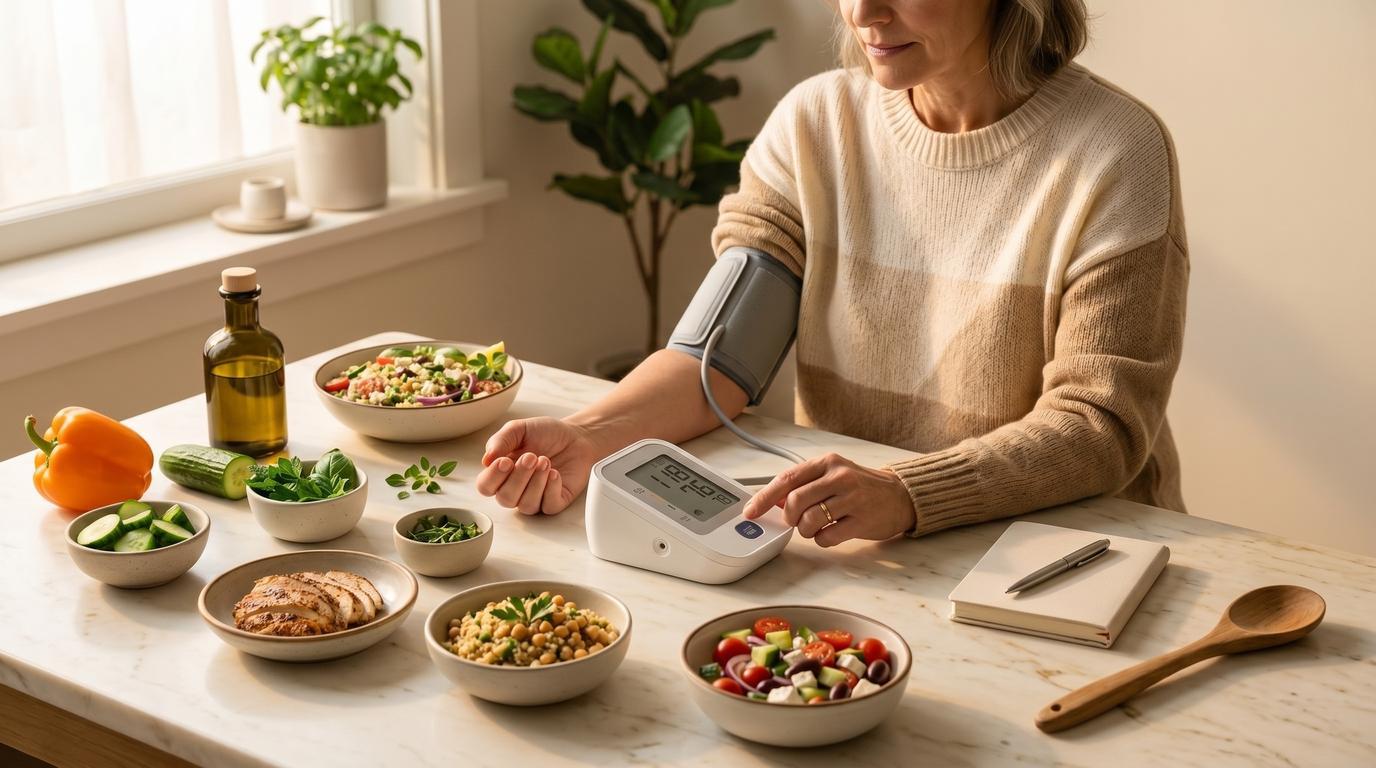
If you are managing weight with tirzepatide and your provider has also been watching your blood pressure, there is a story in the research worth knowing. These two conversations are not separate. They
In this article
If you are managing weight with tirzepatide and your provider has also been watching your blood pressure, there is a story in the research worth knowing. These two conversations are not separate. They are connected in ways the clinical data has been clarifying over the past few years.
Tirzepatide is a dual incretin agonist that activates both GLP-1 (glucagon-like peptide-1) and GIP (glucose-dependent insulinotropic polypeptide) receptors. This mechanism distinguishes it from older GLP-1 medications and may partly explain why its effects on blood pressure and cardiometabolic markers tend to be meaningful.
This article covers what the clinical trial evidence shows about tirzepatide and blood pressure, how its mechanisms compare to what we know from GLP-1 drugs, what the cardiovascular outcomes data looks like now that SURPASS-CVOT has reported, and what to practically expect.
*Compounded tirzepatide is not FDA-approved. This article is for educational and informational purposes only and does not constitute medical advice. Clinical trial data cited here refers to FDA-approved tirzepatide (Zepbound, Mounjaro) unless otherwise noted. Results vary. Consult your licensed healthcare provider before starting, stopping, or adjusting any medication.*
---
Blood Pressure Reductions in SURMOUNT-1
The SURMOUNT-1 trial (PMID [35658024](https://pubmed.ncbi.nlm.nih.gov/35658024/)) is the foundational dataset for tirzepatide in adults with obesity or overweight without type 2 diabetes. The 72-week phase 3 trial enrolled 2,539 adults and tested three doses: 5 mg, 10 mg, and 15 mg weekly against placebo.
Blood pressure reduction was a prespecified secondary endpoint, and the results were consistent across all three doses. Systolic blood pressure (the top number) dropped by approximately 6 to 8 mmHg across tirzepatide arms compared to approximately 2 to 3 mmHg with placebo. The reduction was dose-dependent: higher doses produced larger improvements. Diastolic blood pressure (the bottom number) also declined meaningfully.
To put that magnitude in context, a sustained 5 mmHg reduction in systolic blood pressure is associated with roughly a 10% reduction in stroke risk at the population level. For someone managing both obesity and hypertension, seeing that kind of sustained shift in blood pressure alongside significant weight loss represents a meaningful composite change.
The effect was not uniform across participants. People who came into the trial with higher baseline blood pressure tended to see larger absolute reductions. Those who were normotensive at baseline saw smaller changes, which is the expected physiological pattern.
---
Lipid Improvements: Triglycerides, HDL, and LDL
SURMOUNT-1 also documented changes across lipid panels as part of its cardiometabolic secondary endpoints. The findings are clinically relevant for anyone with elevated triglycerides, which is one of the most common metabolic abnormalities in obesity.
Triglycerides fell substantially, with reductions in the range of 24 to 28 percent across tirzepatide doses compared to placebo. For people entering with elevated triglycerides, this kind of shift brings real implications for cardiovascular risk.
HDL cholesterol (the "good" cholesterol) showed modest increases across the dose range, generally in the 7 to 9 percent range. This is clinically valuable because low HDL is independently associated with elevated cardiovascular risk.
The LDL picture (often called "bad" cholesterol) was more variable. Some participants saw modest increases in LDL during treatment, a pattern that has been observed with GLP-1 class medications. This is worth monitoring, particularly in people who are already managing LDL through diet or medication. Your provider can track this through routine bloodwork.
The overall lipid shift, lower triglycerides combined with modestly higher HDL, represents a net positive direction for cardiovascular risk factor modification.

---
Waist Circumference and Visceral Fat
Waist circumference reductions from SURMOUNT-1 ranged from approximately 14 to 19 centimeters across dose groups, compared to around 3 centimeters with placebo. These numbers matter because abdominal fat is not just a measurement. Visceral fat, the fat deposited around the internal organs, is metabolically active in ways that subcutaneous fat is not.
Excess visceral fat directly contributes to elevated blood pressure through several mechanisms: increased intra-abdominal pressure, activation of the renin-angiotensin-aldosterone system (which regulates fluid balance and blood pressure), increased sympathetic nervous system tone, and promotion of systemic inflammation that damages arterial walls over time.
When tirzepatide reduces waist circumference substantially, the cardiovascular implications run deeper than the number on a measuring tape. Many of the mechanisms driving elevated blood pressure in metabolically obese adults are directly related to visceral adiposity. Reducing it addresses the root driver, not just the symptom.
---
HbA1c and Insulin Resistance: SURMOUNT-2 Data
For people with type 2 diabetes, the cardiometabolic picture is somewhat different, and the SURMOUNT-2 trial (PMID [37385275](https://pubmed.ncbi.nlm.nih.gov/37385275/), Lancet 2023) provides the relevant data.
SURMOUNT-2 enrolled 938 adults with both obesity and type 2 diabetes, testing tirzepatide 10 mg and 15 mg against placebo over 72 weeks. Beyond weight loss of 12.8 percent (10 mg) and 14.7 percent (15 mg), the trial showed HbA1c reductions of approximately 2.1 to 2.4 percentage points. In practical terms, participants moved from the poorly controlled range into well-controlled or near-normal glycemic status.
This matters for cardiovascular health because uncontrolled blood glucose is itself a cardiovascular risk factor. Chronically elevated blood sugar damages the lining of blood vessels, promotes inflammation, and accelerates the development of atherosclerosis. HbA1c reductions of this magnitude, particularly in the context of simultaneous blood pressure improvements and weight loss, represent a meaningful aggregate shift in cardiovascular risk profile.
Insulin resistance, the underlying driver of type 2 diabetes and a major component of metabolic syndrome, also improves substantially on tirzepatide, consistent with the weight loss and glycemic data.
---
The Cardiovascular Outcomes Picture: SURPASS-CVOT
The most significant recent development for tirzepatide and cardiovascular outcomes is the SURPASS-CVOT trial, which reported results in the *New England Journal of Medicine* in December 2025 (PMID [41406444](https://pubmed.ncbi.nlm.nih.gov/41406444/)).
This was an active-comparator-controlled, double-blind noninferiority trial. Researchers enrolled 13,165 patients with type 2 diabetes and established atherosclerotic cardiovascular disease, then randomly assigned them to tirzepatide (up to 15 mg weekly) or dulaglutide (1.5 mg weekly). Dulaglutide is a GLP-1 receptor agonist that already has established cardiovascular benefit, making it a demanding comparator.
The primary endpoint was the composite of death from cardiovascular causes, myocardial infarction, or stroke. Results: a primary-endpoint event occurred in 12.2 percent of the tirzepatide group and 13.1 percent of the dulaglutide group. The hazard ratio was 0.92 (95.3% CI, 0.83 to 1.01). Tirzepatide met the prespecified noninferiority criterion (p = 0.003 for noninferiority). The test for superiority did not reach statistical significance (p = 0.09), though the directional signal favored tirzepatide.
What this means: tirzepatide is now demonstrated to be at least as cardioprotective as dulaglutide in a high-risk T2D population. Since dulaglutide itself provides meaningful cardiovascular protection, this is a clinically significant finding. It does not provide the same "standalone superiority vs. placebo" statement that semaglutide's SELECT trial delivered, but it establishes a meaningful cardiovascular floor for tirzepatide that was absent before this publication.
For comparison, the SURPASS-4 trial (PMID [34672967](https://pubmed.ncbi.nlm.nih.gov/34672967/), Lancet 2021) had already shown that tirzepatide performed comparably to insulin glargine on cardiovascular outcomes in T2D patients at high cardiovascular risk, while delivering substantially better glycemic control and weight loss. SURPASS-CVOT extends that picture with a head-to-head against a GLP-1 drug with proven heart protection.
---
Who Benefits Most
The cardiovascular and blood pressure benefits of tirzepatide are most pronounced in people who carry elevated baseline risk. The evidence is strongest for individuals with:
Hypertension alongside obesity. The combination of excess weight and elevated blood pressure creates a self-reinforcing cycle. Tirzepatide's simultaneous effects on weight and blood pressure mechanisms interrupt that cycle from multiple directions.
Metabolic syndrome. This is the cluster of conditions that includes elevated blood pressure, high triglycerides, low HDL, central obesity, and elevated fasting glucose. Tirzepatide's profile of effects maps onto essentially every component of this cluster.
Type 2 diabetes with cardiovascular risk factors. The SURMOUNT-2 and SURPASS-CVOT data are particularly relevant here. For people managing both diabetes and elevated cardiovascular risk, tirzepatide offers improvements in HbA1c, blood pressure, lipids, and body weight simultaneously.
Prediabetes. People with prediabetes and obesity who reduce weight substantially enough to normalize insulin sensitivity may reduce their long-term cardiovascular risk meaningfully, even before they develop a formal diabetes diagnosis.
---
Antihypertensive Medication Interactions
One practical aspect of tirzepatide's blood pressure effects deserves specific attention: as blood pressure improves during treatment, some people who are already on antihypertensive medications may need dose adjustments.
This is not a problem. It is a sign of the treatment working. However, managing those adjustments is a clinical decision that should be made explicitly with your prescribing provider, not handled independently.
The concern runs in both directions. If your blood pressure drops substantially on tirzepatide and your antihypertensive doses remain unchanged, you may experience symptoms of low blood pressure: lightheadedness, dizziness, or fatigue. This is most likely to appear early in treatment before stable weight loss is achieved, or during periods of rapid weight change.
If you are on antihypertensives and starting tirzepatide, tell your provider. Tracking blood pressure at home during the first several months is useful data for those conversations. Most providers will want to revisit your antihypertensive regimen once meaningful weight loss and blood pressure changes have been established.
---
Frequently Asked Questions
Does tirzepatide lower blood pressure?
Yes. Clinical trial data from SURMOUNT-1 showed systolic blood pressure reductions of approximately 6 to 8 mmHg compared to placebo, with effects that were dose-dependent. The mechanisms include weight loss, visceral fat reduction, and direct effects on vascular and renal function through GLP-1 and GIP receptor activation.
How does tirzepatide compare to semaglutide for blood pressure?
Both produce meaningful blood pressure reductions. Tirzepatide's dual mechanism (GLP-1 plus GIP) may produce modestly larger cardiometabolic effects, including on blood pressure and triglycerides, though direct head-to-head comparisons in cardiovascular outcomes trials have not been published. The SURMOUNT-1 data for tirzepatide and the STEP 1 data for semaglutide show similar magnitudes of systolic blood pressure reduction.
Does tirzepatide affect heart rate?
Modestly, yes. GLP-1 receptor agonists, including tirzepatide, typically increase resting heart rate by approximately 1 to 4 beats per minute. For most people, this is clinically insignificant given the overall cardiovascular benefit. People with pre-existing tachycardia or arrhythmias should discuss this with their provider before starting treatment.
Can I stop my blood pressure medication if I start tirzepatide?
Not without explicit guidance from your provider. Blood pressure medication adjustments may be appropriate as your pressure improves on tirzepatide, but this is a clinical decision, not something to self-manage. Stopping antihypertensives abruptly carries its own risks.
---
The Bottom Line
Tirzepatide's cardiometabolic profile is one of the most comprehensive among obesity medications. SURMOUNT-1 documented dose-dependent reductions in blood pressure, substantial triglyceride improvements, waist circumference reductions, and favorable shifts in HDL. SURMOUNT-2 extended those findings to the type 2 diabetes population, adding meaningful HbA1c reductions. And SURPASS-CVOT (December 2025) has now established that tirzepatide is at least as cardiovascularly protective as dulaglutide in high-risk patients with T2D and established cardiovascular disease.
For people who come to tirzepatide carrying elevated blood pressure, metabolic syndrome, or type 2 diabetes alongside obesity, the clinical data supports that the conversation with your provider includes more than just weight loss. The heart health angle is real.
---
Compounding Disclaimer: Compounded tirzepatide is not an FDA-approved medication. Compounded drugs are not reviewed by the FDA for safety, efficacy, or quality. Compounded tirzepatide is not the same as, equivalent to, or interchangeable with FDA-approved tirzepatide products (Mounjaro or Zepbound). Clinical research cited in this article refers to FDA-approved tirzepatide formulations and has not been replicated for compounded tirzepatide.
Results Disclaimer: Individual results vary. Cardiometabolic outcomes depend on adherence to your prescribed treatment plan, diet, exercise, starting health status, and other individual factors. Results are not guaranteed.
Provider Disclaimer: All medical services, including prescribing, are provided by independently licensed healthcare providers. Prescriva LLC is a management services organization and does not practice medicine or make clinical decisions.
Brand Disclaimer: Mounjaro and Zepbound are registered trademarks of Eli Lilly and Company. Prescriva is not affiliated with, endorsed by, or sponsored by Eli Lilly and Company.
*This article is for educational and informational purposes only and does not constitute medical advice. Always consult your licensed healthcare provider before starting or adjusting any medication.*
---
Related Resources:
- [Compounded Tirzepatide: A Complete Guide](/resources/compounded-tirzepatide-guide)
- [Tirzepatide Long-Term Effects: What the Research Shows](/resources/tirzepatide-long-term-effects)
- [Semaglutide and Blood Pressure: What GLP-1s Actually Do for Your Heart](/resources/semaglutide-blood-pressure-cardiovascular-benefits)
- [Tirzepatide Side Effects: What to Expect](/resources/tirzepatide-side-effects-what-to-expect)
Sources
- Jastreboff AM et al. Tirzepatide Once Weekly for the Treatment of Obesity (SURMOUNT-1). *New England Journal of Medicine.* 2022. PMID [35658024](https://pubmed.ncbi.nlm.nih.gov/35658024/)
- Garvey WT et al. Tirzepatide once weekly for the treatment of obesity in people with type 2 diabetes (SURMOUNT-2). *Lancet.* 2023. PMID [37385275](https://pubmed.ncbi.nlm.nih.gov/37385275/)
- Del Prato S et al. Tirzepatide versus insulin glargine in type 2 diabetes and increased cardiovascular risk (SURPASS-4). *Lancet.* 2021. PMID [34672967](https://pubmed.ncbi.nlm.nih.gov/34672967/)
- Nicholls SJ et al. Cardiovascular Outcomes with Tirzepatide versus Dulaglutide in Type 2 Diabetes (SURPASS-CVOT). *New England Journal of Medicine.* 2025. PMID [41406444](https://pubmed.ncbi.nlm.nih.gov/41406444/)
Stay informed
Weekly research updates and health guides. No spam.
References
- Jastreboff AM et al. Tirzepatide Once Weekly for the Treatment of Obesity (SURMOUNT-1). New England Journal of Medicine. (2022).
- Garvey WT et al. Tirzepatide once weekly for the treatment of obesity in people with type 2 diabetes (SURMOUNT-2). Lancet. (2023).
- Del Prato S et al. Tirzepatide versus insulin glargine in type 2 diabetes and increased cardiovascular risk (SURPASS-4). Lancet. (2021).
- Nicholls SJ et al. Cardiovascular Outcomes with Tirzepatide versus Dulaglutide in Type 2 Diabetes (SURPASS-CVOT). New England Journal of Medicine. (2025).
Ready to get started?
Check if you qualify for a personalized treatment plan.
Check Your Eligibility →Continue reading

GLP-1 Medications After Bariatric Surgery: What the Research Shows About Weight Regain

Tirzepatide and Birth Control: What You Need to Know About Oral Contraceptives