Semaglutide Shortage 2026: Current Availability and Compounded Access
The semaglutide shortage of 2026 has evolved significantly from the supply crisis of earlier years, shaped by FDA regulatory decisions, compounding pharmacy restrictions, and ongoing demand that conti

In this article
The semaglutide shortage of 2026 has evolved significantly from the supply crisis of earlier years, shaped by FDA regulatory decisions, compounding pharmacy restrictions, and ongoing demand that continues to outpace manufacturing capacity.
*This article is for informational purposes only. It is not medical advice. Speak with a licensed healthcare provider before starting or stopping any medication. Compounded medications are not FDA-approved.*
*Last updated: April 21, 2026. This page is updated frequently as the [compounded semaglutide regulations](/resources/compounded-semaglutide-regulations-2026) situation evolves.*
---
If you found this page because you are worried about losing access to your semaglutide, you are not alone. Millions of people have been navigating a confusing and fast-changing regulatory situation. The semaglutide shortage that lasted nearly three years has officially ended. What replaced it is a more complicated picture.
This article explains the shortage timeline, what changed when the FDA removed semaglutide from its shortage list, how compounding rules shifted under 503A and 503B pathways, and what your options look like as of 2026.
---
The Semaglutide Shortage: A Brief Timeline
Understanding where things stand today requires understanding how the shortage developed in the first place.
March and August 2022: The FDA added injectable semaglutide products to its drug shortage list, first for Wegovy (the weight loss formulation) and then for Ozempic (the diabetes formulation). Demand had exploded: semaglutide prescription fills increased by more than 440 percent between January 2021 and December 2023, according to IQVIA data cited in federal regulatory proceedings.
2022 to 2025: Novo Nordisk, the manufacturer of both Ozempic and Wegovy, struggled to meet demand. During this period, licensed compounding pharmacies were legally permitted to compound semaglutide under an FDA shortage exemption. That exemption created a legal pathway for a large [compounded semaglutide](/resources/compounded-semaglutide-what-it-is) market to develop, served primarily by telehealth platforms.
February 21, 2025: The FDA revised semaglutide's shortage status to "resolved" for all dosages, determining that supply had reached a level sufficient to meet present and projected demand. This was a significant regulatory event with immediate downstream consequences.
April 22 and May 22, 2025: The FDA set winddown deadlines for compounders. 503A pharmacies (state-licensed, patient-specific compounders) were given until April 22, 2025. 503B outsourcing facilities (larger-scale producers) were given until May 22, 2025.
February through mid-2025: Multiple compounding industry organizations and pharmacies filed legal challenges to the FDA's shortage resolution determination. These lawsuits argued, among other things, that supply remained insufficient for certain patient populations and dosage forms, and that the FDA's process was procedurally flawed.
---
What the FDA's Shortage Resolution Actually Meant
When the FDA removes a drug from its shortage list, it triggers a specific chain of regulatory consequences for compounding pharmacies.
Under Section 503A of the Federal Food, Drug, and Cosmetic Act, a licensed 503A compounding pharmacy can compound a drug that is "essentially a copy" of a commercially available product only when that drug appears on the FDA's shortage list. Once it comes off that list, the legal basis for routine 503A compounding of copies disappears for most situations.
Under Section 503B, outsourcing facilities operate under a different set of rules but similarly depend on shortage list status (or the FDA's bulk drug substances list) to compound certain products.
The shortage resolution did not make existing prescriptions invalid and did not immediately stop all compounding. But it fundamentally changed the legal framework under which compounders could operate.
---
503A vs. 503B: What the Difference Means for Patients
These two regulatory categories matter because they affect what kind of compounded semaglutide, if any, you can still legally access.
503A: Patient-Specific Compounding
A 503A pharmacy is a state-licensed compounding pharmacy that prepares medications pursuant to an individual patient prescription. These pharmacies are not allowed to produce medications in bulk for general distribution; they prepare each prescription individually.
To understand what compounded semaglutide is and how it differs from branded versions, see the guide: [What Is Compounded Semaglutide?](/articles/compounded-semaglutide-what-it-is)
Post-shortage, the 503A pathway is more constrained but not entirely closed. A 503A pharmacy can still compound semaglutide for an individual patient if:
- The patient has a documented allergy or sensitivity to an inactive ingredient in the brand-name product (Ozempic or Wegovy)
- The prescribing clinician determines that a specific dose or formulation not commercially available is medically necessary for that patient
The FDA also issued new guidance on April 1, 2026 clarifying that it does not intend to take enforcement action against a 503A compounder for compounding a drug that is essentially a copy of a commercially available drug if the compounder fills four or fewer prescriptions for that compounded drug product during a calendar month. This is a limited safe harbor, not a broad reopening of compounding access.
503B: Outsourcing Facilities
503B outsourcing facilities are larger-scale compounders that can produce medications without patient-specific prescriptions, typically supplying healthcare institutions. Semaglutide currently does not appear on the FDA's 503B bulk drug substances list, which is the primary legal basis for 503B facilities to compound drugs not on the shortage list.
Several 503B facilities obtained court injunctions following legal challenges to the FDA's shortage resolution, which allowed some to continue operating while litigation proceeded. That litigation is ongoing as of April 2026, and the legal landscape for 503B semaglutide compounding remains unsettled.
If you are currently accessing compounded semaglutide through a telehealth platform, the question worth asking is: which legal pathway is the pharmacy operating under, and what is the documented basis for your prescription?
---
Current Branded Semaglutide Availability in 2026

Here is the baseline: branded Wegovy and Ozempic are available in the United States as of 2026. Novo Nordisk has significantly expanded manufacturing capacity since the shortage period, and the FDA has confirmed that supply now meets demand.
That said, "available" does not mean "easily affordable" for most people.
Without insurance: Wegovy carries a list price of approximately $1,349 per month. Ozempic is typically $800 to $1,000 per month at list price. These are not prices most people can sustain long-term without coverage.
With insurance: Coverage for Wegovy specifically is inconsistent. Many commercial insurance plans cover Ozempic for type 2 diabetes management but exclude Wegovy for weight loss. This situation is changing slowly as large employers and health plans face mounting evidence of the cardiovascular and metabolic benefits of GLP-1 therapy, but meaningful insurance coverage for weight loss indications remains limited in 2026.
Novo Nordisk patient assistance: Novo Nordisk offers a savings card program for commercially insured patients that can reduce out-of-pocket costs significantly for those who qualify. For uninsured patients, the NovoCare assistance program provides access at lower cost for those below income thresholds.
Generic competition timeline: Generic semaglutide is not currently available in the U.S. Novo Nordisk's key patents extend into the late 2020s, and no generic equivalents have received FDA approval.
The practical effect for many patients: the branded product is physically available but financially out of reach without insurance or manufacturer assistance.
---
Where Compounded Semaglutide Access Stands in 2026
Compounded semaglutide has not disappeared entirely, but access is more limited and more nuanced than it was during the shortage period. Here is the honest picture.
What remains available:
503A pharmacies can still prepare patient-specific compounded semaglutide for patients with a documented clinical need, as described above. The allergy exception and the medical-necessity exception are real pathways, but they require legitimate clinical evaluation, not a checkbox intake form.
Some telehealth platforms continue to offer compounded semaglutide, often through pharmacies operating under one of these documented exceptions, or through facilities with active court injunctions. The legal defensibility of these arrangements varies, and it is worth asking detailed questions before enrolling.
What has changed:
The large-scale, generally available compounded semaglutide market that operated from roughly 2022 to 2025 has significantly contracted. Platforms that operated during the shortage on a straightforward shortage-exemption basis no longer have that legal footing for most patients.
What patients should know:
Compounded medications are not FDA-approved. This was true before the shortage and remains true now. The shortage gave compounders a specific legal basis to operate, and that specific basis has been removed. Any compounded semaglutide you access today is operating under a narrower set of legal justifications, and the quality standards vary by pharmacy.
If you are accessing compounded semaglutide through a telehealth platform, ask:
- Which compounding pharmacy is preparing your medication?
- Is that pharmacy 503A or 503B licensed?
- What is the documented clinical basis for your prescription?
- How is the pharmacy currently authorized to compound semaglutide given the shortage resolution?
---
What to Do If You Are Affected by These Changes
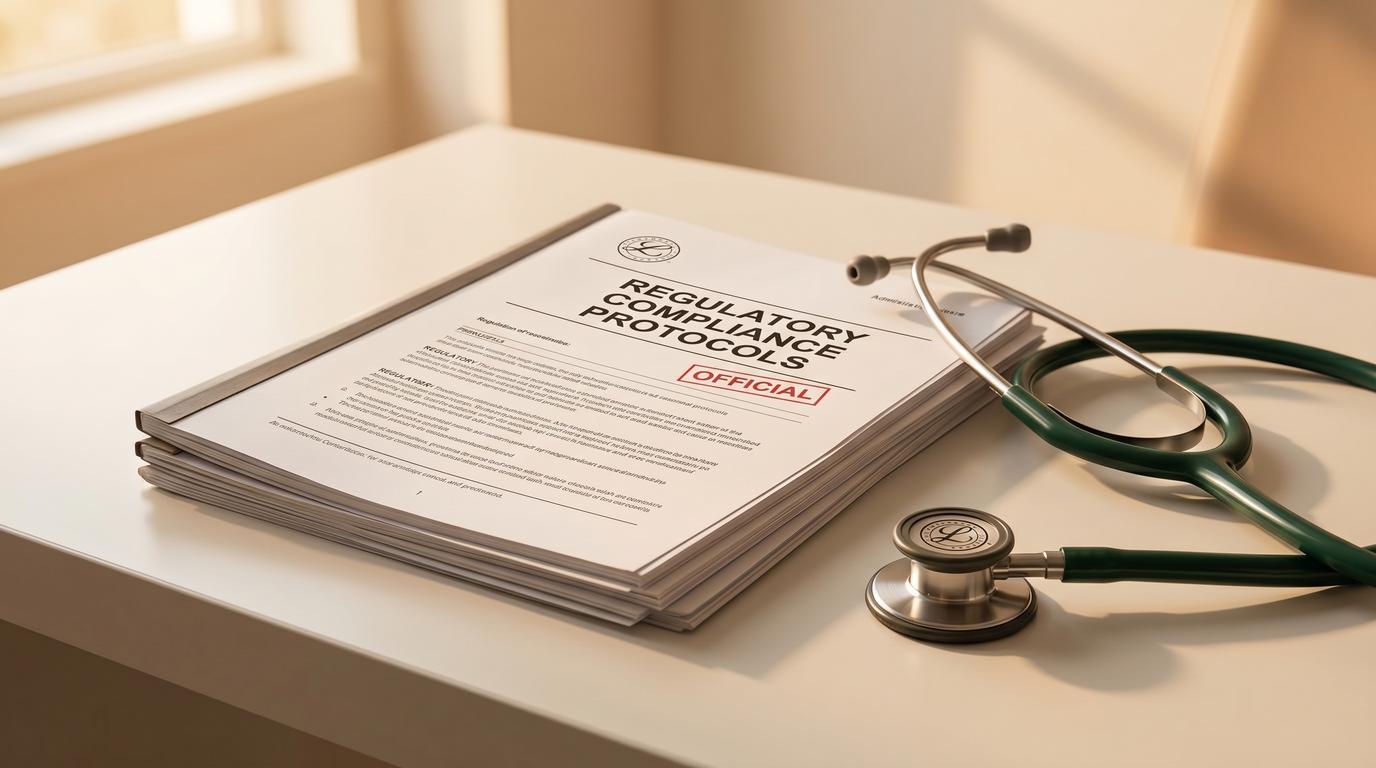
If you relied on compounded semaglutide during the shortage period and are now navigating what comes next, here are the practical options.
Option 1: Transition to branded Wegovy or Ozempic. If you have type 2 diabetes, Ozempic may be covered by your insurance. If your prescribing is for weight management, Wegovy is the approved option. Check your insurance formulary, ask your prescriber to submit a prior authorization, and look into Novo Nordisk's savings programs if you are commercially insured.
Option 2: Explore documented medical exceptions. If you have a genuine allergy or sensitivity to an inactive ingredient in the branded product, or a documented clinical need for a specific dose, talk to your healthcare provider about whether a 503A prescription exception applies to your situation.
Option 3: Discuss alternative GLP-1 medications with your provider. Tirzepatide, the active ingredient in Mounjaro and Zepbound, is another GLP-1 class medication your prescriber may consider. Note that tirzepatide is now in a similar regulatory position to semaglutide: the FDA resolved the tirzepatide shortage, the 503A compounding transition period ended February 18, 2025, and a federal court upheld that decision in May 2025. Compounded tirzepatide is subject to the same narrow patient-specific exceptions described above, not a broader access pathway. A licensed prescriber can help you evaluate whether branded tirzepatide (Mounjaro for type 2 diabetes, Zepbound for weight management) is appropriate for your situation.
Option 4: Work with a telehealth platform navigating the transition. Platforms that have prepared for this regulatory shift can help you understand your options clearly and connect you with the appropriate clinical pathway. If you have questions about whether you may qualify for compounded semaglutide through a documented exception, [Prescriva's eligibility evaluation](/start) connects you with a licensed provider who can assess your individual situation.
---
How Prescriva Approaches This
Prescriva is a telehealth platform and management services organization. We do not manufacture medications, dispense prescriptions, or make clinical decisions. All prescribing decisions are made independently by licensed healthcare providers, and all medications are dispensed by licensed, state-registered 503A compounding pharmacies.
Licensed compounding pharmacies prepare prescriptions on a patient-specific basis. Each prescription is supported by documented clinical rationale from a licensed provider. Pharmacies in Prescriva's affiliated network do not fill prescriptions without the appropriate clinical basis, because shortcuts expose patients to legal and quality risk.
Compounded semaglutide is not FDA-approved. That is stated plainly because you deserve a clear picture of what you are accessing. Licensed compounding pharmacies working with Prescriva's affiliated providers follow established quality standards, source pharmaceutical-grade active ingredients from FDA-registered manufacturers, and provide third-party testing documentation. Independently licensed healthcare providers connected through Prescriva's affiliated network are equipped to assess whether compounded semaglutide is clinically appropriate for your individual situation and whether a documented exception applies.
If you are unsure where you stand, that conversation starts with a clinical evaluation, not a purchase decision. [Check your eligibility here](/start).
*Compounded semaglutide is not FDA-approved. Results vary. This is not medical advice. Speak with a licensed healthcare provider about your specific situation.*
---
Frequently Asked Questions
Is semaglutide still in shortage? No. The FDA resolved the semaglutide shortage on February 21, 2025, and has maintained that position as of April 2026. Branded Wegovy and Ozempic are available from Novo Nordisk.
Is compounded semaglutide still legal? In limited circumstances, yes. 503A compounding for patient-specific needs (documented allergy to inactive ingredient, or medically necessary dose unavailable commercially) remains a legal pathway. Broad commercial compounding of semaglutide as a shortage-exemption product is no longer permissible.
Can I still get compounded semaglutide from a telehealth platform? Some platforms continue to offer it through specific legal pathways, including patient-specific exceptions or through facilities with court injunctions. The regulatory landscape is evolving, and availability varies by platform. Ask your platform to explain the legal basis for your specific prescription.
Why is compounded semaglutide cheaper than Wegovy? Compounding pharmacies do not manufacture at scale with the same regulatory burden as pharmaceutical manufacturers. Compounded medications also have not undergone FDA approval, which involves extensive clinical trial costs. The lower price reflects these differences; it does not mean the compounded product is equivalent to or safer than the branded version. For a deeper comparison, see [Compounded Semaglutide vs. Ozempic: What's Actually Different](/articles/compounded-semaglutide-vs-ozempic).
Will compounded semaglutide become available again if a new shortage occurs? If the FDA were to relist semaglutide as being in shortage, the shortage exemption for compounding would reactivate. The FDA shortage list is updated continuously based on supply and demand conditions.
This is not medical advice. Results vary. Speak with a licensed healthcare provider about your specific situation before making any changes to your treatment. Compounded medications are not FDA-approved.
---
Ready to Understand Your Options?
If you are trying to figure out where you stand after the shortage ended, a clinical evaluation is the right first step. Prescriva connects you with licensed healthcare providers who can assess your situation and explain exactly what pathways are available to you.
[Check your eligibility](/start) (no commitment required).
Or keep reading:
- [What Is Compounded Semaglutide? A Plain-Language Guide](/articles/compounded-semaglutide-what-it-is)
- [Is Compounded Semaglutide Safe?](/articles/is-compounded-semaglutide-safe)
- [How Much Does Compounded Semaglutide Cost in 2026?](/articles/compounded-semaglutide-cost-2026)
*Sources and further reading:*
- *[FDA Drug Shortage Database](https://www.accessdata.fda.gov/scripts/drugshortages/)*
- *[FDA Clarifies Policies for Pharmacy Compounders of GLP-1 Products, April 2026](https://www.foley.com/insights/publications/2026/04/fda-clarifies-policies-for-pharmacy-compounders-of-glp-1-products/)*
- *[FDA Statement on GLP-1 Supply Stabilization](https://www.fda.gov/drugs/drug-alerts-and-statements/fda-clarifies-policies-compounders-national-glp-1-supply-begins-stabilize)*
- *[Semaglutide Shortage Resolved, McDermott](https://www.mwe.com/insights/semaglutide-shortage-resolved/)*
Stay informed
Weekly research updates and health guides. No spam.
Ready to get started?
Check if you qualify for a personalized treatment plan.
Check Your Eligibility →Continue reading

GLP-1 Medications After Bariatric Surgery: What the Research Shows About Weight Regain

Tirzepatide and Birth Control: What You Need to Know About Oral Contraceptives