NAD+ Therapy for Longevity: What You Need to Know
NAD+ therapy has attracted growing scientific interest as researchers investigate its potential to support cellular energy metabolism, DNA repair, and the biological pathways associated with healthy a
In this article
NAD+ therapy has attracted growing scientific interest as researchers investigate its potential to support cellular energy metabolism, DNA repair, and the biological pathways associated with healthy aging.
*This article is for informational purposes only. It is not medical advice. Speak with a licensed healthcare provider before starting any new supplement or therapy.*
---
If you spend any time in [longevity research](/resources/science-of-longevity) circles (following researchers like David Sinclair, or tracking biohackers like Bryan Johnson) you have probably heard about NAD+ therapy. It is one of the most discussed molecules in aging science right now, and for good reason.
But the hype can get ahead of the evidence. This guide will walk you through what NAD+ is, what the research actually shows, where the science is still evolving, and what to realistically expect if you choose to pursue NAD+ therapy.
---
What Is NAD+?
NAD+ stands for nicotinamide adenine dinucleotide. That is a mouthful, but the concept is straightforward: NAD+ is a coenzyme (a helper molecule) found in every single cell in your body.
It does three jobs that are absolutely critical to your health:
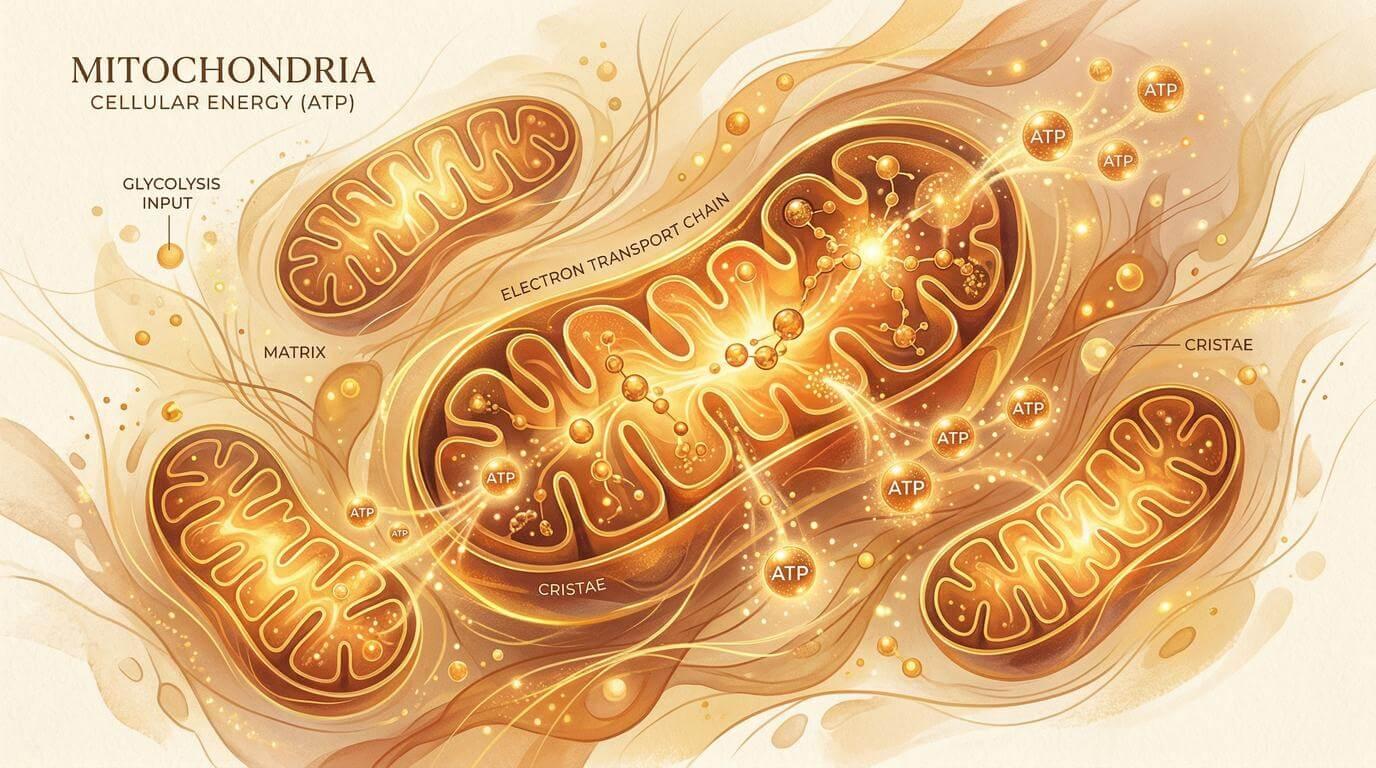
- Energy metabolism. NAD+ sits at the center of your cells' ability to convert food into energy (ATP). Without it, your mitochondria, the power plants of your cells, cannot function.
- DNA repair. When your DNA gets damaged (which happens constantly, from UV light, toxins, and normal metabolic processes), enzymes called PARPs use NAD+ to detect and repair that damage. Less NAD+ means slower, less effective repair.
- Sirtuin activation. Sirtuins are a family of proteins sometimes called "longevity genes." They regulate inflammation, stress responses, metabolism, and cellular survival, and they require NAD+ to work. No NAD+, no sirtuin activity.
---
Why NAD+ Levels Decline With Age
Here is the problem: NAD+ levels fall significantly as you get older.
Research suggests that NAD+ levels decline by roughly 40 to 60 percent between ages 40 and 60. This is not a minor fluctuation. It represents a substantial reduction in the raw material your cells need for energy production, DNA repair, and sirtuin activation.
Several things drive this decline:
- Increased PARP activity. As DNA damage accumulates with age, your body uses more and more NAD+ to power DNA repair, depleting the pool.
- CD38 enzyme upregulation. CD38 is an enzyme that breaks down NAD+. Its activity increases with age and inflammation, consuming NAD+ faster than the body can make it.
- Reduced biosynthesis. Your cells' ability to manufacture new NAD+ from dietary precursors also slows over time.
---
What Does NAD+ Therapy Do?
The goal of NAD+ therapy is straightforward: restore NAD+ levels to a range more typical of a younger biological state.
What happens when you do that? Here is where it is important to be honest about the distinction between what is theoretically plausible, what is shown in animal models, and what has been demonstrated in human clinical trials.
Theoretically well-supported:
- Restored NAD+ should improve mitochondrial energy production
- Improved PARP function should enhance DNA repair capacity
- Sirtuin reactivation may improve cellular stress response and metabolic regulation
- Extended lifespan in yeast, worms, and mice
- Improved muscle function, endurance, and cognitive performance in aging animal models
- Reversal of some age-related metabolic dysfunction
- Improved insulin sensitivity in specific populations
- Improved muscle function in older adults
- Evidence that oral NAD+ precursors can measurably raise blood NAD+ levels
---
Forms of NAD+ Therapy
There are several ways to raise NAD+ levels, and they differ meaningfully in bioavailability, convenience, and cost.
NMN (Nicotinamide Mononucleotide): Oral Supplement
NMN is a direct precursor to NAD+. Your body converts it into NAD+ relatively efficiently. NMN is available as an oral supplement and is FDA-cleared as a dietary supplement (meaning it is legal to sell, though not FDA-approved as a drug). The Yoshino et al. study in Cell Metabolism (PMID [34015253](https://pubmed.ncbi.nlm.nih.gov/34015253/)) found that NMN supplementation improved muscle insulin sensitivity in postmenopausal women with prediabetes, one of the stronger human trials to date.
NR (Nicotinamide Riboside): Oral Supplement
NR is another NAD+ precursor that takes a slightly different biochemical pathway. It is also available as an oral supplement and has a solid safety profile in human trials. Bioavailability is similar to NMN, though there is ongoing debate in the research community about which is more effective at raising intracellular NAD+.
NAD+ IV Infusions: Clinic-Based
IV infusions deliver NAD+ directly into your bloodstream, bypassing the digestive system entirely. This produces the highest acute spike in blood NAD+ levels. Many clinics offer NAD+ IV drips, typically running 2 to 4 hours per session. The tradeoff: cost (often $500-$1,000+ per session), time, and the requirement to attend a clinic in person.
NAD+ Subcutaneous Injections: Home-Based
Subcutaneous (under-the-skin) NAD+ injections offer a compelling middle ground. They bypass the digestive system like IV infusions, meaning better bioavailability than oral supplements, but can be self-administered at home, like insulin. This makes them far more convenient and significantly less expensive than clinic-based IV therapy.
Bioavailability Comparison
| Method | Bioavailability | Convenience | Cost Range |
|---|---|---|---|
| Oral NMN/NR | Moderate | High | $40-$100/mo |
| Subcutaneous injection | High | High (at-home) | Varies by provider |
| IV infusion | Highest | Low (clinic visit) | $500-$1,000/session |
What the Research Shows
Sirtuins and Longevity
The foundational science connecting NAD+ to longevity runs through sirtuins. Imai and Guarente published a landmark review in Cell in 2014 (PMID [25303521](https://pubmed.ncbi.nlm.nih.gov/25303521/)) establishing the link between NAD+, sirtuin activity, and aging biology. SIRT1, one of seven human sirtuins, regulates metabolism, stress resistance, and inflammation. Its activation requires NAD+, and its activity declines as NAD+ levels fall with age. Restoring NAD+ is one of the most direct ways to reactivate sirtuin signaling.
Therapeutic Potential: A Rigorous Review
Rajman, Chwalek, and Sinclair published a comprehensive review in Cell Metabolism in 2018 (PMID [29514064](https://pubmed.ncbi.nlm.nih.gov/29514064/)) examining the full body of NAD+ research across aging, metabolic disease, neurodegenerative conditions, and heart disease. Their conclusion: the therapeutic potential of NAD+ boosting strategies is substantial, but most strong evidence remains preclinical. They identified NAD+ precursor supplementation as safe and effective at raising NAD+ levels, with promising signals in multiple disease domains, while calling for larger, longer human trials.
NAD+ and Metabolic Health
The most robust human data to date comes from metabolic research. The Yoshino et al. trial (PMID [34015253](https://pubmed.ncbi.nlm.nih.gov/34015253/)) gave 25 postmenopausal women with prediabetes either NMN or placebo for 10 weeks. The NMN group showed significantly improved muscle insulin sensitivity, a finding with real implications for metabolic aging and type 2 diabetes prevention. This is the kind of concrete, mechanism-driven human data the field has needed.
NAD+ and Muscle Aging
Skeletal muscle is one of the tissues most affected by NAD+ decline. Preclinical research consistently shows that restoring NAD+ improves muscle stem cell function, mitochondrial efficiency, and endurance in aging animal models. Human data in this area is still emerging, but the mechanistic rationale is strong. This is why NAD+ therapy is attracting attention from researchers focused on sarcopenia (age-related muscle loss).
---
Who Is a Good Candidate for NAD+ Therapy?
NAD+ therapy is not for everyone, and it is not a substitute for foundational health habits. That said, the people most likely to benefit are those who:
- Are over 40, when NAD+ decline becomes more pronounced
- Are interested in longevity optimization rather than treating a specific disease
- Already have good fundamentals in place (sleep, exercise, nutrition) and want to layer in targeted interventions
- Have metabolic risk factors (prediabetes, insulin resistance) where the human data is most directly relevant
- Are working with a healthcare provider who understands the current evidence landscape
---
NAD+ Therapy Cost: What to Expect
Costs vary significantly by delivery method:
- Oral NMN or NR supplements: $40-$100 per month. Widely available, no prescription required, but lower bioavailability.
- NAD+ IV infusions: $500-$1,000 or more per session, typically recommended as a series. High bioavailability, but expensive and time-intensive.
- Subcutaneous injections (clinic or telehealth): Pricing varies widely. This approach offers strong bioavailability at a fraction of IV costs.
Frequently Asked Questions
What does NAD+ therapy actually do? NAD+ therapy aims to restore levels of a coenzyme called nicotinamide adenine dinucleotide that declines significantly with age. NAD+ is essential for cellular energy production, DNA repair, and activation of proteins called sirtuins that regulate aging-related processes. By raising NAD+ levels, the goal is to support these functions more effectively than an aging body can on its own.
Is there human research supporting NAD+ therapy? Yes, though it is important to be clear about what the human data shows. Well-designed human trials demonstrate that oral NMN supplementation raises blood NAD+ levels and improves metabolic markers like insulin sensitivity (Yoshino et al., 2021, PMID [34015253](https://pubmed.ncbi.nlm.nih.gov/34015253/)). Comprehensive reviews of the preclinical literature show strong signals across multiple aging-related conditions (Rajman et al., 2018, PMID [29514064](https://pubmed.ncbi.nlm.nih.gov/29514064/)). What does not yet exist is a large, long-term human clinical trial showing that NAD+ therapy extends lifespan or prevents specific age-related diseases. That research is ongoing.
How is NAD+ therapy administered? There are four main methods: oral supplements (NMN or NR capsules), IV infusions at a clinic, subcutaneous injections at home, and topical or nasal formulations (less studied). Oral supplements are most convenient but have lower bioavailability. IV infusions provide the highest acute NAD+ spike but require clinic visits. Subcutaneous injections offer a practical middle ground: better bioavailability than oral, at-home convenience, and significantly lower cost than IV therapy.
Is NAD+ therapy safe? Oral NMN and NR supplements have good safety profiles in human trials conducted to date, with no serious adverse events reported at typical doses. IV NAD+ can cause side effects during infusion including nausea, chest tightness, and flushing, which is why it should be administered under medical supervision. Discuss NAD+ supplementation with your healthcare provider before starting, particularly if you have existing health conditions or take medications.
Is NAD+ therapy worth it? That depends on your goals and your comfort with early-stage evidence. If you are looking for therapies with decades of large human trial data, NAD+ is not there yet. If you are a longevity-oriented adult who follows the research, understands that the animal data is strong and the human data is promising, and wants to get ahead of the evidence curve, NAD+ therapy is one of the more scientifically grounded options available. The key is working with a provider who is honest about what is known and what is still uncertain.
---
Disclaimer
*This article is for educational and research purposes only. NAD+ supplementation and therapy are not FDA-approved for longevity, anti-aging, or the treatment of any disease. Prescriva does not sell or prescribe NAD+ therapy. The research discussed is based on published scientific studies and does not constitute medical advice or a recommendation for use.*
*Do not attempt to self-administer any therapy without consulting a licensed healthcare provider. Always seek the guidance of a qualified healthcare professional before making changes to your health regimen.*
*Nothing in this article should be interpreted as a diagnosis, treatment recommendation, or medical advice. Individual responses to any intervention vary significantly.*
---
Sources:
- Yoshino M, et al. "Nicotinamide mononucleotide increases muscle insulin sensitivity in prediabetic women." *Cell Metabolism.* 2021. PMID: [34015253](https://pubmed.ncbi.nlm.nih.gov/34015253/)
- Imai SI, Guarente L. "NAD+ and sirtuins in aging and disease." *Cell.* 2014. PMID: [25303521](https://pubmed.ncbi.nlm.nih.gov/25303521/)
- Rajman L, Chwalek K, Sinclair DA. "Therapeutic potential of NAD-boosting molecules: the in vivo evidence." *Cell Metabolism.* 2018. PMID: [29514064](https://pubmed.ncbi.nlm.nih.gov/29514064/)
Stay informed
Weekly research updates and health guides. No spam.
Ready to get started?
Check if you qualify for a personalized treatment plan.
Check Your Eligibility →