Metformin for Anti-Aging: What the Research Actually Says
Metformin has been prescribed for type 2 diabetes for decades. In the United States alone, over 90 million prescriptions are filled annually, making it one of the most widely used medications on earth

In this article
Metformin has been prescribed for type 2 diabetes for decades. In the United States alone, over 90 million prescriptions are filled annually, making it one of the most widely used medications on earth. It is inexpensive, generally well-tolerated, and has a safety record stretching back more than 60 years.
In recent years, something unexpected has happened. Researchers studying diabetic patients on metformin noticed that some were living longer than non-diabetic controls who were not taking the drug. That observation set off a line of scientific inquiry that now involves some of the most prominent aging researchers in the world, a federally supported clinical trial, and a growing body of preclinical evidence suggesting metformin may do something far beyond controlling blood sugar.
This article reviews what the research actually shows, how metformin's biology connects to aging, and where the evidence stands today.
*This article is for educational purposes only. Metformin is an FDA-approved prescription medication for type 2 diabetes. Its use for [longevity](/resources/science-of-longevity) or anti-aging in non-diabetic individuals is off-label and not standard of care. Prescriva does not prescribe metformin for anti-aging purposes. Consult your licensed healthcare provider before considering any medication.*
---
What Is Metformin?
Metformin is a biguanide compound derived from the French lilac plant (*Galega officinalis*). The plant's folk medical use for lowering blood sugar dates back centuries in Europe; the active compound was isolated in the early 20th century and developed into the medication we now know.
The FDA approved metformin for type 2 diabetes in 1994, though it had been used in Europe since the 1950s. It works primarily by reducing glucose production in the liver and improving insulin sensitivity in tissues. Unlike some other diabetes medications, it does not cause hypoglycemia (dangerous low blood sugar) in people without diabetes and is not associated with weight gain.
Generic metformin is inexpensive. Monthly costs are typically under ten dollars at standard pharmacies. That accessibility has made it one of the most-studied drugs in the world, which in turn has generated an unusually rich data set about its effects on health outcomes beyond glycemic control.
---
The Biology: Why Metformin Might Affect Aging
The longevity research community's interest in metformin is not arbitrary. Its primary mechanism of action touches biological pathways that are deeply intertwined with how cells age.
AMPK Activation
Metformin's best-documented molecular effect is the activation of AMPK, short for AMP-activated protein kinase. AMPK is the cell's primary energy sensor. When cellular energy is low, such as during fasting or exercise, AMPK activates and triggers a cascade of responses: increased fat burning, improved insulin sensitivity, and the downregulation of energy-expensive processes like cell growth and protein synthesis.
In the context of aging, AMPK activation has several relevant downstream effects. It inhibits mTOR, the same pathway that rapamycin targets. It reduces oxidative stress by lowering the production of reactive oxygen species. It promotes autophagy, the cellular process that clears out damaged proteins and organelles. Researchers studying these pathways have repeatedly found that interventions mimicking nutrient restriction, whether caloric restriction itself or pharmacological AMPK activators like metformin, tend to improve healthspan markers across multiple organisms.
Mitochondrial Effects
Metformin inhibits Complex I of the mitochondrial electron transport chain, the machinery cells use to produce energy from oxygen and nutrients. At the doses used clinically, this produces a mild, transient energy deficit that triggers AMPK activation. At higher doses, the mitochondrial effects can become harmful, which is why careful dosing matters.
This mechanism is relevant to aging because mitochondrial dysfunction is one of the core hallmarks of cellular aging identified in the scientific literature. Cells in aged tissues show accumulated mitochondrial damage and reduced energy production efficiency. Metformin's effects on mitochondrial signaling intersect with this process in ways that researchers are still working to understand fully.
Anti-Inflammatory Effects
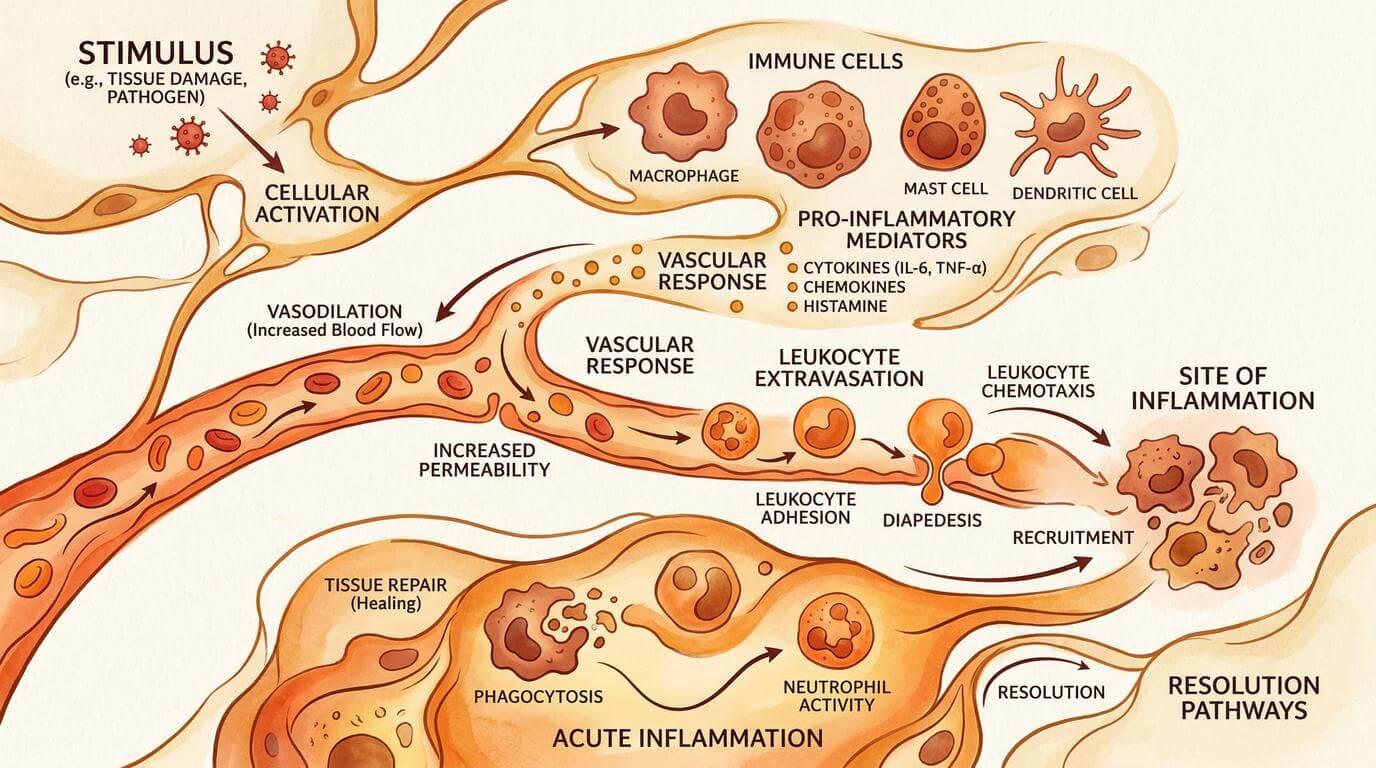
Aging is associated with a state of chronic low-grade inflammation that researchers have termed "inflammaging." This persistent inflammatory signaling contributes to the progression of multiple age-related conditions, including cardiovascular disease, neurodegeneration, and metabolic decline.
Metformin has documented anti-inflammatory properties. It reduces levels of inflammatory cytokines and has been shown to modulate NF-kB, a transcription factor that regulates many inflammatory genes. Whether this effect is independent of its metabolic effects or downstream of them remains an area of active study.
---
What the Animal Research Shows
Evidence for metformin's effects on lifespan in animal models is more mixed than the headlines sometimes suggest, and worth examining carefully.
In *C. elegans* (nematodes), metformin has consistently extended lifespan. These organisms are transparent, genetically tractable, and have a lifespan of about three weeks, making them useful for initial longevity studies. The findings in worms established that metformin could affect aging biology in principle, but worms are very far from humans.
Results in mice have been more variable. Some studies found modest lifespan extension in specific genetic backgrounds; others found little effect or even negative effects at higher doses. A study by the National Institute on Aging's Interventions Testing Program found no significant lifespan extension in genetically heterogeneous mice treated with metformin. The mouse evidence for metformin is, bluntly, weaker than it is for rapamycin in the same experimental framework.
The most compelling recent animal data comes from non-human primates.
The 2024 Monkey Study
Research published in *Cell* (Yang et al., 2024, PMID [39270656](https://pubmed.ncbi.nlm.nih.gov/39270656/)) examined the effects of metformin in male cynomolgus monkeys aged 13 to 16 years, roughly equivalent to 40 to 50 years in humans. Animals were treated with 20 mg/kg daily for approximately 3.3 years, equivalent to roughly ten human years.
The findings attracted significant attention. Metformin treatment decreased protein age by an average of 6.41 years. Effects on DNA methylation clocks varied by tissue: the frontal lobe of the brain showed a 6.1-year reduction in methylation age, the lung showed a 5.11-year reduction, and the kidney cortex showed a 4.9-year reduction. Treated animals also showed better preservation of organ function and cognitive performance markers compared to controls.
This is the strongest non-human primate evidence to date that metformin measurably affects biological aging markers. Monkeys share far more biological machinery with humans than mice do, which makes this study more relevant to the human question.
That said, aging clock deceleration in a surrogate marker is not the same as demonstrating that human lifespan extends. That question still requires human trial data.
---

---
What the Human Evidence Shows
The Bannister Observation
The study that put metformin on the longevity map was published in 2014 by Bannister and colleagues in *Diabetes, Obesity and Metabolism* (PMID [25041462](https://pubmed.ncbi.nlm.nih.gov/25041462/)). Analyzing over 78,000 type 2 diabetic patients initiating metformin monotherapy versus non-diabetic controls, the researchers found that the metformin group had lower all-cause mortality than people without diabetes at all.
This finding was striking because it inverted expectations: diabetes is a disease that generally shortens life. Yet these diabetic patients on metformin appeared to outlive the comparison group.
The study's limitations are important. Diabetic patients initiating metformin monotherapy tend to be healthier diabetics: those who can manage with one drug rather than multiple are typically earlier in disease progression. Non-diabetic controls may have included undiagnosed diabetics or individuals with less health-conscious behavior. The comparison group was not ideal. These confounders likely explain part of the observed benefit.
Subsequent meta-analyses have found that metformin use in diabetics is associated with reduced cardiovascular events, lower cancer incidence in some tumor types, and reduced all-cause mortality compared to other diabetes medications. These findings are suggestive but do not establish whether the benefit comes from aging biology or from better diabetes management.
Recent Clinical Trial Evidence: Complexity and Caution
Not all recent clinical data has been encouraging. A 2024 trial (MET-PREVENT) examining metformin in older adults for 4 months found no meaningful improvement in grip strength, walking speed, physical performance, muscle mass, or quality of life measures.
Separately, a body of research has raised concern about metformin blunting exercise adaptations. Several studies found that metformin reduced the gains in muscle mass and cardiorespiratory fitness that typically result from exercise training in older adults. This potential trade-off is clinically important: exercise is the most evidence-supported intervention for healthy aging. A drug that impairs exercise response could theoretically offset some of its own benefits.
A 2025 review in *Ageing Research Reviews* described what it called "emerging uncertainty" about metformin's anti-aging potential, noting that the disconnect between strong mechanistic evidence and modest or negative clinical trial results warrants more cautious interpretation.
The TAME Trial
The most consequential pending piece of evidence is the TAME trial, short for Targeting Aging with Metformin. Designed by Dr. Nir Barzilai at the Albert Einstein College of Medicine and supported by the American Federation for Aging Research, TAME is a landmark attempt to prove that aging itself can be treated as a medical target.
The trial plans to enroll 3,000 adults ages 65 to 79 across approximately 14 U.S. centers. Participants will receive metformin at 1,500 mg per day or placebo for four years. The primary endpoint is not a single disease but a composite measure: time to a new occurrence of cardiovascular events, cancer, dementia, or death. The logic is that if metformin slows aging, it should delay the onset of all these conditions together.
As of early 2026, TAME has faced significant funding delays. The trial is now being managed within ARPA-H, the Advanced Research Projects Agency for Health. Full enrollment and results are still pending. If successful, TAME would provide the first randomized controlled evidence that a pharmacological intervention can delay human aging as a biological process.
---
The Safety Profile
Metformin's safety record is one of its major advantages as a longevity candidate. Compared to most drugs being explored in aging research, its toxicity profile is exceptionally well characterized.
Common side effects are primarily gastrointestinal: nausea, diarrhea, abdominal discomfort, and a metallic taste. These are most pronounced when starting or increasing the dose and often diminish over time. Extended-release formulations reduce gastrointestinal side effects significantly for many people.
Vitamin B12 deficiency is a clinically important concern with long-term use. Metformin reduces B12 absorption in a meaningful percentage of patients. Regular monitoring and supplementation are recommended for long-term users.
Lactic acidosis is a rare but serious complication. The risk is primarily in people with significant kidney impairment, liver disease, heart failure, or those undergoing procedures with contrast dye. In people with normal kidney function, the absolute risk is very low.
Drug interactions and contraindications exist. Metformin is generally avoided in people with eGFR below 30 (kidney disease) and requires dose adjustment between eGFR 30 to 45.
The adverse effect profile changes when considering use in non-diabetics for anti-aging purposes. Long-term safety data in healthy individuals without diabetes taking metformin chronically for longevity purposes does not yet exist at the scale needed to draw firm conclusions.
---
Who Is Studying This
The credibility of metformin longevity research is strengthened by the institutions involved:
- The American Federation for Aging Research (AFAR) has been the primary funder of TAME
- The National Institute on Aging has supported related mechanistic studies
- ARPA-H has taken on the TAME trial under its mandate to fund high-impact health research
- Academic groups at Einstein College of Medicine, the Buck Institute, and multiple international institutions are contributing research
---
What This Means for You Today
Metformin is cheap, widely available by prescription, and has a favorable safety profile that is well understood from decades of use in diabetics. The mechanistic case for anti-aging effects is coherent and biologically grounded. The 2024 monkey data is genuinely interesting.
At the same time, the human evidence for longevity benefits in non-diabetics is currently circumstantial and incomplete. The observational data has limitations. Short-term clinical trials have not shown the functional benefits one might expect. The possibility that metformin blunts exercise adaptations is a real concern given how central physical activity is to healthy aging.
Some clinicians are prescribing metformin off-label to motivated individuals who understand the experimental nature of the intervention. This practice is not endorsed by medical specialty societies and is not part of any established clinical guideline.
If you are interested in this area, the most valuable step is talking with a clinician who understands both the evidence and the limitations, and who can evaluate whether any intervention makes sense for your individual health situation.
---
Frequently Asked Questions
Is metformin FDA-approved for anti-aging? No. Metformin is FDA-approved only for type 2 diabetes management. Use for anti-aging or longevity in non-diabetics is off-label and experimental.
Can people without diabetes take metformin? Prescriptions for metformin in non-diabetics exist as off-label use. Some clinicians prescribe it for longevity purposes to fully informed patients. There is no established clinical guideline supporting this practice.
How does metformin differ from rapamycin for longevity? Both affect overlapping aging pathways, but through different mechanisms. Rapamycin directly inhibits mTOR; metformin activates AMPK, which secondarily inhibits mTOR. Rapamycin has stronger lifespan extension data in animal models. Metformin has a more established human safety record and is far cheaper. They are not interchangeable and carry different risk profiles.
Does metformin interfere with exercise benefits? Several clinical studies have found that metformin may reduce muscle and fitness gains from exercise in older adults. This is an active research question. The practical significance for individuals is unclear, and not all studies agree. It is an important consideration when weighing the decision to use metformin off-label.
What is the TAME trial and when will results be available? TAME (Targeting Aging with Metformin) is a landmark clinical trial enrolling 3,000 adults ages 65 to 79 to test whether metformin delays the onset of multiple age-related diseases simultaneously. As of early 2026, the trial is managed within ARPA-H and facing funding and enrollment delays. Results are not yet available.
Does metformin affect B12 levels? Yes. Long-term metformin use reduces vitamin B12 absorption in a clinically meaningful proportion of users. Anyone taking metformin long-term should have B12 levels monitored regularly and consider supplementation.
---
The Bottom Line
Metformin sits in an interesting position in longevity medicine: the mechanistic case is stronger than almost any other affordable, widely available compound, yet the clinical evidence for human longevity benefits outside of diabetes management remains incomplete.
The 2024 primate data is the most encouraging recent development. The TAME trial, if funded and completed, could resolve the central question. Until that data exists, confidence in recommending metformin for anti-aging purposes specifically requires more evidence than is currently available.
The research is serious, the investigators are credible, and the mechanism is biologically coherent. That is worth knowing. Whether it translates into personal action is a conversation for you and your healthcare provider.
*This article is for educational and research purposes only. Metformin is FDA-approved as a treatment for type 2 diabetes. Its use for longevity is off-label and experimental. Prescriva does not prescribe metformin for anti-aging purposes. Do not start or stop any prescription medication without clinician oversight.*
*This does not constitute medical advice. Consult your licensed healthcare provider before considering any treatment. Individual responses to any intervention vary significantly.*
---
Sources
- Bannister CA, et al. Can people with type 2 diabetes live longer than those without? A comparison of mortality in people initiated with metformin or sulphonylurea monotherapy and matched, non-diabetic controls. *Diabetes Obes Metab.* 2014. [PMID: 25041462](https://pubmed.ncbi.nlm.nih.gov/25041462/)
- Yang J, et al. Metformin decelerates aging clock in male monkeys. *Cell.* 2024. [PMID: 39270656](https://pubmed.ncbi.nlm.nih.gov/39270656/)
- Barzilai N, et al. Metformin as a Tool to Target Aging. *Cell Metab.* 2016. [PMID: 27304500](https://pubmed.ncbi.nlm.nih.gov/27304500/)
- Kulkarni AS, et al. Metformin regulates metabolic and nonmetabolic pathways in skeletal muscle and subcutaneous adipose tissues of older adults. *Aging Cell.* 2018. [PMID: 30079641](https://pubmed.ncbi.nlm.nih.gov/30079641/)
- Walton RG, et al. Metformin blunts muscle hypertrophy in response to progressive resistance exercise training in older adults. *Aging Cell.* 2019. [PMID: 31278837](https://pubmed.ncbi.nlm.nih.gov/31278837/)
- Onken B, Driscoll M. Metformin induces a dietary restriction-like state and the oxidative stress response to extend *C. elegans* healthspan via AMPK, LKB1, and SKN-1. *PLoS ONE.* 2010. [PMID: 20090912](https://pubmed.ncbi.nlm.nih.gov/20090912/)
Interested in Longevity Medicine?
The science of aging is moving quickly. Prescriva's platform connects you with licensed healthcare providers who stay current with the evidence and can discuss what preventive health and longevity-focused approaches are appropriate for your individual situation.
*This is not medical advice. Consult your healthcare provider. Results vary.*
[Learn More About Prescriva](#)
Stay informed
Weekly research updates and health guides. No spam.
References
- Bannister CA, et al. Can people with type 2 diabetes live longer than those without? A comparison of mortality in people initiated with metformin or sulphonylurea monotherapy and matched, non-diabetic controls. Diabetes Obes Metab. (2014).
- Yang J, et al. Metformin decelerates aging clock in male monkeys. Cell. (2024).
- Barzilai N, et al. Metformin as a Tool to Target Aging. Cell Metab. (2016).
- Kulkarni AS, et al. Metformin regulates metabolic and nonmetabolic pathways in skeletal muscle and subcutaneous adipose tissues of older adults. Aging Cell. (2018).
- Walton RG, et al. Metformin blunts muscle hypertrophy in response to progressive resistance exercise training in older adults. Aging Cell. (2019).
- Onken B, Driscoll M. Metformin induces a dietary restriction-like state and the oxidative stress response to extend *C. elegans* healthspan via AMPK, LKB1, and SKN-1. PLoS ONE. (2010).
Ready to get started?
Check if you qualify for a personalized treatment plan.
Check Your Eligibility →