NAD+ and Cellular Aging: What the Research Shows
NAD+ (nicotinamide adenine dinucleotide) is one of the most studied molecules in aging research. Present in every living cell, it is essential for energy metabolism, DNA repair, and the regulation of
In this article
NAD+ (nicotinamide adenine dinucleotide) is one of the most studied molecules in aging research. Present in every living cell, it is essential for energy metabolism, DNA repair, and the regulation of [longevity](/resources/science-of-longevity)-associated enzymes called sirtuins. The problem: NAD+ levels decline substantially with age.
Why NAD+ Matters
NAD+ serves as a coenzyme in hundreds of metabolic reactions. Its two most critical roles in the context of aging are:

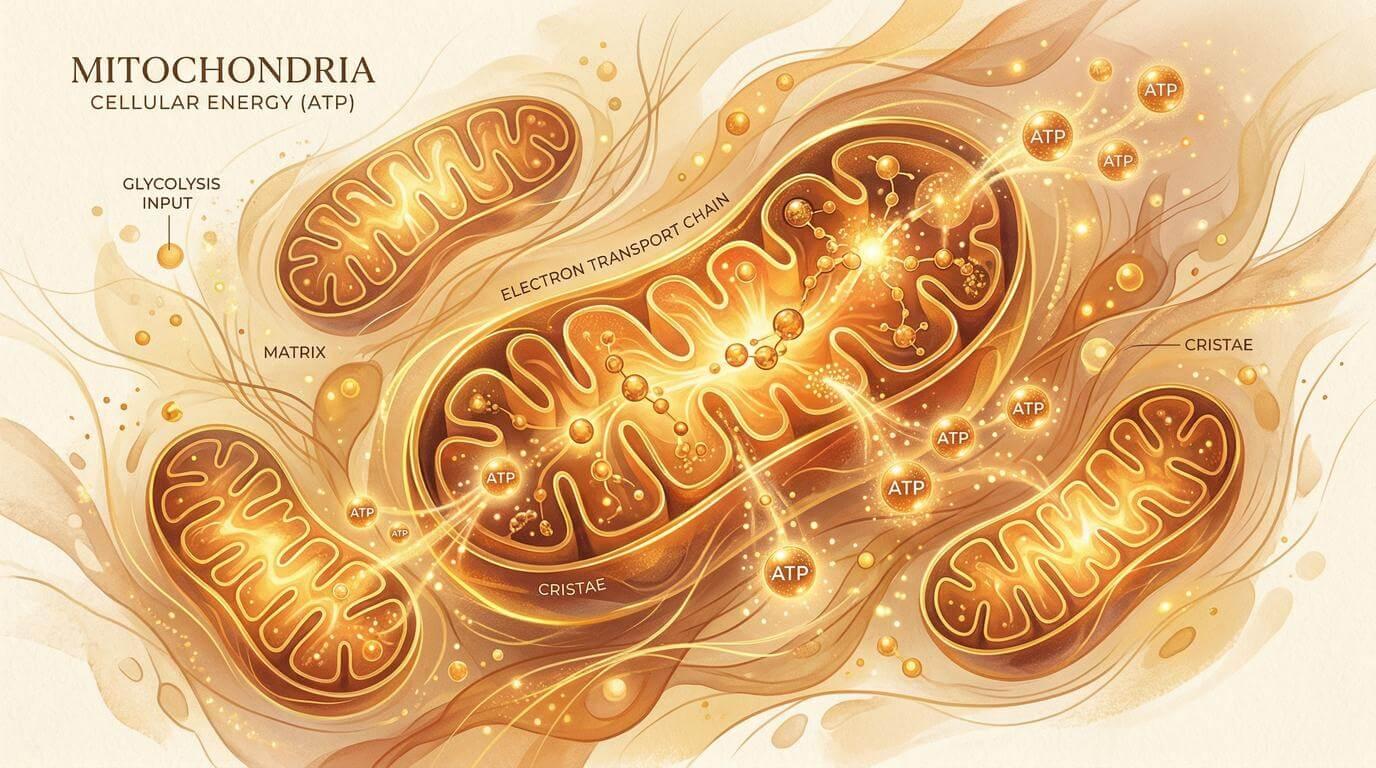
Energy Production: NAD+ is required for mitochondrial oxidative phosphorylation, the process by which cells convert nutrients into ATP. When NAD+ falls, mitochondrial function deteriorates, contributing to fatigue, metabolic dysfunction, and cellular damage.
DNA Repair: The enzyme PARP1, a frontline DNA repair mechanism, consumes NAD+ as fuel. As NAD+ declines, DNA damage accumulates, accelerating the aging phenotype.
Sirtuin Activation: Sirtuins (SIRT1-7) depend on NAD+ to regulate gene expression, inflammation, and stress resistance. Declining NAD+ silences these protective pathways.
How NAD+ Declines With Age
Research published in Nature Reviews Molecular Cell Biology shows that NAD+ levels can fall by as much as 50% between young adulthood and middle age. The decline is driven by increased activity of NAD+-consuming enzymes (especially CD38, which rises with chronic inflammation) and reduced biosynthesis.
This creates a vicious cycle: lower NAD+ impairs cellular repair, which generates more damage, which consumes more NAD+.
NAD+ Precursors: NMN and NR
Because NAD+ itself has poor oral bioavailability, research has focused on precursors that cells can convert into NAD+:
Nicotinamide Mononucleotide (NMN)
NMN is a direct precursor to NAD+. A 2020 clinical trial in healthy Japanese men demonstrated that oral NMN supplementation safely raised blood NAD+ metabolite levels in a dose-dependent manner. Animal studies have shown improvements in vascular health, insulin sensitivity, and exercise capacity.
Nicotinamide Riboside (NR)
A landmark 2018 trial published in Nature Communications established that chronic NR supplementation in healthy middle-aged and older adults was well-tolerated and effectively increased whole-blood NAD+ levels by approximately 60%. Participants also showed trends toward reduced blood pressure and arterial stiffness.
What the Evidence Supports and Where Gaps Remain
The preclinical data is compelling: restoring NAD+ in aged mice reverses mitochondrial dysfunction, improves stem cell function, and extends healthspan. However, large-scale human trials measuring clinical endpoints (disease incidence, mortality) are still underway.
Current evidence supports:
- NAD+ precursors safely raise NAD+ levels in humans
- Short-term supplementation is well-tolerated
- Biomarker improvements (blood pressure trends, inflammation markers) are promising
- Whether raising NAD+ translates to measurable lifespan extension
- Optimal dosing and duration for long-term benefit
- Whether intravenous or sublingual NAD+ delivery offers advantages over oral precursors
Practical Takeaways
- NAD+ decline is a well-established hallmark of aging with broad metabolic consequences
- NMN and NR are the most studied oral precursors with favorable safety profiles
- Lifestyle factors, including exercise, caloric restriction, and circadian rhythm alignment, also support endogenous NAD+ production
- Supplementation should be considered as one component of a broader longevity strategy, not a standalone intervention
Frequently Asked Questions
What is the difference between NMN and NR?
Both are NAD+ precursors, but they enter the biosynthesis pathway at different points. NMN is one enzymatic step closer to NAD+ than NR. Current research has not established that one is definitively superior to the other in humans.
Can you get NAD+ from food?
Small amounts of NAD+ precursors occur in foods such as edamame, broccoli, avocado, and raw fish. However, dietary intake alone is insufficient to offset age-related NAD+ decline at clinically meaningful levels.
Is NAD+ supplementation safe?
Published human trials of NMN and NR at standard doses (250-1000 mg/day) report no serious adverse effects. As with any supplement, clinician oversight is recommended, particularly for individuals on other medications.
Individual results vary. This content is for informational purposes and does not constitute medical advice.
References
- Covarrubias AJ, et al. NAD+ metabolism and its roles in cellular processes during ageing. *Nat Rev Mol Cell Biol.* 2021 Feb. PMID 33353981. [https://pubmed.ncbi.nlm.nih.gov/33353981/](https://pubmed.ncbi.nlm.nih.gov/33353981/)
- Martens CR, et al. Chronic nicotinamide riboside supplementation is well-tolerated and elevates NAD+ in healthy middle-aged and older adults. *Nat Commun.* 2018 Mar. PMID 29599478. [https://pubmed.ncbi.nlm.nih.gov/29599478/](https://pubmed.ncbi.nlm.nih.gov/29599478/)
- Irie J, et al. Effect of oral administration of nicotinamide mononucleotide on clinical parameters and nicotinamide metabolite levels in healthy Japanese men. *Endocr J.* 2020 Feb. PMID 31685720. [https://pubmed.ncbi.nlm.nih.gov/31685720/](https://pubmed.ncbi.nlm.nih.gov/31685720/)
- Gallagher C, et al. NAD+ supplementation for anti-aging and wellness: a PRISMA-guided systematic review. *Ageing Res Rev.* 2026 Apr. PMID 41655607. [https://pubmed.ncbi.nlm.nih.gov/41655607/](https://pubmed.ncbi.nlm.nih.gov/41655607/)
Stay informed
Weekly research updates and health guides. No spam.
References
- Covarrubias AJ, et al. NAD+ metabolism and its roles in cellular processes during ageing. Nat Rev Mol Cell Biol. (2021).
- Martens CR, et al. Chronic nicotinamide riboside supplementation is well-tolerated and elevates NAD+ in healthy middle-aged and older adults. Nat Commun. (2018).
- Irie J, et al. Effect of oral administration of nicotinamide mononucleotide on clinical parameters and nicotinamide metabolite levels in healthy Japanese men. Endocr J. (2020).
- Gallagher C, et al. NAD+ supplementation for anti-aging and wellness: a PRISMA-guided systematic review. Ageing Res Rev. (2026).
Ready to get started?
Check if you qualify for a personalized treatment plan.
Check Your Eligibility →