How Online Telehealth Is Making Weight Loss Medication Accessible
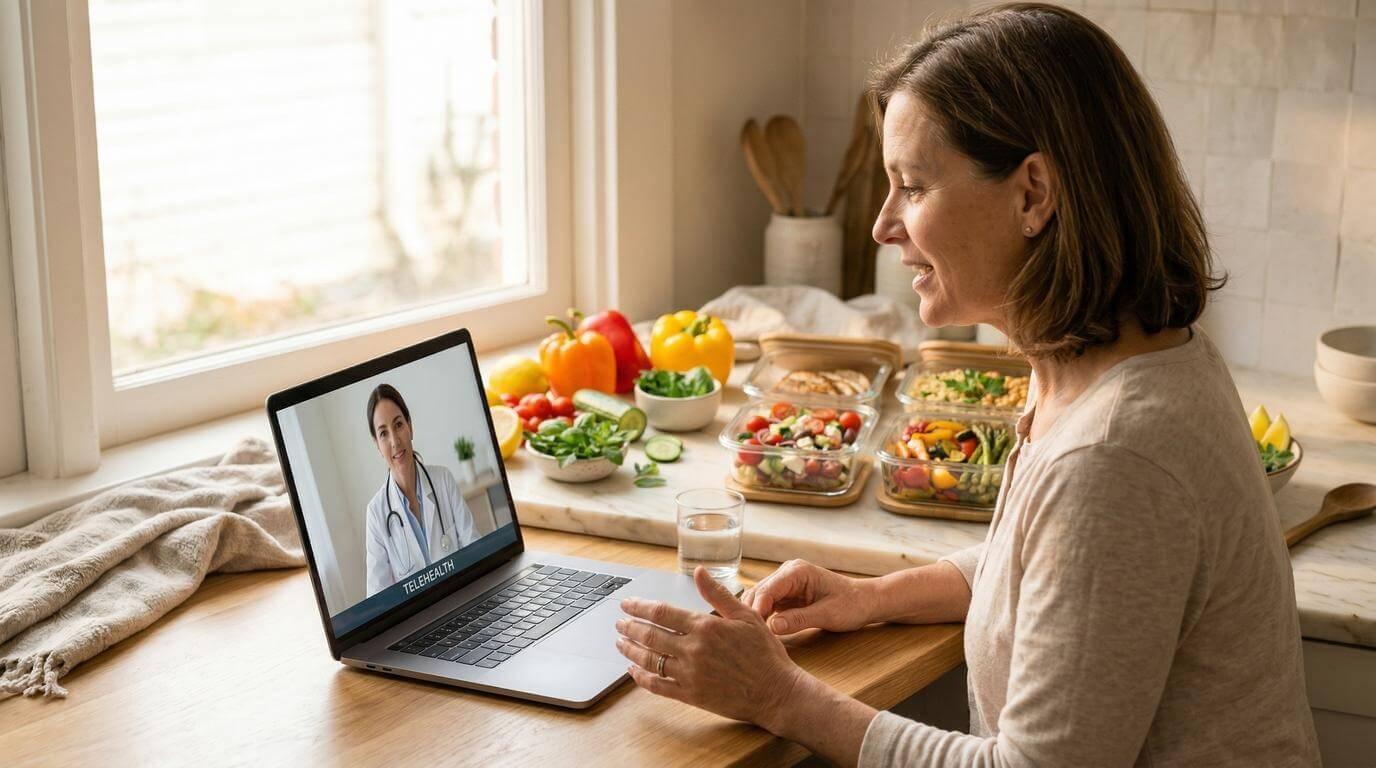
An online weight loss program through telehealth has made GLP-1 medications accessible to patients who would otherwise face months-long waits for in-person appointments with obesity specialists.
In this article
An online weight loss program through telehealth has made GLP-1 medications accessible to patients who would otherwise face months-long waits for in-person appointments with obesity specialists.
*This article is for informational purposes only. It is not medical advice. Speak with a licensed healthcare provider before starting any new medication or treatment program.*
---
Not long ago, if you wanted to discuss weight loss medication with a doctor, you had to navigate a familiar set of obstacles: finding a clinician who specialized in obesity medicine, waiting weeks for an appointment, paying out of pocket if insurance did not cover it, and potentially being dismissed with generic advice about diet and exercise. Online weight loss program telehealth services have changed this landscape considerably.
That experience is changing. This guide covers online weight loss program telehealth access, costs, and what to look for in a provider. Clinician-supervised weight loss treatment is more accessible than ever before - and the clinical tools available through these programs have improved dramatically at the same time.
This article explains how telehealth weight loss programs work, what safety looks like in this space, and what to look for when choosing a provider.
---
What Is a Telehealth Weight Loss Program?
A telehealth weight loss program delivers clinician-supervised obesity treatment online - through a website, mobile app, or both - rather than requiring in-person office visits.
The core components of a legitimate telehealth weight loss program typically include:
- Medical intake: You complete a detailed health questionnaire covering your medical history, current medications, weight history, and health goals
- Clinical review: A licensed clinician or other qualified clinician reviews your intake and determines whether prescription treatment is appropriate for you
- Prescription (if appropriate): If you are a candidate, the clinician writes a prescription that is sent to a licensed pharmacy
- Medication delivery: Your medication is shipped to your door
- Ongoing monitoring: Regular check-ins to assess how you are responding to treatment, manage side effects, and adjust your plan as needed
---
The Scale of the Problem Telehealth Is Helping Solve
The gap between who needs obesity treatment and who receives it is significant.
According to CDC data, 42.4% of U.S. adults have obesity - a condition with well-documented links to type 2 diabetes, cardiovascular disease, sleep apnea, certain cancers, and reduced quality of life.
Yet access to evidence-based treatment has historically been limited by:
- Cost: Brand-name [GLP-1 medications](/resources/what-are-glp1-medications-complete-guide) can cost $1,000 or more per month, and insurance coverage is inconsistent
- Specialist scarcity: Obesity medicine specialists are concentrated in urban areas, leaving many patients without access
- Stigma: Many people with obesity have experienced dismissal or inadequate care from healthcare providers
- Time: Office-based specialist appointments require time off work, transportation, and often months of waiting
Telehealth does not eliminate all of these barriers - cost remains a challenge for many people even with telehealth programs. But it substantially lowers the friction of access.
---
How the Clinical Process Works

Understanding what actually happens in a telehealth weight loss program helps set appropriate expectations.
Step 1: Health Intake
You fill out a detailed questionnaire. A serious program will ask about:
- Your current weight and height
- Your medical history (hypertension, diabetes, thyroid conditions, etc.)
- Medications you currently take
- Any personal or family history of conditions that affect eligibility (like thyroid cancer or pancreatitis)
- Your previous weight loss attempts
- Your goals and preferences
Step 2: Clinician Review
A licensed clinician or clinician reviews your intake. In legitimate telehealth programs, this is not automated. A real licensed provider reads your information and makes a clinical judgment.
If you are not a candidate for prescription treatment - due to medical contraindications, current medications, or other factors - you should be told clearly. A program that approves everyone is a red flag, not a feature.
Step 3: Prescription and Pharmacy
If you are approved, the clinician writes a prescription. In most telehealth weight loss programs, this is for a compounded medication prepared by a licensed compounding pharmacy.
Important to understand: Compounded medications are not FDA-approved. They are not the same products as brand-name medications like Wegovy or Zepbound, and are not equivalent to or interchangeable with them. Compounded drugs have not gone through the FDA's drug approval process for the specific formulation. This is a meaningful distinction that any legitimate provider should explain transparently.
Prescriptions from independently licensed providers in Prescriva's affiliated network are filled by licensed 503A compounding pharmacies. What compounded medications are (and what they are not) is explained transparently.
Step 4: Ongoing Care
Medication delivery is the beginning of care, not the end. A responsible telehealth program includes:
- Regular check-ins to assess your response to treatment
- Guidance on dose titration (most GLP-1 medications require gradual dose increases)
- Access to your clinician when questions or concerns arise
- Adjustment of your plan based on how you are responding
---
Is Telehealth Weight Loss Safe?
Safety depends entirely on how the program is run.
A legitimate telehealth program is safe because it operates the same way good in-person care operates: qualified clinicians, proper evaluation, appropriate prescribing, ongoing monitoring, and transparency.
What Good Looks Like
- Licensed clinicians or nurse practitioners (not unlicensed "health coaches" prescribing)
- Thorough intake that actually screens for contraindications
- Clear, transparent explanation of what compounded medications are and are not
- All-inclusive monthly pricing that bundles consultation, medication, and shipping
- Easy access to your clinical team when you have questions or experience side effects
- A process for stopping treatment safely if needed
What to Watch Out For
The 2025-2026 regulatory environment has brought increased scrutiny to telehealth weight loss programs. The FTC has taken action against companies for deceptive pricing (NextMed, July 2025), and the FDA has issued warning letters to telehealth companies for misleading claims about compounded GLP-1 medications.
Red flags in any telehealth weight loss program:
- Claiming compounded medications are "FDA-approved" or "equivalent to" brand-name drugs
- Hiding fees or making the cancellation process difficult
- No real clinician review (automated approval)
- Specific weight loss guarantees ("lose 20 lbs in 30 days")
- No ongoing monitoring or follow-up
---
What to Expect From Your Treatment
The First Month
Most GLP-1 medications are started at a low dose and increased gradually. During the first few weeks, you may notice:
- Reduced appetite - meals feel more satisfying, snacking urges decrease
- Nausea, especially around injection time (this typically improves)
- Early weight loss - often water weight in the first 2-4 weeks
Months 2-6
As the dose increases, most people experience more pronounced effects on appetite. Meaningful weight loss typically becomes visible in this window.
Results vary significantly by individual. Clinical trials show average weight loss of 5-15% of starting body weight over 6-12 months for GLP-1 medications, but individual variation is wide. Diet quality, physical activity, sleep, and stress levels all influence results.
Individual results may vary. These medications work best when combined with diet and lifestyle changes.
Long-Term
GLP-1 medications are not typically a short-term fix. The clinical data suggests benefits persist as long as medication is continued, with some weight regain when stopping. Your provider can help you think through long-term options.
---
What Makes Prescriva Different
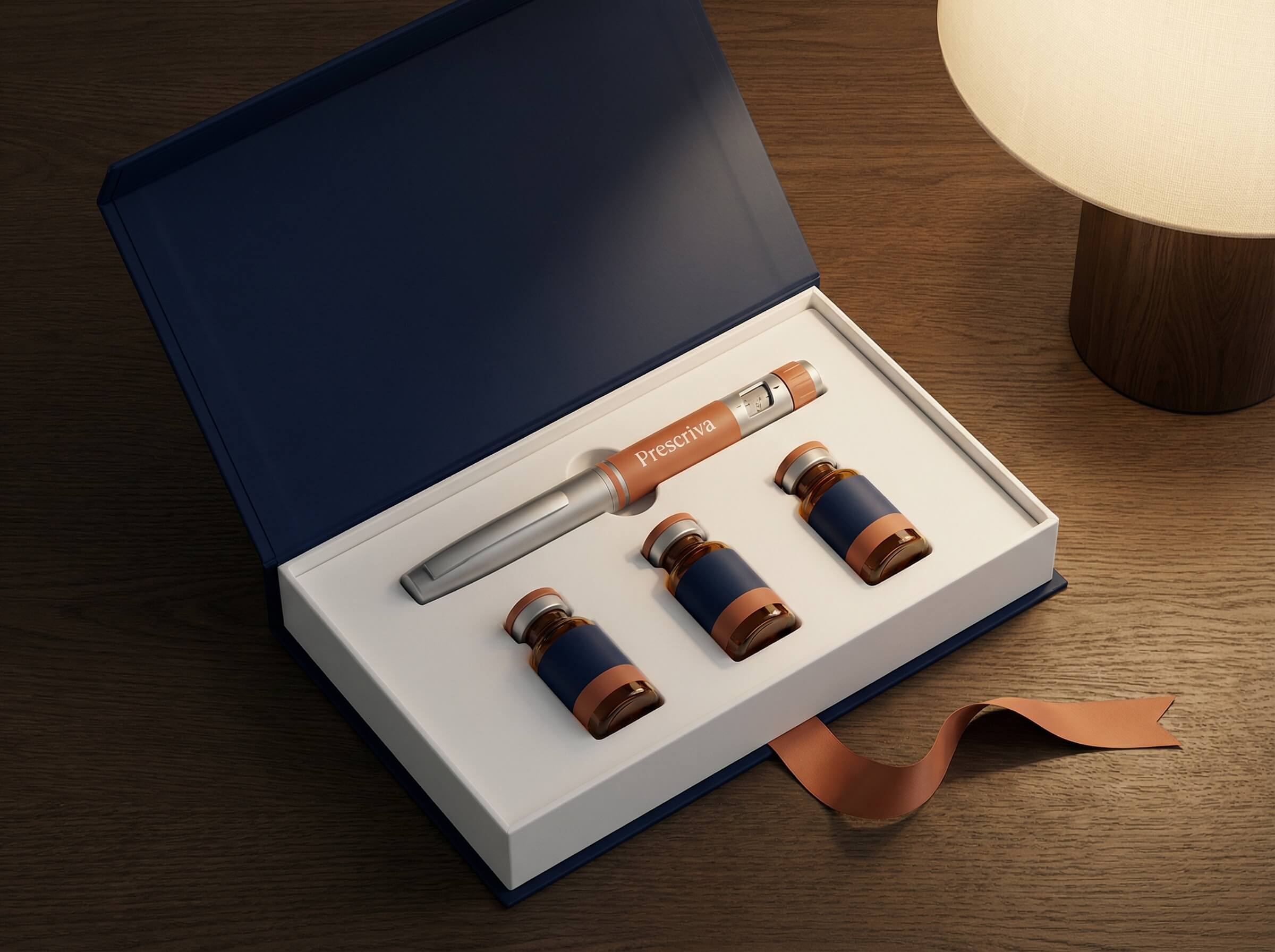
Prescriva is a clinician-backed telehealth platform for compounded medications, starting with GLP-1 weight loss programs.
What Prescriva is:
- A Management Services Organization (MSO) that provides technology and administrative infrastructure
- Partnered with licensed provider networks for clinical care
- Working with licensed 503A compounding pharmacies for medication fulfillment
- A medical practice (Prescriva does not employ clinicians or make clinical decisions)
- Claiming compounded medications are FDA-approved (they are not)
- Hiding fees or making cancellation complicated
- Online intake reviewed by a licensed clinician
- A transparent pricing model ($169/mo on the 52-week plan ($289/mo month-to-month) for [compounded semaglutide](/resources/compounded-semaglutide-what-it-is), all-inclusive)
- Medication shipped to your door from a licensed compounding pharmacy
- Ongoing access to your clinical team
---
How to Evaluate Any Telehealth Weight Loss Program
Before you sign up anywhere, ask these questions:
Who reviews my intake? A licensed clinician or clinical provider should be making the prescribing decision - not an algorithm.
What are the total costs? Everything - consultation, medication, shipping - should be clear before you pay. If you have to dig for the real number, that is a sign.
What happens if I am not a good candidate? You should be told clearly, without being pushed to purchase something else.
How do I get help if I have side effects? There should be a clear path to reach your clinical team.
What is the cancellation process? Simple, no-penalty cancellation should be readily available and clearly explained.
Is the medication compounded or brand-name? Both are legitimate options, but you should know which you are getting and understand the differences.
---
The Bottom Line
Telehealth has meaningfully expanded access to clinician-supervised weight loss treatment. For millions of people who would otherwise face significant barriers to care - cost, geography, stigma, time - this represents a real change.
The space is not without problems. The growth of telehealth weight loss has also attracted providers who cut corners on clinical rigor or transparency. Regulators are paying attention.
The answer is not to avoid telehealth - it is to choose carefully. Look for programs with real clinical oversight, transparent pricing, honest communication about what compounded medications are, and easy access to support.
If you are ready to explore whether a GLP-1 program might be right for you, start your eligibility evaluation at Prescriva. It takes about 10 minutes, your information is reviewed by a licensed clinician, and if prescription treatment is not appropriate for you, we will tell you that clearly.
---
*This article is for informational purposes only and does not constitute medical advice. Always consult a licensed healthcare provider before starting any medication or weight loss program. Compounded medications are not FDA-approved and are not the same as, equivalent to, or interchangeable with FDA-approved brand-name medications. Individual results may vary. Results depend on adherence to treatment plan and lifestyle modifications.*
*All medical services, including prescribing, are provided by independently licensed healthcare providers. Prescriva LLC is a management services organization and does not practice medicine or make clinical decisions.*
*Ozempic and Wegovy are registered trademarks of Novo Nordisk A/S. Mounjaro and Zepbound are registered trademarks of Eli Lilly and Company. Prescriva is not affiliated with, endorsed by, or sponsored by these companies.*
---
References
- Batsis JA, et al. Effectiveness of Obesity Telehealth Interventions Across the Life Span: A Systematic Review. *Obesity Reviews.* 2021;22(8). [PMID: 33527658](https://pubmed.ncbi.nlm.nih.gov/33527658/)
- Ward ZJ, et al. Projected U.S. State-Level Prevalence of Adult Obesity and Severe Obesity. *N Engl J Med.* 2019;381(25):2440-2450.
- Wilding JPH, et al. Once-weekly semaglutide in adults with overweight or obesity. *N Engl J Med.* 2021;384(11):989-1002. [PMID: 33567185](https://pubmed.ncbi.nlm.nih.gov/33567185/)
Stay informed
Weekly research updates and health guides. No spam.
Ready to get started?
Check if you qualify for a personalized treatment plan.
Check Your Eligibility →Continue reading

GLP-1 Medications After Bariatric Surgery: What the Research Shows About Weight Regain
Tirzepatide and Birth Control: What You Need to Know About Oral Contraceptives