How Does Tirzepatide Work? Mechanism of Action Explained
Understanding how tirzepatide works requires looking at two separate hormone systems simultaneously, because this medication targets both GLP-1 and GIP receptors in ways that produce synergistic effec

In this article
Understanding how tirzepatide works requires looking at two separate hormone systems simultaneously, because this medication targets both GLP-1 and GIP receptors in ways that produce synergistic effects neither can achieve alone.
*This article is for informational purposes only. It is not medical advice. Consult your licensed healthcare provider before starting any medication or weight loss program.*
---
If you have heard that tirzepatide produces stronger weight loss results than earlier GLP-1 medications, you might be wondering why. The answer is not a more powerful dose of the same drug. Tirzepatide works through a fundamentally different mechanism: it activates two separate gut hormones at once, rather than one.
Understanding how those two hormones work together explains both why tirzepatide produces the results it does, and what you can realistically expect from treatment.
---
What Makes Tirzepatide Different: The Dual Hormone Approach
Most GLP-1 medications, including [semaglutide](/resources/how-semaglutide-suppresses-appetite), work by mimicking a single gut hormone called GLP-1 (glucagon-like peptide-1). Tirzepatide does something different. It was engineered to activate both GLP-1 receptors and GIP receptors simultaneously.
GIP stands for glucose-dependent insulinotropic polypeptide. It is a gut hormone that your body produces naturally, alongside GLP-1, every time you eat. Before tirzepatide, this hormone had never been targeted therapeutically for weight loss. Tirzepatide was the first medication to combine both pathways into a single molecule.
Researchers sometimes describe tirzepatide as a "twincretin" or a dual GIP/GLP-1 receptor agonist. The clinical significance is that the two hormonal pathways influence [appetite](/resources/tirzepatide-appetite-suppression-science), fat metabolism, and blood sugar control through different but complementary routes. Activating both simultaneously produces effects that are meaningfully greater than activating either alone.
The SURPASS-1 trial, published in *The Lancet* in 2021 (Rosenstock et al., PMID [34186022](https://pubmed.ncbi.nlm.nih.gov/34186022/)), was the first large-scale clinical evaluation of tirzepatide's dual mechanism. It established both the efficacy profile and the biological rationale for the dual-receptor approach.
---
What Is GLP-1? A Quick Overview
GLP-1 is a hormone produced by specialized L cells in the small intestine and colon. Your body releases it after meals to signal several things at once: release insulin to manage blood sugar, slow stomach emptying to extend fullness, and tell the brain that you have eaten enough.
Your body's natural GLP-1 clears from circulation within about two minutes. Tirzepatide activates the same receptors but stays active for approximately a week, which is why it is taken as a once-weekly injection. The sustained activation is what makes the appetite-suppressing effects consistent throughout the week rather than brief and episodic.
---
What Is GIP? The Other Gut Hormone
GIP is the second hormone tirzepatide activates, and it is the component that makes tirzepatide structurally distinct from every GLP-1 medication that came before it.
Like GLP-1, GIP is released by your gut after eating. For decades, GIP was studied primarily for its role in stimulating insulin secretion. More recent research has revealed that GIP receptors are distributed in locations beyond the pancreas: in fat cells (adipose tissue), in bone, and in several areas of the brain involved in appetite regulation and food reward.
GIP receptor activation in adipose tissue appears to influence how the body stores and metabolizes fat. In the brain, GIP receptors are present in reward-related areas, which may help explain why some patients on tirzepatide report a particularly pronounced reduction in food cravings and the constant mental pull toward eating.
The SURPASS-1 trial (PMID [34186022](https://pubmed.ncbi.nlm.nih.gov/34186022/)) provided the foundational evidence for how tirzepatide's dual receptor engagement produces this broader metabolic effect compared with GLP-1 monotherapy.
---
How Tirzepatide Works in Your Body After an Injection
Once tirzepatide is absorbed from the injection site, it circulates through the bloodstream and binds to GIP and GLP-1 receptors simultaneously across multiple organs. The effects happen in parallel.
In the Pancreas: Blood Sugar Control
When tirzepatide activates GLP-1 receptors in the pancreas, it stimulates insulin secretion in a glucose-dependent manner: the signal is strongest when blood sugar is elevated and diminishes when blood sugar is normal. This is why tirzepatide carries a low risk of hypoglycemia (dangerously low blood sugar) as a standalone medication.
The GIP component adds a second insulin-stimulating signal through a complementary pathway. GIP also reduces glucagon secretion, the hormone that triggers the liver to release stored glucose. The combined effect is more complete blood sugar control across the day than GLP-1 activation alone.
For people with type 2 diabetes, this is clinically significant. For people without diabetes who are using tirzepatide for weight loss, steadier blood sugar throughout the day also reduces the spikes and crashes that drive hunger.
In the Stomach: Slower Gastric Emptying
GLP-1 receptors in the stomach wall regulate how quickly food passes into the small intestine. When tirzepatide activates these receptors, gastric emptying slows. Food stays in your stomach longer after each meal. That physical stretch, combined with hormonal signals, tells your brain you are full, and that fullness lasts longer than it normally would.
This is also the primary reason nausea is the most commonly reported side effect, particularly in the early weeks of treatment. The stomach is adapting to a new baseline rate of emptying. For most people, nausea decreases significantly as the body adjusts during dose titration.
In the Brain: Appetite, Food Noise, and Reward
The brain effects of tirzepatide are where many patients notice the most striking changes, often within the first few weeks of treatment.
The hypothalamus, a region deep in the brain, controls hunger and satiety signaling. GLP-1 receptors throughout the hypothalamus register tirzepatide's presence and send a sustained satiety signal: you are full, and food does not feel urgent. This same mechanism is how semaglutide reduces appetite.
What may make tirzepatide distinct is the GIP component. GIP receptors are present in areas of the brain involved in food reward, including regions that process the motivational pull toward eating. For some patients, the reduction in what is often called "food noise" (the constant background mental chatter about food, cravings, and eating) appears more pronounced with tirzepatide than with GLP-1-only medications.
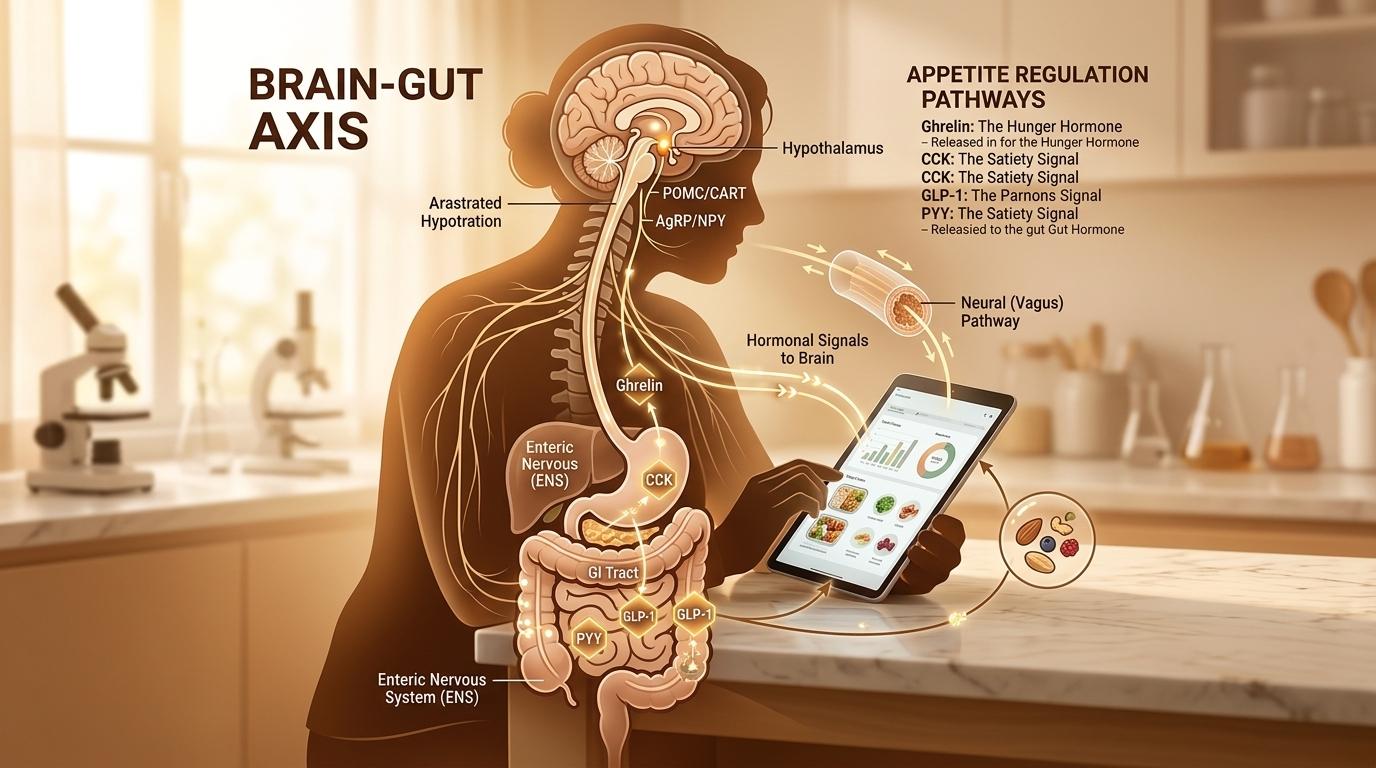
This is a pharmacological effect operating on the same neural circuits that regulate hunger at a biological level. It is not willpower or motivation.
---
What the Clinical Research Shows
The SURMOUNT-1 trial, published in the *New England Journal of Medicine* (Jastreboff et al., 2022, PMID [35658024](https://pubmed.ncbi.nlm.nih.gov/35658024/)), is the landmark study of tirzepatide for weight loss in adults with overweight or obesity (without diabetes). Participants received weekly injections of tirzepatide alongside lifestyle counseling.
At 72 weeks, average weight loss results were:
- 5 mg dose: 16.0% of body weight
- 10 mg dose: 21.4% of body weight
- 15 mg dose: 22.5% of body weight
Important context: These results come from clinical trials using branded, FDA-approved tirzepatide (Mounjaro, Zepbound). Mounjaro and Zepbound are registered trademarks of Eli Lilly and Company. Compounded tirzepatide has not been independently studied in equivalent large-scale clinical trials. Trial figures should not be assumed to apply directly to compounded formulations. Results may vary. Individual outcomes depend on adherence to treatment, diet, and physical activity.
---
How Tirzepatide Compares to Semaglutide
Because semaglutide was the leading GLP-1 medication before tirzepatide, patients often ask how the two compare. The SURPASS-2 trial (Frías et al., *New England Journal of Medicine*, 2021, PMID [34187984](https://pubmed.ncbi.nlm.nih.gov/34187984/)) compared tirzepatide directly to semaglutide 1 mg in people with type 2 diabetes. Tirzepatide produced greater reductions in blood sugar and body weight at all doses tested.
Importantly, the SURPASS-2 trial found that tirzepatide's nausea rates were comparable to semaglutide despite producing greater weight loss. This was an unexpected finding given that greater weight loss might be expected to correlate with more gastrointestinal disruption. Researchers attributed this partly to the GIP component, which may modulate the overall gastrointestinal burden.
The practical difference in mechanism comes down to this: semaglutide activates the GLP-1 pathway. Tirzepatide activates the GLP-1 pathway and adds a second, complementary signal through the GIP pathway. The dual activation appears to produce stronger appetite suppression, greater fat loss, and more comprehensive blood sugar control.
---
Why Weekly Injections Work: The Half-Life Advantage
Your body's natural GLP-1 and GIP clear from circulation within minutes after each meal. The signals are real but brief. Hunger returns quickly.
Tirzepatide maintains continuous GIP and GLP-1 receptor activation around the clock, seven days a week. There are no sharp peaks followed by troughs where appetite floods back between doses. The suppression is consistent and maintained across the week.
This is one reason tirzepatide produces sustained results where willpower-based dieting typically fails over time. Reducing calories by effort alone means resisting a biological drive that intensifies as the body defends its weight. Tirzepatide changes the underlying biology driving that drive, not just the behavior layered on top of it.
---
How Long Until It Starts Working?
Appetite suppression often begins within the first week at the starting dose (2.5 mg). Many people notice smaller portions, reduced snacking, and less interest in food within the first injection cycle. The effects intensify as the dose increases over the titration period.
Visible weight loss typically becomes apparent between weeks 3 and 8 for most people. The standard dose escalation protocol increases the dose every four weeks, balancing efficacy with tolerability. This gradual approach is not a limitation; it is by design.
By months 3 to 6, most people who respond to treatment are experiencing consistent, meaningful weight loss. This is a sustained metabolic intervention, not a quick-drop response.
---
How Compounded Tirzepatide Works the Same Way
Tirzepatide is a specific molecule with a specific mechanism. A licensed compounding pharmacy prepares compounded tirzepatide using tirzepatide as the active pharmaceutical ingredient. The molecule binds to the same GIP and GLP-1 receptors throughout the body described above. The dual-pathway activation in your brain, stomach, pancreas, and adipose tissue works the same way regardless of who manufactured the medication.
The difference between compounded and branded tirzepatide lies in manufacturing and regulatory status, not in the pharmacological mechanism.
Compounded tirzepatide is not FDA-approved. It is prepared by licensed compounding pharmacies under a separate regulatory pathway from FDA-approved brand-name drugs. Mounjaro and Zepbound are FDA-approved tirzepatide products manufactured by Eli Lilly and Company; they are not the same product as compounded tirzepatide. Prescriptions written by independently licensed providers in Prescriva's affiliated network are filled by state-licensed 503A compounding pharmacies operating under state pharmacy board oversight and USP compounding standards.
For patients seeking access to GLP-1 treatment at a more accessible price point, compounded tirzepatide operates through the same pharmacological mechanism. The large clinical trials used FDA-approved branded formulations. The compounded formulation itself has not been validated in equivalent independent clinical trials.
---
Why Tirzepatide Is Different from Stimulants and Old Diet Pills
Older weight loss medications often worked by stimulating the central nervous system: elevating heart rate, increasing alertness, and suppressing appetite through excitation rather than satiety. These approaches produced real short-term results but carried dependency risk and significant cardiovascular effects.
Tirzepatide works through a completely different pathway. It is not a stimulant. It does not elevate heart rate as a mechanism of action. It does not produce the wired, anxious feeling associated with stimulant-based weight loss drugs.
The mechanism is hormonal: working with the body's existing regulatory systems through pathways that are already present and active. For most people, the appetite suppression feels qualitatively different from stimulant-based hunger blunting. It is quieter, more sustainable, and less disruptive to daily function.
---
Frequently Asked Questions
How long does it take for tirzepatide to start working?
Most people notice reduced appetite within the first week at the 2.5 mg starting dose. Visible weight loss typically begins between weeks 3 and 8. Full effects develop progressively over several months as the dose increases through the titration schedule.
Does tirzepatide work without changing your diet?
Tirzepatide substantially reduces appetite, which naturally leads most people to eat significantly less. Clinical trials paired the medication with lifestyle counseling, and the strongest outcomes occur when the medication works alongside intentional attention to nutrition and movement. Tirzepatide makes those changes considerably easier by addressing the biological drivers of hunger.
What happens if you stop tirzepatide?
When tirzepatide is discontinued, the appetite-suppressing effects tied to active GIP and GLP-1 receptor activation diminish. Hunger signals return, and weight regain is common without additional interventions. This is a reflection of underlying biology, not willpower failure. Your healthcare provider can discuss long-term treatment planning and what discontinuation looks like for your situation.
Is tirzepatide stronger than semaglutide?
In head-to-head clinical trials comparing both medications in people with type 2 diabetes (SURPASS-2, PMID [34187984](https://pubmed.ncbi.nlm.nih.gov/34187984/)), tirzepatide produced greater weight loss and blood sugar reduction at all tested doses compared with semaglutide 1 mg. The SURMOUNT-1 trial reported average weight loss of up to 22.5% with tirzepatide 15 mg in people without diabetes. The STEP 1 trial reported 14.9% average weight loss with semaglutide 2.4 mg. These trials used different populations and cannot be directly compared, but the pattern across multiple studies consistently favors tirzepatide for weight loss magnitude.
What is a GIP receptor agonist?
A GIP receptor agonist is a compound that binds to and activates GIP (glucose-dependent insulinotropic polypeptide) receptors. Tirzepatide is both a GIP receptor agonist and a GLP-1 receptor agonist simultaneously. No approved GLP-1 medication before tirzepatide also activated GIP receptors.
How does compounded tirzepatide differ from Mounjaro or Zepbound?
Compounded tirzepatide is not the same product as Mounjaro or Zepbound. Mounjaro and Zepbound are FDA-approved brand-name medications manufactured by Eli Lilly and Company. Compounded tirzepatide is prepared by a licensed 503A compounding pharmacy under a separate regulatory pathway and is not FDA-approved. The active pharmaceutical ingredient is tirzepatide in both cases, but the products are legally and regulatorily distinct and are not interchangeable.
---
Ready to Find Out If You Qualify?
Understanding how tirzepatide works is the first step. Finding out whether it is appropriate for you requires a clinical evaluation.
Licensed healthcare providers in Prescriva's affiliated network review your full health history, assess your eligibility, and determine the appropriate treatment before any prescription is written. Your assessment is confidential, takes about 10 minutes, and is reviewed within 24 hours.
*This article is for informational purposes only and does not constitute medical advice. Compounded tirzepatide is not FDA-approved and is not the same as Mounjaro or Zepbound, which are registered trademarks of Eli Lilly and Company. Clinical trial results cited apply to FDA-approved branded tirzepatide formulations and should not be assumed to apply to compounded formulations. Results may vary. Individual results depend on adherence to treatment and lifestyle changes. Prescriva LLC is a Management Services Organization and does not practice medicine or make clinical decisions; all care is delivered by independently licensed healthcare providers. Consult your licensed healthcare provider before starting any medication.*
---
Sources
- Rosenstock J, et al. "Efficacy and safety of a novel dual GIP and GLP-1 receptor agonist tirzepatide in patients with type 2 diabetes (SURPASS-1)." *The Lancet.* 2021. PMID: [34186022](https://pubmed.ncbi.nlm.nih.gov/34186022/)
- Jastreboff AM, et al. "Tirzepatide Once Weekly for the Treatment of Obesity." *New England Journal of Medicine.* 2022. PMID: [35658024](https://pubmed.ncbi.nlm.nih.gov/35658024/)
- Frías JP, et al. "Tirzepatide versus Semaglutide Once Weekly in Patients with Type 2 Diabetes." *New England Journal of Medicine.* 2021. PMID: [34187984](https://pubmed.ncbi.nlm.nih.gov/34187984/)
Stay informed
Weekly research updates and health guides. No spam.
References
- Rosenstock J, et al. "Efficacy and safety of a novel dual GIP and GLP-1 receptor agonist tirzepatide in patients with type 2 diabetes (SURPASS-1)." *The Lancet.* 2021. PMID: 34186022. Published Research (2021).
- Jastreboff AM, et al. "Tirzepatide Once Weekly for the Treatment of Obesity." *New England Journal of Medicine.* 2022. PMID: 35658024. Published Research (2022).
- Frías JP, et al. "Tirzepatide versus Semaglutide Once Weekly in Patients with Type 2 Diabetes." *New England Journal of Medicine.* 2021. PMID: 34187984. Published Research (2021).
Ready to get started?
Check if you qualify for a personalized treatment plan.
Check Your Eligibility →Continue reading

GLP-1 Medications After Bariatric Surgery: What the Research Shows About Weight Regain

Tirzepatide and Birth Control: What You Need to Know About Oral Contraceptives