GLP-1 Medications and Smoking Cessation: What the Research Shows
GLP-1 and smoking cessation share a neurological connection through the mesolimbic reward system, and early clinical observations suggest semaglutide may reduce nicotine cravings in ways that could co

In this article
GLP-1 and smoking cessation share a neurological connection through the mesolimbic reward system, and early clinical observations suggest semaglutide may reduce nicotine cravings in ways that could complement existing cessation strategies.
*This article is for informational and educational purposes only. It is not medical advice. Compounded [semaglutide](/resources/how-does-semaglutide-work) and tirzepatide are not FDA-approved medications. GLP-1 receptor agonists are not approved by the FDA for smoking cessation. The clinical research cited here was conducted using FDA-approved or investigational pharmaceutical compounds; results may not apply to [compounded GLP-1 program](/resources/compounded-semaglutide-cost-2026) products. Individual results vary. Consult your licensed healthcare provider before starting, stopping, or adjusting any medication, and before making changes to your smoking cessation plan. Prescriva LLC is a management services organization and does not practice medicine or employ physicians.*
---
Something many people on GLP-1 therapy report is not written on any label. They stop reaching for a cigarette in the afternoon. The familiar pull toward nicotine softens. Some quit smoking without specifically planning to.
For researchers studying addiction and the brain's reward circuitry, this pattern is not entirely surprising. But it has moved steadily from anecdote into active scientific inquiry, and the emerging findings deserve attention from anyone who smokes and is currently using or considering a GLP-1 medication for weight management.
Here is what the evidence currently shows, what it does not yet prove, and why this research matters.
---
The Problem With Quitting Smoking
Nicotine is among the most addictive substances known. Fewer than 10 percent of people successfully quit in any given attempt without pharmacological or behavioral support, and the majority relapse within the first week. Even people with strong motivation and access to cessation tools face staggering relapse rates.
Two primary obstacles drive this failure rate. The first is psychological: the ingrained habits, stress associations, and social rituals that surround smoking. The second is biological. Nicotine withdrawal triggers measurable neurological changes, including dysphoria, irritability, difficulty concentrating, and intense craving, that make the early quit period genuinely miserable.
There is a third obstacle that receives less attention but is deeply influential: weight gain. Nicotine suppresses appetite and accelerates metabolism. When it is removed, both effects reverse. Average post-cessation weight gain ranges from 4 to 5 kilograms over the first 12 months. For people already working to manage their weight, this prospect can be a decisive barrier. Some smokers make the calculation, consciously or not, that they would rather continue smoking than gain weight. That is a tradeoff with serious long-term consequences, but it is real.
GLP-1 receptor agonists have attracted growing scientific interest precisely because they appear to address multiple layers of this challenge simultaneously.
---
How GLP-1 Receptors Connect to Nicotine Addiction
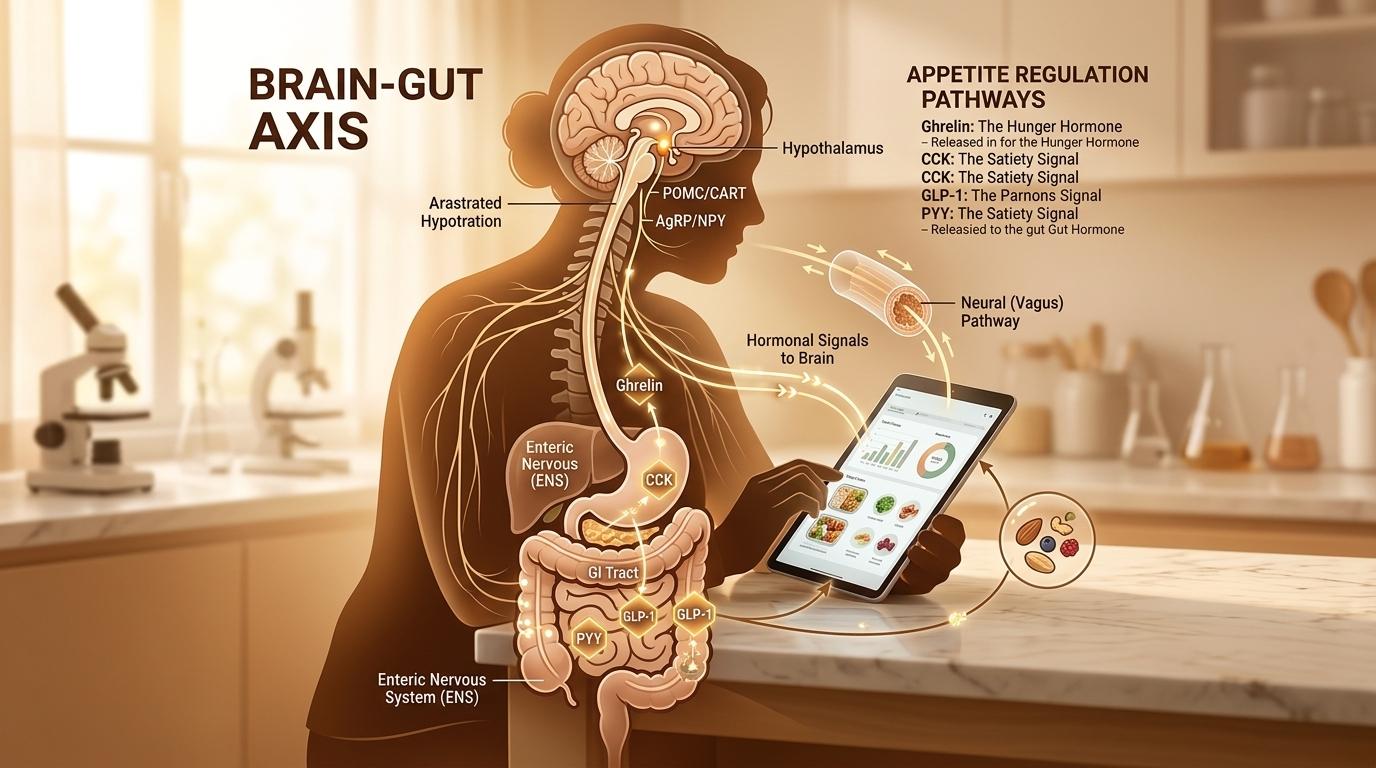
GLP-1, glucagon-like peptide-1, is a hormone your gut releases after eating. Medications like semaglutide and tirzepatide activate GLP-1 receptors throughout the body and brain to reduce appetite, regulate blood sugar, and produce sustained weight loss.
The appetite story is well known. The brain story is where the smoking connection begins.
GLP-1 receptors are expressed in brain regions that govern reward processing: the ventral tegmental area (VTA), the nucleus accumbens, and the prefrontal cortex. These areas form the mesolimbic dopamine system, the circuitry responsible for reinforcing behaviors that feel pleasurable or relieving. Nicotine hijacks this system by triggering a dopamine surge that the brain learns to associate with relief and repetition.
A 2025 review published in Medical Sciences examined how GLP-1 receptor activation modifies this reward circuitry. The researchers found that GLP-1 activation in the VTA and nucleus accumbens modulates dopamine, glutamate, and GABA neurotransmission in ways that appear to reduce the reinforcing signals associated with substance use, including nicotine (PMID [40843757](https://pubmed.ncbi.nlm.nih.gov/40843757/)).
A 2023 study in Cell Reports added mechanistic detail. Researchers at the University of Copenhagen found that GLP-1 receptor signaling suppresses nicotine-induced dopamine release in the nucleus accumbens in animal models (PMID [37148870](https://pubmed.ncbi.nlm.nih.gov/37148870/)). When GLP-1 receptors are activated, the dopamine spike that reinforces nicotine use is blunted. The reward signal becomes smaller.
This is the neurobiological foundation for why researchers began asking whether [GLP-1 medications](/resources/what-are-glp1-medications-complete-guide) might reduce nicotine dependence in people.
---
---
What Preclinical Research Shows
Animal studies on GLP-1 receptor agonists and nicotine have produced a consistent pattern across more than a decade of research.
Rodents given GLP-1 receptor agonists self-administer less nicotine. They show reduced motivation to seek nicotine under laboratory conditions designed to simulate craving and relapse. When nicotine is removed, animals treated with GLP-1 receptor agonists exhibit fewer withdrawal-related symptoms, including the hyperphagia (increased eating) that typically follows cessation.
A 2024 review by Herman and Schmidt in Physiology and Behavior synthesized preclinical and early clinical evidence across GLP-1 receptor agonists and nicotine use disorder. Their analysis found that GLP-1R agonists consistently reduce nicotine self-administration, relapse-seeking behavior, and withdrawal-related appetite increases across multiple animal models and testing paradigms (PMID [38663460](https://pubmed.ncbi.nlm.nih.gov/38663460/)).
The finding that these medications also reduce the post-cessation appetite surge is clinically significant. Nicotine cessation drives hyperphagia through neurobiological changes in the hypothalamus. GLP-1 medications act on those same hypothalamic circuits to suppress appetite. Addressing the biological driver of post-cessation eating would tackle one of the most stubborn barriers to staying quit.
---
The First Human Trial Evidence
Translating animal data into human outcomes is always uncertain. Early-phase human data on GLP-1 receptor agonists and smoking cessation is limited but consistent with the preclinical story.
The most important clinical study to date tested exenatide, an older GLP-1 receptor agonist, as an adjunct to a standard nicotine patch. This pilot randomized controlled trial, published in Nicotine and Tobacco Research, enrolled 84 participants who smoked and had prediabetes or were overweight. Participants were randomized to exenatide 2 mg weekly plus a nicotine patch, or placebo plus a nicotine patch. Both groups received brief smoking cessation counseling.
The results were meaningful. At the end of the trial, 46.3 percent of participants receiving exenatide plus the nicotine patch had achieved smoking abstinence, compared to 26.8 percent in the placebo group. The exenatide group also showed reduced nicotine craving scores, fewer withdrawal symptoms, and significantly lower post-cessation weight gain among those who successfully quit (PMID [33831213](https://pubmed.ncbi.nlm.nih.gov/33831213/)).
This was a pilot trial. The sample size was small and the results require replication in larger, independently powered studies. But the direction and magnitude of the effect were large enough to anchor a growing research program and support the biological plausibility of the animal findings.
---
Real-World Observations From GLP-1 Users
Beyond controlled trials, researchers have begun examining smoking behavior in people already using GLP-1 medications for weight management.
A 2026 cross-sectional study published in BMC Public Health surveyed 390 participants who had been prescribed GLP-1 receptor agonists. Among those who smoked at the start of their treatment, 17.4 percent reported becoming ex-smokers during their GLP-1 therapy course. Separately, 24.4 percent of all participants reported reduced nicotine cravings during GLP-1 use. Female participants and those in the 26-to-44-year age group showed the most pronounced craving reductions. Longer treatment duration was associated with greater reported improvement in smoking-related outcomes (PMID [41673636](https://pubmed.ncbi.nlm.nih.gov/41673636/)).
Cross-sectional studies cannot establish that the GLP-1 medication caused these outcomes. People who are prescribed GLP-1 therapy and who successfully quit smoking may differ in motivation, access to support, and other factors that independently influence cessation. But the proportions observed are notable, and they align with what the mechanistic and clinical trial data would predict.
---
Post-Cessation Weight Gain as a Treatable Barrier
The weight angle is worth revisiting in clinical terms because it is so often the deciding factor.
When someone quits smoking, nicotine's appetite-suppressing and metabolic-boosting effects disappear. The hypothalamus, which had been partially regulated by nicotine's influence on reward circuits, adjusts. Hunger increases. Metabolic rate slows. Weight accumulates, particularly in the first three months after quitting.
This is not a matter of willpower. It is a predictable neurobiological consequence of nicotine removal. Standard cessation aids like varenicline and bupropion address craving and withdrawal reasonably well. None address the post-cessation weight trajectory with meaningful effect.
GLP-1 receptor agonists work directly against this pattern. In the exenatide pilot trial (PMID [33831213](https://pubmed.ncbi.nlm.nih.gov/33831213/)), abstinent participants on exenatide gained substantially less weight after quitting than those in the placebo group. The review by Herman and Schmidt (PMID [38663460](https://pubmed.ncbi.nlm.nih.gov/38663460/)) highlights this as one of the most clinically compelling features of GLP-1 receptor agonists in the cessation context. A medication that reduces craving and prevents post-cessation weight gain simultaneously would represent a genuine advance in cessation pharmacology.
---
Where the Research Stands Now
GLP-1 receptor agonists are not FDA-approved for smoking cessation. They are not listed as evidence-based cessation tools by the CDC or the U.S. Preventive Services Task Force. The evidence base, while scientifically compelling and mechanistically coherent, consists primarily of animal studies, one small pilot trial, and observational data that cannot rule out confounding.
Larger clinical trials are running. The Phase 2 study NCT05530577 is directly examining the effects of semaglutide on nicotine intake in human participants. Results from that trial will provide more controlled evidence than anything currently published.
Regulatory recognition would require robust, replicated evidence from adequately powered trials across diverse populations. That threshold has not yet been met. Researchers are working toward it, but it remains several years away at minimum.
---
What This Means If You Smoke and Use GLP-1 Therapy
If you are already using a GLP-1 medication for weight management and you also smoke, you may have noticed reduced cravings without having set out to quit. This is consistent with what the research would predict.
Whether that observation in your case reflects pharmacological effects, the broader lifestyle shifts that accompany a weight management program, or coincidence is not determinable from population-level data. What the science does establish is that the observation has a biological basis and is documented across multiple study types. It is not imaginary.
If you are considering quitting, share that intention with your healthcare provider. Evidence-based cessation tools, including varenicline, bupropion, and nicotine replacement therapy, have well-established track records and can be used alongside a GLP-1 medication. Your provider can help you design a cessation approach that accounts for your full clinical picture, including any weight management goals.
If you have noticed reduced cigarette cravings since starting a GLP-1 medication, that is clinically relevant information. Tell your provider. It contributes to a treatment picture that may inform timing, dosing decisions, and the kind of cessation support you receive.
---
Summary
GLP-1 receptor agonists were developed for appetite regulation, blood sugar control, and weight management. Research is revealing that their effects extend into the brain circuits that govern nicotine addiction, appetite suppression after cessation, and the reinforcing signals that sustain smoking behavior over time.
The mechanistic basis is well-established in preclinical models. An early-phase human trial with exenatide showed a meaningful improvement in cessation rates alongside reduced post-cessation weight gain. Real-world survey data finds that a meaningful proportion of GLP-1 users report reduced nicotine cravings during treatment. Larger trials are underway, and this area of investigation is moving quickly.
None of this supports using a GLP-1 medication as a standalone smoking cessation treatment. The FDA has not approved these medications for that purpose, and the human evidence is too preliminary to recommend them as primary cessation therapy. But the direction of the science is clear enough that, for people who already smoke and are using GLP-1 therapy for weight management, the potential for overlapping benefit is a legitimate clinical question, and one worth raising with your healthcare team.
---
References:
- Yammine L, et al. Exenatide Adjunct to Nicotine Patch Facilitates Smoking Cessation and May Reduce Post-Cessation Weight Gain: A Pilot Randomized Controlled Trial. *Nicotine Tob Res.* 2021. PMID [33831213](https://pubmed.ncbi.nlm.nih.gov/33831213/)
- Herman RJ, Schmidt HD. Targeting GLP-1 receptors to reduce nicotine use disorder: Preclinical and clinical evidence. *Physiol Behav.* 2024. PMID [38663460](https://pubmed.ncbi.nlm.nih.gov/38663460/)
- Falk S, et al. GLP-1 and nicotine combination therapy engages hypothalamic and mesolimbic pathways to reverse obesity. *Cell Rep.* 2023. PMID [37148870](https://pubmed.ncbi.nlm.nih.gov/37148870/)
- Amorim Moreira Alves G, et al. Mechanisms of GLP-1 in Modulating Craving and Addiction: Neurobiological and Translational Insights. *Med Sci (Basel).* 2025. PMID [40843757](https://pubmed.ncbi.nlm.nih.gov/40843757/)
- Alsaleh NA, et al. The use of GLP-1 receptor agonists and subsequent risk of nicotine-related events: a cross-sectional study. *BMC Public Health.* 2026. PMID [41673636](https://pubmed.ncbi.nlm.nih.gov/41673636/)
*Compounded semaglutide and compounded tirzepatide are not FDA-approved. Compounded drugs are not reviewed by the FDA for safety, efficacy, or quality. Compounded semaglutide is not the same as, equivalent to, or interchangeable with FDA-approved semaglutide products (Ozempic, Wegovy, or Rybelsus). GLP-1 receptor agonists are not FDA-approved for smoking cessation. Results from studies of FDA-approved pharmaceutical GLP-1 receptor agonists do not apply to compounded products. Individual results vary. Consult your licensed healthcare provider before starting, stopping, or adjusting any medication. Prescriva LLC is a management services organization and does not practice medicine or employ physicians. Ozempic and Wegovy are registered trademarks of Novo Nordisk A/S. Mounjaro and Zepbound are registered trademarks of Eli Lilly and Company. Prescriva is not affiliated with, endorsed by, or sponsored by these companies.*
Stay informed
Weekly research updates and health guides. No spam.
Ready to get started?
Check if you qualify for a personalized treatment plan.
Check Your Eligibility →Continue reading

GLP-1 Medications After Bariatric Surgery: What the Research Shows About Weight Regain

Tirzepatide and Birth Control: What You Need to Know About Oral Contraceptives