What Is Food Noise? How GLP-1 Medications Quiet It
GLP-1 food noise reduction is one of the most consistently reported experiences among patients on semaglutide and tirzepatide, and the neuroscience behind it helps explain why these medications feel s

In this article
GLP-1 food noise reduction is one of the most consistently reported experiences among patients on semaglutide and tirzepatide, and the neuroscience behind it helps explain why these medications feel so different from previous weight loss treatments.
*Compounded semaglutide and tirzepatide are not FDA-approved. This article is for educational and informational purposes only and does not constitute medical advice. Individual results vary. Consult your licensed healthcare provider before starting any medication.*
---
One of the most consistent things people report after starting a GLP-1 medication is not how much weight they lose. It is how quiet their mind gets.
The constant, low-grade mental preoccupation with food, what to eat next, whether to have that second portion, how to get through the rest of the afternoon without snacking, seems to simply switch off. Researchers and patients alike have started calling this phenomenon "food noise," and understanding it matters not just for how these medications work, but for how to use them well.
This article explains what food noise is, what is happening in the brain that causes it, and what the research shows about how GLP-1 medications like semaglutide and tirzepatide affect it.
---
What Food Noise Actually Is
Food noise is not the same thing as hunger. Hunger is a physical sensation: a gnawing in the stomach, lightheadedness, irritability when blood sugar dips. Food noise is cognitive. It is the background mental activity that keeps pulling your attention back to food even when you are not physically hungry.
It shows up as:
- Thinking about your next meal before you have finished the current one
- Mentally rehearsing what you will eat later in the day
- Difficulty concentrating on tasks because food-related thoughts keep intruding
- A sense of preoccupation with food that feels disproportionate and difficult to override by willpower alone
---
The Neuroscience: Why Your Brain Keeps Thinking About Food
The brain treats food as a reward. When you see, smell, or even think about appealing food, your brain's mesolimbic dopamine system activates. Dopamine neurons in the ventral tegmental area (VTA) fire in response to cues that predict food reward. This is the same system that responds to other rewarding stimuli, and it is extremely powerful.
The problem is that this system does not simply register hunger. It registers expectation. When a cue associated with a food reward appears, whether that cue is a fast food sign, a clock showing 3pm, or even just walking past the kitchen, dopamine spikes in anticipation. That spike motivates you to seek the reward. You do not need to be physically hungry to experience it.
A 2020 study from the University of Illinois at Chicago, using in-vivo fiber photometry to measure real-time dopamine neuron activity in rats, demonstrated this cue-driven dopamine surge directly. [1] When a predictive audio cue was paired with sucrose delivery, VTA dopamine neurons fired sharply in response to the cue itself, before any food arrived. This cue-evoked dopamine signal was directly correlated with how aggressively the animals sought the reward.
Food noise, in neurological terms, is the subjective experience of this cue-driven dopamine activity in a brain that has learned to associate many everyday triggers with food rewards.
---
Where GLP-1 Medications Act in the Brain
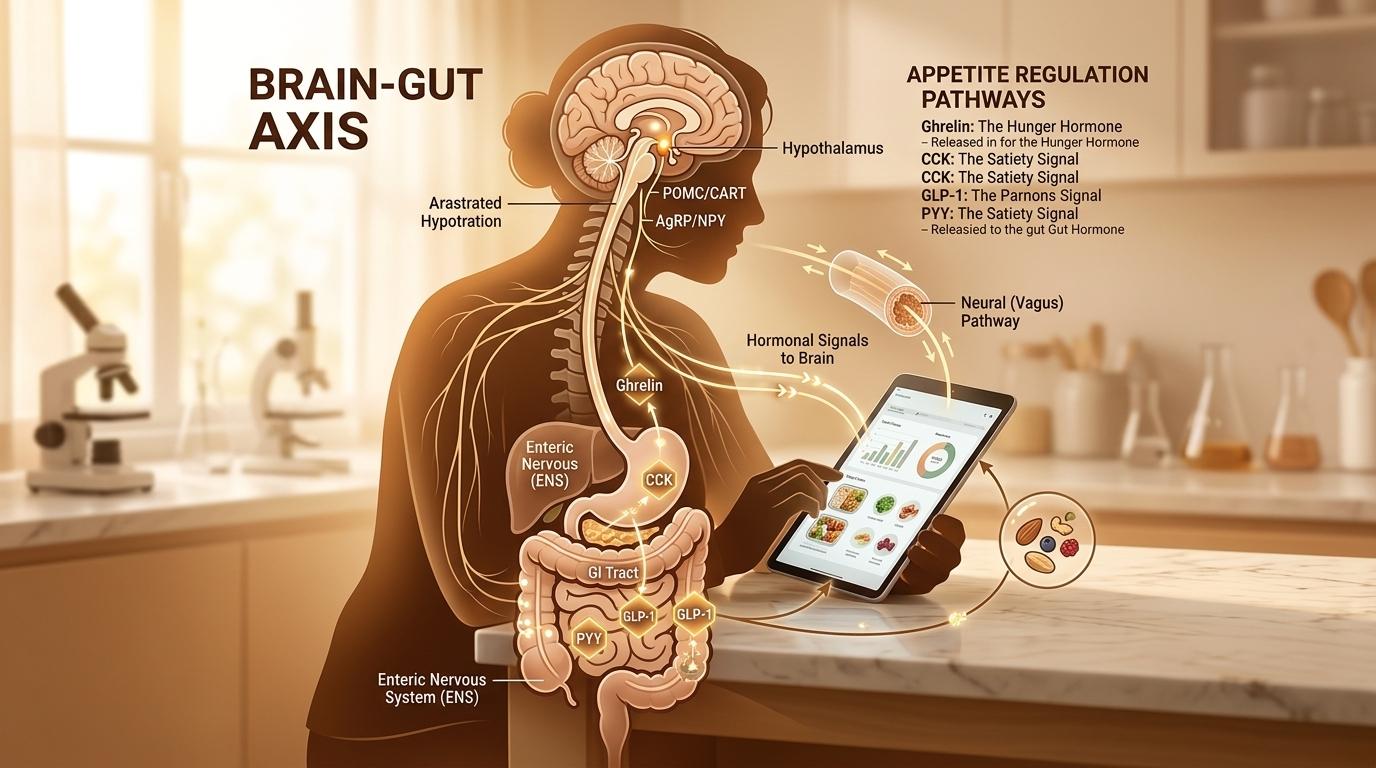
GLP-1 (glucagon-like peptide-1) receptors are not just in the gut and pancreas. They are expressed throughout the central nervous system, including the hypothalamus (which regulates hunger and energy balance) and the mesolimbic dopamine system (which governs motivation, reward, and craving).
This dual location is what makes GLP-1 medications different from older appetite suppressants that worked primarily by suppressing hunger signals peripherally. [GLP-1 receptor agonists](/resources/glp1-medications-addiction-cravings-research) appear to modulate the reward system itself.
A 2025 review published in the International Journal of Molecular Sciences described GLP-1 receptor agonists as agents that "suppress dopamine signaling in reward circuits" and "directly modify reward processing underlying compulsive eating," beyond their well-established effects on appetite suppression. [2] The review, which examined both preclinical and emerging clinical evidence, found that GLP-1Rs expressed in hypothalamic nuclei and mesolimbic circuits are key targets through which these medications reduce food-seeking behavior.
A separate 2025 analysis in Progress in Cardiovascular Diseases characterized semaglutide and tirzepatide as potential "anti-consumption agents," arguing they may be "the first effective medications targeting the brain's reward pathway that mediates addiction to foods" and related compulsive behaviors. [3]
---
What Clinical Research Shows About Food Cravings
The reduction in food noise is not just anecdotal. It shows up in formal eating behavior questionnaires used in randomized controlled trials.
The Control of Eating Questionnaire (CoEQ) is a validated instrument that measures four dimensions: craving control, craving for sweet foods, craving for savory foods, and positive mood. When researchers administered it to participants in a double-blind, placebo-controlled trial of subcutaneous semaglutide 2.4 mg, the results showed significantly fewer and weaker food cravings in the semaglutide group compared with placebo. [4] Energy intake at a standardized ad libitum meal was 35% lower in the semaglutide group.
Earlier work with semaglutide 1.0 mg weekly, in a crossover trial of 30 adults with obesity, found similar patterns. [5] Participants reported less hunger and food cravings, better control of eating, and a lower preference for high-fat, energy-dense foods. Total energy intake across all meals throughout the day was 24% lower on semaglutide versus placebo. Importantly, nausea ratings were similar between groups, meaning the reduction in eating was not simply due to feeling sick.
More recently, a 2024 randomized controlled trial of once-daily oral semaglutide 50 mg confirmed these effects with higher doses. [6] Participants showed a 39.2% reduction in ad libitum energy intake, along with reduced hunger, increased fullness and satiety, fewer food cravings, and better control of eating. No statistically significant difference in gastric emptying was observed at 20 weeks, suggesting the behavioral effects on eating were primarily central rather than gastric.
---
The Dopamine Puzzle: Why Food Still Feels Good
One counterintuitive finding from preclinical research adds nuance to the food noise story.
A 2023 study from Utrecht University measured VTA dopamine neuron activity in mice during a sucrose reward task under semaglutide versus vehicle. [7] The researchers found something unexpected: semaglutide reduced the number of rewards collected and overall food-seeking behavior, as expected. But dopamine signaling in the VTA during the moment of reward collection actually increased on semaglutide.
The investigators interpreted this as semaglutide reducing the anticipatory drive to seek food while preserving or enhancing the satisfaction signal from eating. The medication appears to selectively reduce the background noise of food preoccupation without eliminating the pleasure of actually eating.
This distinction matters clinically. The goal of GLP-1 therapy is not to create food aversion or make eating feel punishing. It is to restore a normal relationship with food, where eating happens in response to genuine hunger and actual meals are satisfying, rather than being driven by constant cue-triggered craving.
---
How Quickly Does the Quiet Start?
Patients frequently report noticing a change in food-related thinking within the first few weeks of starting a GLP-1 medication, sometimes before significant weight loss has occurred. This temporal pattern is consistent with a central mechanism, since weight loss itself takes longer to accumulate.
The CoEQ and appetite rating data from the semaglutide clinical trials show effects at 12 to 20 weeks. However, real-world patient reports suggest that some degree of reduced food preoccupation can appear within two to four weeks, as initial doses take effect and GLP-1 receptor signaling in the brain increases.
There is no reliable predictor of exactly when this effect will start for any individual. Factors including your baseline level of food-related preoccupation, dopamine system sensitivity, and medication dose all play a role. The dose-escalation schedule used with both semaglutide and tirzepatide means the full effect may not emerge until several weeks or months into treatment.
---
Food Noise Reduction Is Not Universal
Not everyone experiences a dramatic reduction in food noise on GLP-1 therapy, and this is worth acknowledging directly.
Some people lose appetite significantly and find food-related thinking fades quickly. Others lose weight steadily but still experience food cravings and preoccupation, particularly for specific trigger foods or in high-stress situations. A subset of patients report minimal psychological effect even as they lose weight through the appetite-suppressing and gastric effects of the medication.
Individual differences in GLP-1 receptor expression, dopamine system activity, and the psychological history of food relationships all influence how pronounced the mental quieting effect is. This is one reason why combining GLP-1 therapy with behavioral support, including nutritional guidance and counseling where appropriate, remains the standard of care. The medication changes the neurological landscape, but building healthy eating habits in that quieter landscape still requires intention.
Prescriva's program includes licensed provider oversight and individualized care from the start. If you are experiencing persistent food noise or cravings during treatment, your [provider](/resources/who-qualifies-for-glp1-medications) can review your current dose and discuss additional support options.
---
What This Means for Long-Term Success
The reduction in food noise may be one of the underappreciated mechanisms by which GLP-1 medications support long-term weight management, not just acute weight loss.
Diets fail, in part, because they require sustained effort against a brain that is constantly signaling to seek food. The mental bandwidth required to override those signals is finite. Fatigue sets in, resolve weakens, and the diet ends. GLP-1 medications appear to shift the baseline state of the reward system itself, reducing how much effort is required to make lower-calorie choices.
This does not mean the medication does the work for you. But it changes the difficulty level of the work. For many people, that shift is what makes the difference between a weight management approach they can sustain and one they cannot.
Understanding this mechanism also clarifies why [stopping GLP-1 therapy](/resources/what-happens-when-you-stop-semaglutide) often leads to weight regain. When the medication is discontinued, the GLP-1 receptor modulation of the reward system stops, food noise tends to return, and the behavioral patterns that were easier to maintain during treatment become harder again. [Long-term treatment plans](/resources/long-term-weight-maintenance-glp1), medical supervision, and lifestyle changes established during treatment remain essential components of durable outcomes.
---
A Note About Compounded GLP-1 Medications
Compounded semaglutide and tirzepatide are not FDA-approved drugs. They are compounded preparations made by licensed pharmacies based on individual patient prescriptions. The clinical research cited in this article was conducted using FDA-approved branded formulations of semaglutide. Those trial results cannot be directly applied to compounded preparations, and Prescriva makes no claim of equivalent efficacy or safety.
All Prescriva prescriptions are issued by licensed healthcare providers following individual medical evaluation. Compounded medications are not appropriate for everyone. Side effects, including nausea, vomiting, diarrhea, and constipation, are common, particularly during dose escalation. Your provider will review your complete health history before prescribing.
---
*This article is for informational and educational purposes only and does not constitute medical advice. Consult your licensed healthcare provider before starting, stopping, or changing any medication. Compounded semaglutide and tirzepatide are not FDA-approved. Individual results vary. Diet and exercise remain essential components of any weight management program. Prescriva LLC is a management services organization and does not practice medicine or make clinical decisions.*
---
References
- Konanur VR, Hsu TM, Kanoski SE, Hayes MR, Roitman MF. Phasic dopamine responses to a food-predictive cue are suppressed by the glucagon-like peptide-1 receptor agonist Exendin-4. *Physiol Behav.* 2020 Mar 1;215:112771. PMID [31821815](https://pubmed.ncbi.nlm.nih.gov/31821815/)
- Tongta S, Sungkaworn T, Pathomthongtaweechai N. Neurobiological Mechanisms and Therapeutic Potential of Glucagon-like Peptide-1 Receptor Agonists in Binge Eating Disorder. *Int J Mol Sci.* 2025;26(22):10974. PMID [41303457](https://pubmed.ncbi.nlm.nih.gov/41303457/)
- O'Keefe JH, Franco WG, O'Keefe EL. Anti-consumption agents: Tirzepatide and semaglutide for treating obesity-related diseases and addictions, and improving life expectancy. *Prog Cardiovasc Dis.* 2025 Mar-Apr;89:102-112. PMID [39743126](https://pubmed.ncbi.nlm.nih.gov/39743126/)
- Friedrichsen M, Breitschaft A, Tadayon S, Wizert A, Skovgaard D. The effect of semaglutide 2.4 mg once weekly on energy intake, appetite, control of eating, and gastric emptying in adults with obesity. *Diabetes Obes Metab.* 2021 Mar;23(3):754-762. PMID [33269530](https://pubmed.ncbi.nlm.nih.gov/33269530/)
- Blundell J, Finlayson G, Axelsen M, et al. Effects of once-weekly semaglutide on appetite, energy intake, control of eating, food preference and body weight in subjects with obesity. *Diabetes Obes Metab.* 2017 Sep;19(9):1242-1251. PMID [28266779](https://pubmed.ncbi.nlm.nih.gov/28266779/)
- Gabe MBN, Breitschaft A, Knop FK, et al. Effect of oral semaglutide on energy intake, appetite, control of eating and gastric emptying in adults living with obesity: A randomized controlled trial. *Diabetes Obes Metab.* 2024 Oct;26(10):4480-4489. PMID [39082206](https://pubmed.ncbi.nlm.nih.gov/39082206/)
- Kooij KL, Koster DI, Eeltink E, et al. GLP-1 receptor agonist semaglutide reduces appetite while increasing dopamine reward signaling. *Neurosci Appl.* 2023;3:103925. PMID [40656110](https://pubmed.ncbi.nlm.nih.gov/40656110/)
Stay informed
Weekly research updates and health guides. No spam.
References
- Konanur VR, Hsu TM, Kanoski SE, Hayes MR, Roitman MF. Phasic dopamine responses to a food-predictive cue are suppressed by the glucagon-like peptide-1 receptor agonist Exendin-4. Physiol Behav. (2020).
- Tongta S, Sungkaworn T, Pathomthongtaweechai N. Neurobiological Mechanisms and Therapeutic Potential of Glucagon-like Peptide-1 Receptor Agonists in Binge Eating Disorder. Int J Mol Sci. (2025).
- O'Keefe JH, Franco WG, O'Keefe EL. Anti-consumption agents: Tirzepatide and semaglutide for treating obesity-related diseases and addictions, and improving life expectancy. Prog Cardiovasc Dis. (2025).
- Friedrichsen M, Breitschaft A, Tadayon S, Wizert A, Skovgaard D. The effect of semaglutide 2.4 mg once weekly on energy intake, appetite, control of eating, and gastric emptying in adults with obesity. Diabetes Obes Metab. (2021).
- Blundell J, Finlayson G, Axelsen M, et al. Effects of once-weekly semaglutide on appetite, energy intake, control of eating, food preference and body weight in subjects with obesity. Diabetes Obes Metab. (2017).
- Gabe MBN, Breitschaft A, Knop FK, et al. Effect of oral semaglutide on energy intake, appetite, control of eating and gastric emptying in adults living with obesity: A randomized controlled trial. Diabetes Obes Metab. (2024).
- Kooij KL, Koster DI, Eeltink E, et al. GLP-1 receptor agonist semaglutide reduces appetite while increasing dopamine reward signaling. Neurosci Appl. (2023).
Ready to get started?
Check if you qualify for a personalized treatment plan.
Check Your Eligibility →Continue reading

GLP-1 Medications After Bariatric Surgery: What the Research Shows About Weight Regain

Tirzepatide and Birth Control: What You Need to Know About Oral Contraceptives