When to Inject Semaglutide: Best Day, Time, and Timing Tips
One of the first questions people ask after starting semaglutide is a simple one: when exactly should I take it?
In this article
One of the first questions people ask after starting semaglutide is a simple one: when exactly should I take it?
The good news is that semaglutide gives you real flexibility. Unlike some medications that require strict meal timing or a specific time of day, semaglutide works within a wide window. Still, small choices about timing can make a meaningful difference in how you feel, especially in those first weeks when your body is adjusting.
Here is what you need to know.
*Compounded semaglutide is not FDA-approved. This article is for informational purposes only and does not constitute medical advice. Always follow your prescriber's specific instructions for your semaglutide dose and schedule. Results vary by individual.*
---
The Basic Rule: Once a Week, Any Day
Semaglutide is a once-weekly subcutaneous injection. Its half-life is approximately one week, which is what makes once-weekly dosing possible in the first place. After each injection, the drug accumulates and reaches a stable, consistent level in your bloodstream over several weeks (Ikushima et al., *Advances in Therapy*, 2018; PMID 29536338).
The practical implication: you can take it on any day of the week, as long as you stay consistent.
The key rule is 7-day spacing. If you inject on a Monday, your next dose is the following Monday. Varying by a day or two does not typically cause problems, but the closer you stay to a consistent day, the easier it is to build a habit and maintain stable medication levels.
If you need to reschedule to a different day of the week, there is a minimum gap to observe: at least 5 days between doses. Never take two doses less than 5 days apart.
One more thing worth knowing: unlike oral GLP-1 medications (including orforglipron, the oral formulation being evaluated for consumer use), subcutaneous semaglutide has no food or fasting requirements. You do not need to skip a meal or wait after eating.
---
Morning vs. Evening: Does the Time of Day Matter?
From a pharmacokinetic standpoint, it does not. The absorption profile of subcutaneous semaglutide is not meaningfully altered by whether you inject in the morning or at night (Jensen et al., *European Journal of Pharmaceutical Sciences*, 2017; PMID 28323117). The drug absorbs slowly regardless of time of day.
Where timing can matter is in how you experience the first few hours after an injection.
Nausea is the most commonly reported side effect of semaglutide. In the STEP 1 clinical trial, 44.2% of participants reported nausea, with most cases occurring in the early weeks of treatment (Wilding et al., *New England Journal of Medicine*, 2021; PMID 33567185). Nausea typically peaks in the hours following the injection, then subsides.
Evening injection strategy: Many people find that injecting at night lets them sleep through the period when nausea is most likely to occur. If you wake up feeling off, it tends to pass by morning. This is one of the most commonly recommended practical strategies for people who are nausea-prone.
Morning injection strategy: Others prefer morning because it fits into an existing daily routine, making the habit easier to sustain. If you tolerate semaglutide well and nausea is not an issue, time of day may simply come down to what you will actually remember to do consistently.
Neither approach is pharmacologically superior. Choose the one that fits your life.
---
Choosing Your Day of the Week
Pick a day that makes sense in the context of your regular schedule. There is no universally "best" day, but some practical factors are worth considering.
Avoid high-stakes days. If you tend to feel off after an injection, choosing a Friday or Saturday gives you the weekend to rest if needed, rather than powering through a demanding workday.
Think about social events. If you have a standing weekly commitment where nausea or reduced appetite would be inconvenient (a business dinner, a long social event), avoid injecting the evening before that day until you know how your body responds.
Align with your memory anchors. Tying your injection to an existing weekly habit works well: Sunday night after dinner, Saturday morning before grocery shopping, Monday morning with your coffee. Whatever creates the smallest friction wins.
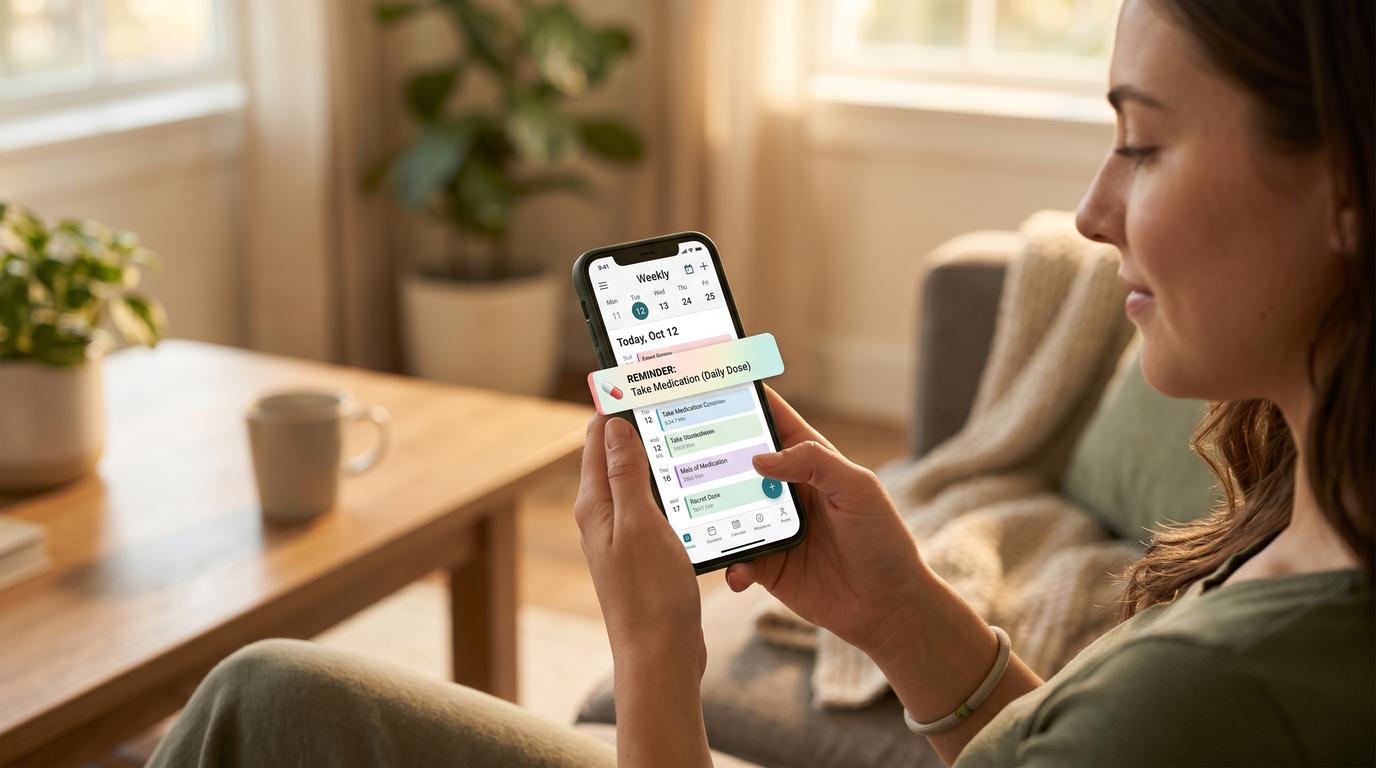
Use a weekly reminder in your phone or a calendar alert. Many patients find a recurring alarm more reliable than memory alone, especially in the early weeks.
---
Injecting Around Meals: Do You Need to Fast?
No. Subcutaneous semaglutide does not require fasting before or after injection.
This is a point of confusion partly because of oral semaglutide (brand name Rybelsus), which does have strict food restrictions. Rybelsus must be taken on an empty stomach with a small amount of water, at least 30 minutes before food, beverages, or other medications. The absorption mechanism for oral semaglutide is fundamentally different, and those rules do not apply to the injectable form.
For subcutaneous semaglutide, you can inject before a meal, after a meal, or between meals. There is some data suggesting fatty meals may marginally increase absorption, but the effect is not clinically significant for most people. Inject whenever it is most convenient.
If you experience nausea, some patients report it is milder when they are not injecting on a completely empty stomach. A light snack beforehand may help. Your provider can offer guidance tailored to your specific situation.
---
What If You Miss Your Injection Day?
Missing a dose happens. Here is how to handle it.
If fewer than 5 days have passed since your missed dose: Take the injection as soon as you remember. Then resume your regular schedule from that new date. For example, if you normally inject on Mondays and you remember on Thursday, inject on Thursday and consider Thursday your new injection day going forward, or return to Monday after a full 7 days.
If more than 5 days have passed: Skip the missed dose entirely. Do not try to make it up. Return to your regular schedule at the next scheduled date.
Do not double-dose. Taking two doses close together does not improve outcomes and significantly increases the likelihood of side effects.
For a more detailed breakdown of dose timing after a missed injection, see [what to do if you miss a dose](/resources/missed-dose-semaglutide-tirzepatide).
---
Special Situations: Travel, Surgery, and Illness
Traveling across time zones: Semaglutide's once-weekly schedule provides a lot of flexibility here. If you are crossing several time zones, inject within a reasonable window of your usual home time, or simply shift to your destination schedule if the trip is long enough. A variation of a day or two is acceptable as long as you maintain at least 5 days since your last dose. For detailed guidance on traveling with injectable medications, see [traveling with GLP-1 medications](/resources/traveling-with-glp1-medications-storage-guide).
Upcoming surgery: GLP-1 receptor agonists like semaglutide slow gastric emptying, which has important implications for anesthesia. Aspiration of stomach contents under general anesthesia is a serious risk. Many anesthesia protocols now recommend stopping GLP-1 medications one week before elective surgery, though guidance varies by institution. Discuss your specific situation with your surgeon and anesthesiologist well in advance. See [GLP-1 medications before surgery](/resources/glp1-medications-before-surgery-anesthesia-guide) for more information.
During illness: Semaglutide is generally continued during minor illness unless your provider instructs otherwise. If you are severely ill, unable to keep fluids down, or facing a procedure, contact your prescribing provider for guidance specific to your situation.
---
Frequently Asked Questions
Can I inject semaglutide at night? Yes. There is no pharmacological reason to avoid evening injections, and many people prefer them because sleeping through the post-injection window reduces awareness of any nausea. Evening injection is a practical strategy, not a medical requirement.
What if I inject 2 days late? If it has been fewer than 5 days since your missed dose, inject as soon as you remember. If it has been more than 5 days, skip that dose and return to your regular schedule.
Can I change my injection day? Yes. To shift to a different day, make sure at least 5 days have passed since your last injection before taking the new one. Then continue from that new day going forward.
Should I inject semaglutide with or without food? Subcutaneous semaglutide can be taken with or without food. There are no fasting requirements for the injectable form. This is different from oral semaglutide (Rybelsus), which does require fasting.
---
The Bottom Line
The best time to inject semaglutide is the time you will stick with consistently. Day of the week, morning or evening, before or after meals: none of these choices significantly changes how the medication works. What matters most is regularity and at least 7 days between doses.
If nausea is something you are managing in the early weeks, consider an evening injection. If building a sustainable routine is the challenge, anchor your injection to an existing weekly habit and set a recurring alarm.
Small adjustments in timing can improve tolerability. Review your approach with your provider if side effects are affecting your day-to-day life. For more on managing early side effects, see [managing semaglutide nausea](/resources/semaglutide-nausea) and the full [semaglutide dosing schedule guide](/resources/semaglutide-dosing-schedule-titration-guide).
Ready to get started? Prescriva connects you with licensed healthcare providers who can evaluate whether semaglutide is right for you, and create a plan tailored to your schedule and goals.
[Start your free assessment today](/get-started)
---
*This article is for informational and educational purposes only. It does not constitute medical advice, diagnosis, or treatment. Compounded semaglutide is not FDA-approved. Always consult your prescribing healthcare provider before making any changes to your medication schedule. Individual results may vary. Prescriva is a Management Services Organization (MSO) and does not practice medicine or employ physicians. Clinical decisions are made by licensed providers in our affiliated provider network.*
References
- Ikushima I, Jensen L, Flint A, et al. A Randomized Trial Investigating the Pharmacokinetics, Pharmacodynamics, and Safety of Subcutaneous Semaglutide Once-Weekly in Healthy Male Japanese and Caucasian Subjects. *Advances in Therapy*. 2018;35(3):383–394. PMID 29536338.
- Jensen L, Helleberg H, Roffel A, et al. Absorption, metabolism and excretion of the GLP-1 analogue semaglutide in humans and nonclinical species. *European Journal of Pharmaceutical Sciences*. 2017;104:31–41. PMID 28323117.
- Wilding JPH, Batterham RL, Calanna S, et al. Once-Weekly Semaglutide in Adults with Overweight or Obesity. *New England Journal of Medicine*. 2021;384(11):989–1002. PMID 33567185.
- Ozempic (semaglutide) injection [prescribing information]. Plainsboro, NJ: Novo Nordisk Inc; 2023.
Stay informed
Weekly research updates and health guides. No spam.
References
- Ikushima I, Jensen L, Flint A, et al. A Randomized Trial Investigating the Pharmacokinetics, Pharmacodynamics, and Safety of Subcutaneous Semaglutide Once-Weekly in Healthy Male Japanese and Caucasian Subjects. Advances in Therapy (2018).
- Jensen L, Helleberg H, Roffel A, et al. Absorption, metabolism and excretion of the GLP-1 analogue semaglutide in humans and nonclinical species. European Journal of Pharmaceutical Sciences (2017).
- Wilding JPH, Batterham RL, Calanna S, et al. Once-Weekly Semaglutide in Adults with Overweight or Obesity. New England Journal of Medicine (2021).
- Ozempic (semaglutide) injection [prescribing information]. Plainsboro, NJ: Novo Nordisk Inc; 2023.. Published Research (2023).
Ready to get started?
Check if you qualify for a personalized treatment plan.
Check Your Eligibility →