Traveling with GLP-1 Medications: A Complete Storage and Safety Guide
An international flight booked. A weekend trip to see family. A two-week vacation you have been looking forward to for months.
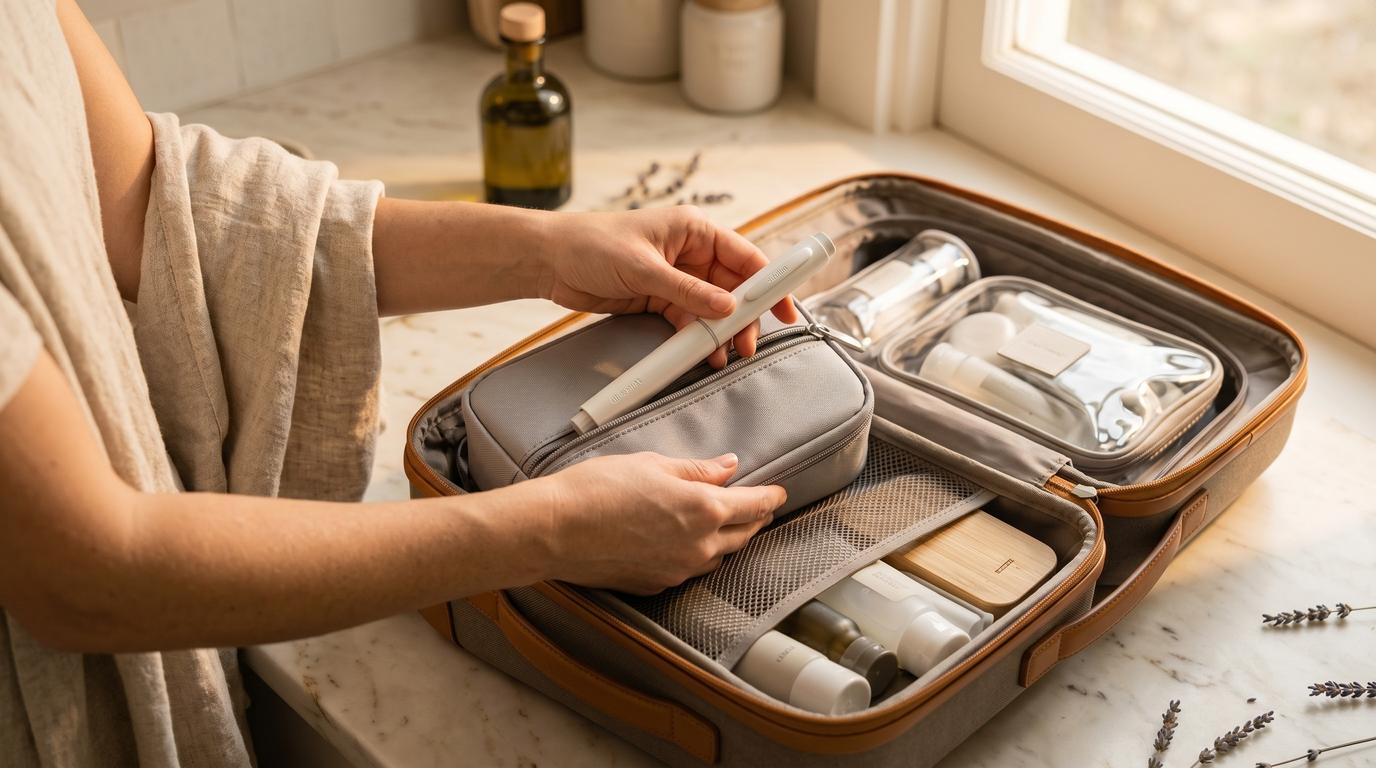
In this article
*Compounded semaglutide and [compounded tirzepatide](/resources/compounded-tirzepatide-guide) are not FDA-approved medications. This article is for informational purposes only and does not constitute medical advice. Follow the storage and dosing instructions provided by your prescribing provider and compounding pharmacy. Always consult your licensed healthcare provider before making changes to your medication routine. Care at Prescriva is delivered by independently licensed providers, not by Prescriva LLC, doing business as Prescriva, which is a management services organization.*
---
An international flight booked. A weekend trip to see family. A two-week vacation you have been looking forward to for months.
These are the moments when people on GLP-1 medications suddenly find themselves searching for answers: Can I bring my semaglutide pen through airport security? What happens if my medication gets too warm on the plane? What if I'm in a time zone that doesn't align with my usual injection day?
These questions come up constantly, and the answers are genuinely reassuring. GLP-1 medications like semaglutide and tirzepatide are designed to be used by real people living real lives - and that includes travel. With a little planning, you can manage your medication safely whether you are flying across the country or heading overseas for several weeks.
This guide covers everything you need to know.
---
Understanding Storage Requirements Before You Pack
The foundation of safe travel with GLP-1 medications starts with knowing exactly what your medication needs.
Temperature Sensitivity
GLP-1 medications are protein-based compounds. Like all proteins, they are sensitive to temperature extremes. Exposure to temperatures outside the recommended range can degrade the active compound, reducing potency even if the medication looks visually unchanged.
Before first use, GLP-1 pens and vials typically require refrigeration at 36 to 46 degrees Fahrenheit (2 to 8 degrees Celsius). This applies to both semaglutide and tirzepatide formulations, including compounded versions.
After first use, the storage window is more flexible. Most GLP-1 preparations can be kept at room temperature below 77 to 86 degrees Fahrenheit (25 to 30 degrees Celsius) for a specified period before they must be discarded. The exact window varies by formulation and compounding pharmacy. Check the labeling or instructions your pharmacy provided with your specific medication.
For compounded semaglutide and tirzepatide, follow the storage instructions on your pharmacy label. These may differ from FDA-approved branded formulations. If you are unsure, contact your pharmacy directly before you travel.
What "too warm" looks like in practice: The heat of a car interior in summer, direct sunlight, and overhead storage compartments on aircraft can all push temperatures above safe limits. A medication left in a hot car or in checked luggage stored in a cargo hold during an extreme weather flight is at real risk of degradation.
Freezing is also a problem. Temperatures below 32 degrees Fahrenheit (0 degrees Celsius) can crystallize the medication and make it unusable. Never pack GLP-1 medications in checked luggage that may be exposed to freezing cargo hold temperatures.
---
TSA and Airport Security: What to Expect
Millions of people travel through US airports with prescription medications, including injectable drugs, every day. The Transportation Security Administration has clear policies that make this manageable.
Liquid and Injectable Medications Are Exempt From the 3-1-1 Rule
The standard 3-1-1 rule (liquids in containers of 3.4 ounces or less, in a single quart-sized bag) does not apply to prescription medications. You can bring a 28-day supply, a 90-day supply, or whatever quantity you need for your trip. There is no volume restriction on medically necessary liquids.
This exemption covers:
- Prefilled GLP-1 injection pens
- Medication vials
- Syringes
- Alcohol swabs
- Cooling packs and insulated carrying cases
What TSA Requires
TSA does not require your medication to be in its original prescription bottle. However, having your medication labeled with your name and a matching photo ID makes the checkpoint process smoother and is strongly recommended for international travel.
Insulin syringes, which are similar in appearance to GLP-1 syringes, are explicitly listed in TSA guidelines as permitted when accompanied by injectable medication. The same principle applies to GLP-1 administration supplies.
Practical tip: Separate your medications and cooling case from the rest of your carry-on before you reach the X-ray machine. You will likely be asked to remove it for inspection anyway, and doing it proactively speeds up the process.
A Note on Medical Documentation
TSA does not require a doctor's letter or prescription printout for domestic travel. However, having one available is useful if an officer asks questions. For international travel, a letter from your prescriber on clinic letterhead stating your name, the medication name, dosage, and medical necessity is highly recommended and may be required by some countries.
---
Keeping Your Medication Cool During Travel
Managing temperature during travel is the most practical challenge GLP-1 users face. Here is how to handle it.
Use an Insulated Medication Carrying Case
A dedicated medication cooling case - with a gel pack designed for refrigerated medications, not dry ice - will maintain safe temperatures for 12 to 48 hours depending on the case and ambient conditions. These are widely available online and in travel pharmacies. Look for cases rated for 2 to 8 degrees Celsius protection.
Gel packs are the right choice. Dry ice and loose ice are not appropriate for GLP-1 pens because freezing is harmful. Gel packs that are pre-frozen and wrapped in a cloth or paper towel maintain a cool but not freezing temperature.
In-Flight Considerations
Overhead bins on aircraft reach variable temperatures and are not temperature-controlled. Store your medication in the seat pocket in front of you or under the seat rather than in the overhead compartment during a long flight.
On shorter flights where your medication is within its room-temperature stability window, the cabin temperature (typically kept at 65 to 75 degrees Fahrenheit) is sufficient. No cooling case is required.
If you are flying somewhere hot, plan to access refrigeration at your destination as soon as you arrive. Many hotels will store medications in a refrigerator at the front desk if there is no in-room option. Simply ask.
In a Car
Never leave GLP-1 medications in a parked car in warm weather. The interior temperature of a car parked in direct sun can reach 130 to 170 degrees Fahrenheit within minutes - far beyond what any GLP-1 medication can withstand. If you are road-tripping, keep the medication in a cooling case in the passenger compartment, not the trunk.
---
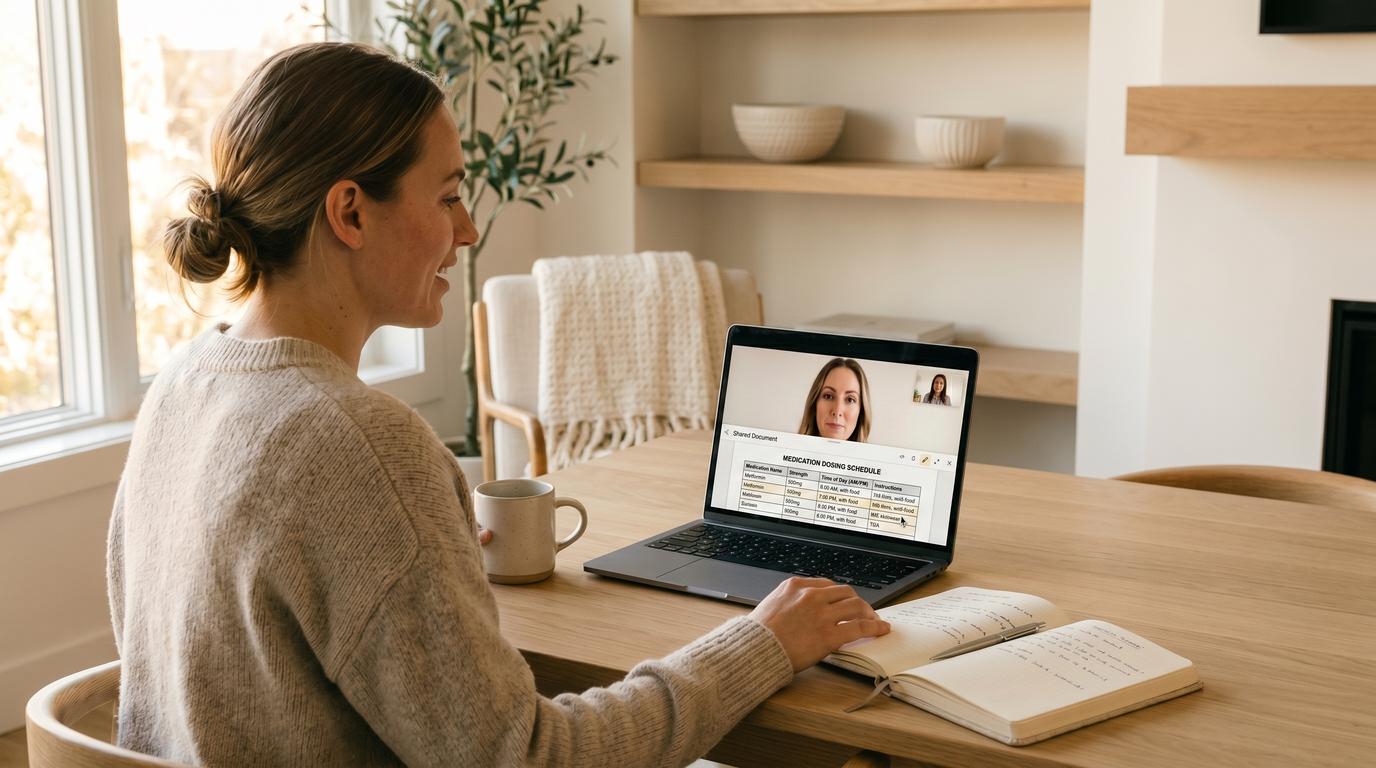
Managing Your Dosing Schedule Across Time Zones
One of the most common concerns travelers have is what to do about weekly injections when crossing time zones.
Why Once-Weekly Dosing Gives You Flexibility
Semaglutide and most GLP-1 medications used for weight management are administered once weekly. The pharmacokinetics of these medications are well-established: semaglutide has a half-life of approximately one week, meaning it remains active in your body for a prolonged period between doses (Yang et al., 2024; PMID 38952487).
This long half-life is what makes once-weekly dosing practical. It also means that a one-day or two-day shift in your injection schedule due to travel is unlikely to cause meaningful disruption in how the medication works.
The prescribing guidance for most GLP-1 medications allows a window of a few days on either side of your scheduled dose day. If you typically inject on Mondays and travel shifts your schedule so you inject on a Wednesday one week, you can return to Mondays the following week without clinical concern - as long as you are not injecting twice within a few days.
Always confirm with your own provider before making any change to your dosing schedule. The guidance here is general; your individual situation may differ.
What Happens If You Miss a Dose Entirely
Missing a single dose of a once-weekly GLP-1 medication is less consequential than missing a daily medication, precisely because of the long half-life. Research tracking real-world adherence to GLP-1 receptor agonists found that patients who maintained consistent weekly dosing had significantly better outcomes over time, with discontinuation rates rising sharply in the first few months (Gleason et al., 2024; PMID 38717042).
The clinical significance of this is clear from the STEP 1 trial extension, which tracked what happened to patients after semaglutide was withdrawn. Within one year of stopping, participants regained two-thirds of their lost weight and saw their cardiometabolic risk markers return toward baseline (Wilding et al., 2022; PMID 35441470).
This research is not meant to alarm travelers - it is context. Travel is a normal part of life, and a short delay in one injection is not going to cause the same effect as stopping the medication entirely. What matters is getting back on your regular schedule promptly.
---
International Travel: What You Need to Know
Traveling with prescription medication internationally requires more preparation than domestic travel.
Before You Leave
- Carry a letter from your prescriber. This should be on clinic letterhead, in English, and include: your full name, the medication name, dosage, and a statement that it is medically necessary. For countries where English is not the primary language, ask if a translated version is available.
- Research your destination country's rules. Some countries classify certain medications differently than the US does. A medication that is prescription-only in the US may require additional documentation or permits in another country, or may have restrictions on the quantity you can bring. Check the embassy or consulate website for your destination before you travel.
- Carry enough medication. Compounded GLP-1 medications cannot be easily replaced in another country. Many compounding pharmacies serve only US-based patients and cannot ship internationally. Bring your full supply plus a reasonable buffer in case of travel delays.
- Keep medications in your carry-on. Never pack injectable medications in checked luggage. Checked bags are exposed to variable temperatures in cargo holds and can be delayed or lost entirely.
Customs and Border Protection
When returning to the US, medications for personal use are generally allowed without issue. Customs and Border Protection (CBP) has no quantity limit for personal medications for a reasonable supply. Declaring medications at customs is not required but is the honest approach and avoids complications if your bag is inspected.
---
Practical Packing Checklist
Before every trip, confirm you have the following:
Medication and supplies:
- Full supply of GLP-1 medication (plus extra, if your trip extends beyond your next dose)
- Syringes or autoinjector pen (plus backup needles)
- Alcohol swabs
- Sharps disposal container (small travel size)
- Insulated medication case with gel packs
- Extra gel packs if your trip is longer than a day or two (freeze extras at your hotel)
- Prescriber letter (recommended for international travel)
- Copy of your prescription or pharmacy label
- Insurance card (if applicable)
- Contact information for your prescribing provider in case you have questions abroad
- Contact information for your compounding pharmacy
Frequently Asked Questions
Can I bring my GLP-1 pen through airport security? Yes. Prescription medications, including injectable pens and syringes, are exempt from the 3-1-1 liquid rule and are permitted in carry-on baggage at US airports.
What if my medication got warm during travel? If your medication was exposed to temperatures above the storage limit for an extended period, do not use it. Contact your provider or pharmacy for guidance. Using degraded medication may mean you are not getting the expected therapeutic effect, even if the pen looks normal.
Do I need a doctor's note to fly with semaglutide? For domestic US travel, TSA does not require a note. For international travel, a prescriber letter is strongly recommended and may be required depending on your destination country.
Can I put my GLP-1 medication in checked luggage? No. Cargo holds can reach temperatures well below freezing or above safe storage limits. Always carry your medication in your carry-on bag.
What if my medication is lost or stolen abroad? Contact your prescribing provider as soon as possible. They may be able to coordinate with your pharmacy or advise on next steps. This is another reason to travel with slightly more medication than the minimum you need.
---
The Bottom Line
Traveling with GLP-1 medications is straightforward when you plan for it. The core principles are consistent: keep your medication cool, carry it on your person, bring documentation for international travel, and don't let schedule shifts around a trip become an excuse to delay getting back to your regular routine.
The research on GLP-1 adherence is clear that consistent use drives outcomes, and the good news is that a well-planned trip does not have to disrupt that consistency at all.
---
Ready to explore your options? [Check your eligibility](/quiz) to see if a Prescriva GLP-1 program is right for you.
---
Sources
- Yang XD et al. Clinical Pharmacokinetics of Semaglutide: A Systematic Review. *Drug Design, Development and Therapy*. 2024. PMID: 38952487.
- Gleason PP et al. Real-world persistence and adherence to glucagon-like peptide-1 receptor agonists among obese commercially insured adults without diabetes. *Journal of Managed Care & Specialty Pharmacy*. 2024 Aug. PMID: 38717042.
- Wilding JPH et al. Weight regain and cardiometabolic effects after withdrawal of semaglutide: The STEP 1 trial extension. *Diabetes, Obesity & Metabolism*. 2022 Aug. PMID: 35441470.
Stay informed
Weekly research updates and health guides. No spam.
References
- Yang XD et al. Clinical Pharmacokinetics of Semaglutide: A Systematic Review. Drug Design, Development and Therapy (2024).
- Gleason PP et al. Real-world persistence and adherence to glucagon-like peptide-1 receptor agonists among obese commercially insured adults without diabetes. Journal of Managed Care & Specialty Pharmacy (2024).
- Wilding JPH et al. Weight regain and cardiometabolic effects after withdrawal of semaglutide: The STEP 1 trial extension. Diabetes, Obesity & Metabolism (2022).
Ready to get started?
Check if you qualify for a personalized treatment plan.
Check Your Eligibility →