Why Food Tastes Different on Semaglutide
You sit down to a meal you have eaten a hundred times. The food is fine. But something feels off. It is duller than you remember, or strangely unappetizing, or it triggers a faint wave of nausea befor

In this article
You sit down to a meal you have eaten a hundred times. The food is fine. But something feels off. It is duller than you remember, or strangely unappetizing, or it triggers a faint wave of nausea before you have even taken a bite. Meanwhile, sweets you used to crave no longer seem worth the effort.
If you are on semaglutide and noticing this, you are not imagining it. A meaningful number of people on GLP-1 medications report changes in how food tastes, how appealing certain foods feel, and even how enthusiastically they want to eat at all. This is not an obscure side effect. It connects directly to how semaglutide works in your body and brain.
This article explains the science behind these changes, what most people actually experience, how long it tends to last, and what you can do about it.
> Important disclaimer: Compounded semaglutide is not FDA-approved. It is prescribed by licensed healthcare providers following individual medical evaluation. This article is for educational purposes only and does not constitute medical advice. Always consult your healthcare provider before making any changes to your treatment plan.
---
How Semaglutide Works: A Quick Foundation
Semaglutide is a GLP-1 receptor agonist. It mimics glucagon-like peptide-1, a hormone your gut naturally releases after you eat. Natural GLP-1 breaks down within minutes, but semaglutide is engineered to last a full week.
In that time, it does several things. It tells the pancreas to release insulin in response to rising blood sugar. It slows gastric emptying, meaning food stays in your stomach longer before passing into the small intestine. And it communicates with your brain to reduce appetite [2].
That last part is the key. GLP-1 receptors are not confined to the gut and pancreas. They are distributed throughout your central nervous system, including brain regions that govern hunger, reward, and motivation [2, 3]. When semaglutide activates those receptors continuously over seven days, it creates a sustained shift in how your brain processes food-related signals.
This is the foundation for understanding taste changes. They are not random. They follow from the same neurological pathways that make semaglutide effective.
---
The Neuroscience Behind Taste Changes on Semaglutide
How GLP-1 Dials Down Food Reward
Eating is not just about fuel. The pleasure you get from food, the sense of reward after a satisfying meal, and the motivation to eat past fullness all run through a brain circuit called the mesolimbic system. This circuit includes the ventral tegmental area and the nucleus accumbens, and it operates largely through dopamine.
GLP-1 receptors exist throughout this system. Research published in Physiology and Behavior found that a GLP-1 receptor agonist suppressed phasic dopamine responses to food-predictive cues in animals, directly reducing the reward signal associated with anticipating food [5]. A separate study published in Cell Reports found that GLP-1 activity in the hypothalamus and mesolimbic pathways together reshape how the brain processes food-related motivation [6].
What this means practically: semaglutide does not only suppress physical hunger. It also reduces the hedonic pull of food, the part of eating driven by pleasure rather than need. For many people, this shows up as food feeling less exciting. Cravings for previously irresistible foods quiet down. The mental preoccupation with eating that some people call "food noise" fades.
The Gastric Emptying Effect
Semaglutide slows the rate at which food leaves your stomach. This is well established in the clinical literature [2, 3]. The mechanism contributes significantly to satiety: when food lingers longer, you feel full faster and for longer.
But this also changes the sensory experience of eating. The satisfaction arc of a meal, moving from hungry to comfortably full, becomes compressed. Many people feel uncomfortably full well before finishing a portion they would normally complete. Over time, the brain begins to associate certain foods, particularly heavy, rich, or high-fat ones, with that uncomfortable sensation. What was once appealing starts to feel aversive even before you eat it.
This is not a taste change in the strictest sense. The food has not changed. But the body's anticipatory response to it has, and that shifts how appealing the food seems.
Why Some Foods May Taste Stronger or More Intense
When you are eating smaller portions, flavors tend to concentrate. A bite of something is experienced more fully when it is not followed by fifteen more bites. Some people on semaglutide report that foods they previously ate in large quantities now taste stronger, sometimes pleasantly so, and sometimes overwhelmingly.
There is also evidence that GLP-1 receptors play a role in taste bud function at the biological level. Research in the area of gut-brain signaling suggests that GLP-1 is involved in peripheral taste signaling beyond the central nervous system [3], though the specific mechanisms in humans are still being studied.
---
What Taste Changes Actually Feel Like: Common Patterns
Taste changes on semaglutide are not uniform. They vary between people and can evolve as you move through different doses. These are the patterns reported most often:
Sweet Foods Lose Their Appeal
Many people find that foods they previously craved strongly, sugary drinks, desserts, candy, highly processed snacks, simply no longer hold the same pull. This aligns with what we know about GLP-1 and mesolimbic reward suppression [5]. The anticipatory pleasure of these foods is diminished at a neurological level.
This is often one of the first changes people notice, and for many, it is a welcome one.
Fatty or Greasy Foods Become Aversive
High-fat foods are among the most likely to cause nausea and discomfort on semaglutide, particularly in the early months of treatment. Research on GI tolerability during semaglutide treatment found that fatty foods were specifically associated with increased nausea events, and that reducing high-fat food intake improved tolerability significantly [4].
Over time, many people begin to anticipate the discomfort these foods bring before eating them, and they start to feel less appealing.
Alcohol May Taste or Feel Different
Reduced interest in alcohol is one of the most widely discussed changes on GLP-1 medications. This connects to the same reward circuitry that governs food cravings. Alcohol activates dopamine pathways in the mesolimbic system, and GLP-1 receptor activation in those same pathways suppresses that response [5, 6].
Some people report that alcohol simply tastes different, less enjoyable, or that the desire to drink fades without much effort. Others notice they feel the effects of alcohol more acutely on smaller amounts, which may relate to altered gastric emptying affecting how alcohol is absorbed.
Protein and Vegetables Become More Palatable
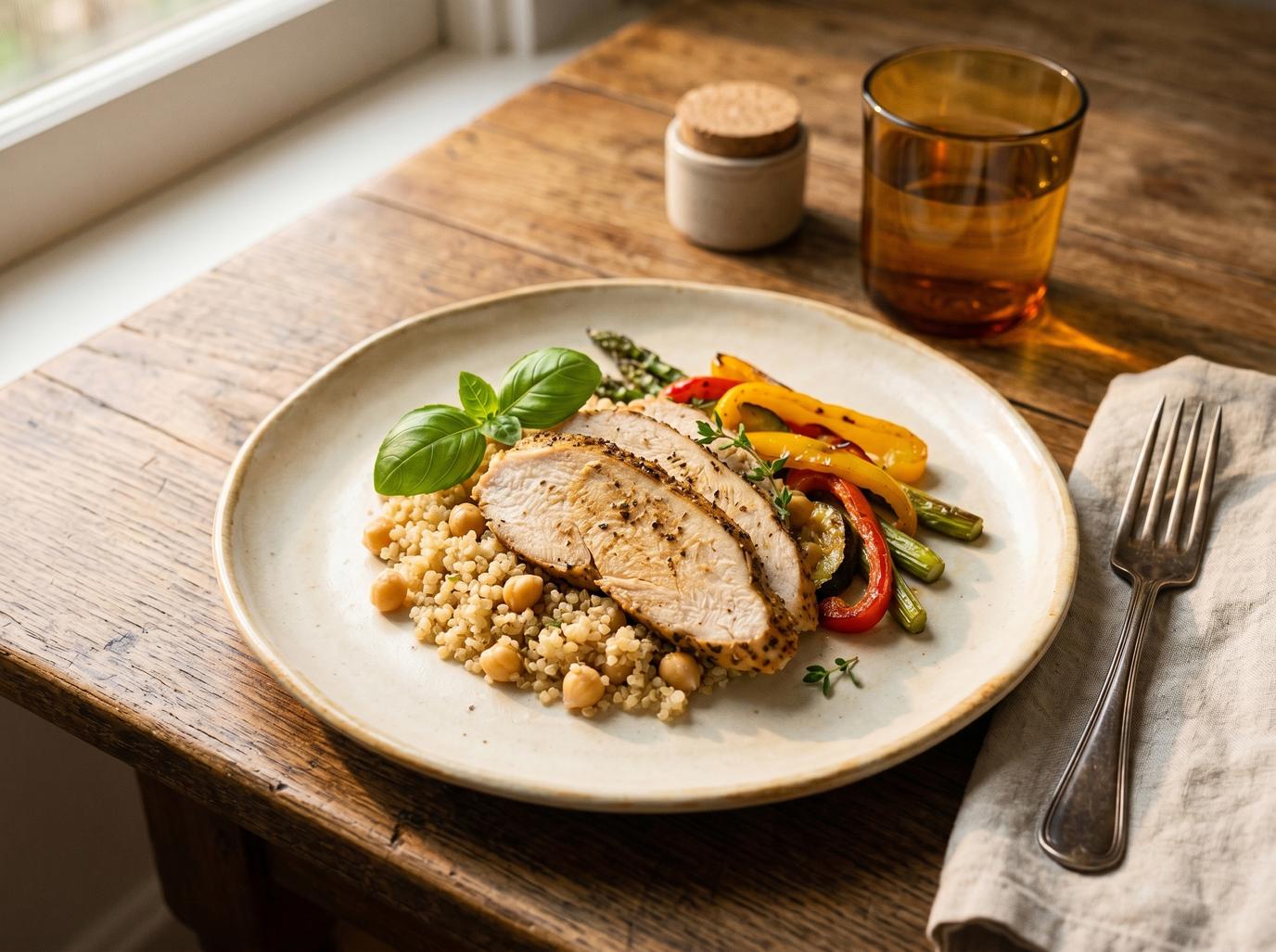
This one surprises some people. When the strong drive toward high-fat, high-sugar foods quiets, there is often more room for foods that previously seemed boring. Lean proteins, vegetables, whole grains, and legumes can start to feel more satisfying. This may partly reflect a shift in the baseline of what the appetite system is responding to.
Clinical data from the STEP 1 trial noted that caloric reductions on semaglutide came disproportionately from fat and carbohydrate intake rather than protein [1], which suggests the medication may shift preferences in a direction that favors protein retention.
Some Foods Trigger Unexpected Aversions
A smaller number of people develop aversions to specific foods they previously ate without issue. Chicken is a commonly mentioned example. Red meat is another. The aversion can be strong enough to feel visceral. This likely reflects a conditioned response: if a food caused nausea or discomfort shortly after eating it during a dose adjustment, the brain can form a quick negative association with that food.
This type of conditioned taste aversion is a well-studied phenomenon in neuroscience and is not unique to GLP-1 medications. It is, however, amplified by the GI effects of semaglutide, particularly in the early titration phase.
---
Is This a Problem, or Is It Part of the Plan?
For most people, mild to moderate taste changes are a tolerable and often helpful feature of treatment. A reduced preoccupation with food, less interest in highly processed or calorie-dense options, and a smaller portion tolerance are all consistent with the goals of medically supervised weight management.
That said, a few scenarios are worth discussing with your provider:
Strong food aversions that limit your nutrition. If you have developed aversions to protein-rich foods or to most foods broadly, your nutritional intake may be compromised. Symptoms of insufficient intake include fatigue, muscle weakness, and hair thinning. If these appear, contact your provider.
Inability to meet minimum caloric needs. Semaglutide reduces appetite significantly, but it is not designed to eliminate eating. Adults generally need at least 1,200 calories daily to avoid muscle loss and nutrient deficiency. If you are consistently eating far below this, a dose adjustment may be appropriate.
Severe nausea attached to most foods. Taste changes linked to GI distress often improve after the titration period or with a slower dose escalation. If nausea is severe, your provider may slow your schedule.
---
How Long Do Taste Changes Last?
The most pronounced changes typically occur in the first one to three months of treatment, particularly after each dose increase. As your body adjusts to a stable dose and the GI side effects settle, taste changes often become less dramatic.
Many people report that their relationship with food has genuinely shifted by the time they reach a maintenance dose, but that the acute aversions and strong appetite suppression moderate over time. This is broadly consistent with data from the STEP 4 trial, which examined what happens to weight and appetite patterns after patients reached a stable maintenance dose [7].
If you stop taking semaglutide, appetite signals and food preferences tend to return toward baseline. For many people, this is part of why building sustainable dietary habits during treatment matters: the behavioral patterns established while appetite is suppressed are more likely to persist than the suppression itself.
---
Practical Tips for Eating Well When Taste Has Changed
These changes, while disorienting, create a genuine opportunity to build better habits. Here is what tends to work:
Lean into protein. Protein is often one of the foods that remains palatable and provides the most nutritional value per calorie. Prioritizing protein helps preserve muscle mass during weight loss, which is critical on GLP-1 therapy [1].
Eat small portions more often. Forcing large meals when your stomach empties slowly leads to discomfort and can worsen taste aversions. Smaller, more frequent eating windows are usually easier to manage.
Track what you can tolerate and what you cannot. Keep a simple list of foods that sit well and foods that trigger discomfort. Use this to plan meals intentionally rather than trial and error at mealtimes.
Avoid high-fat, fried, and very sweet foods in the early months. These are most likely to cause nausea and to build conditioned aversions [4]. Once your tolerance stabilizes, some people can reintroduce them in small amounts.
Stay hydrated. Reduced food intake can come with reduced fluid intake, which compounds fatigue and makes sensory changes feel more pronounced. Aim for consistent hydration throughout the day.
Consider working with a registered dietitian. A dietitian familiar with GLP-1 therapy can help you build a nutritional plan that accounts for your shifting palate while meeting your needs for protein, micronutrients, and overall caloric sufficiency.
---
The Bottom Line
Taste changes on semaglutide are real, relatively common, and rooted in the same neurobiology that makes GLP-1 medications effective for weight management. Semaglutide activates GLP-1 receptors in the brain's reward system, suppressing the dopamine response to food cues and reducing the hedonic pull of eating. It also slows gastric emptying, which changes the physical experience of meals. Together, these mechanisms can alter what food tastes like, how appealing it seems, and what your body is willing to eat.
For most people, these changes are most pronounced during the titration phase and stabilize at a consistent maintenance dose. They are generally a feature of treatment rather than a problem with it.
If taste changes are affecting your ability to eat enough, or if you have developed aversions that are limiting your nutrition, talk to your healthcare provider. Adjustments to dose, timing, or your dietary approach can make a meaningful difference.
Ready to explore your options? [Check your eligibility](/assessment) and connect with a licensed provider who can guide your treatment.
---
> Disclaimer: Compounded semaglutide is not FDA-approved. Individual results vary. This content is for educational purposes only and does not constitute medical advice. Consult a licensed healthcare provider before starting any treatment.
---
Sources
- Wilding JPH, Batterham RL, Calanna S, et al. Once-Weekly Semaglutide in Adults with Overweight or Obesity. *N Engl J Med.* 2021;384(11):989-1002. PMID: [33567185](https://pubmed.ncbi.nlm.nih.gov/33567185/)
- Drucker DJ. The biology of incretin hormones. *Cell Metab.* 2006;3(3):153-165. PMID: [16517403](https://pubmed.ncbi.nlm.nih.gov/16517403/)
- Baggio LL, Drucker DJ. Biology of incretins: GLP-1 and GIP. *Gastroenterology.* 2007;132(6):2131-2157. PMID: [17498508](https://pubmed.ncbi.nlm.nih.gov/17498508/)
- Wharton S, Calanna S, Davies M, et al. Gastrointestinal tolerability of once-weekly semaglutide 2.4 mg in adults with overweight or obesity, and the relationship between gastrointestinal adverse events and weight loss. *Diabetes Obes Metab.* 2022;24(1):94-105. PMID: [34514682](https://pubmed.ncbi.nlm.nih.gov/34514682/)
- Konanur VR, Hsu TM, Kanoski SE, et al. Phasic dopamine responses to a food-predictive cue are suppressed by the glucagon-like peptide-1 receptor agonist Exendin-4. *Physiol Behav.* 2020;215:112771. PMID: [31821815](https://pubmed.ncbi.nlm.nih.gov/31821815/)
- Falk S, Petersen J, Svendsen C, et al. GLP-1 and nicotine combination therapy engages hypothalamic and mesolimbic pathways to reverse obesity. *Cell Rep.* 2023;42(5):112492. PMID: [37148870](https://pubmed.ncbi.nlm.nih.gov/37148870/)
- Rubino D, Abrahamsson N, Davies M, et al. Effect of Continued Weekly Subcutaneous Semaglutide vs Placebo on Weight Loss Maintenance in Adults With Overweight or Obesity: The STEP 4 Randomized Clinical Trial. *JAMA.* 2021;325(14):1414-1425. PMID: [33755728](https://pubmed.ncbi.nlm.nih.gov/33755728/)
Stay informed
Weekly research updates and health guides. No spam.
References
- Wilding JPH, Batterham RL, Calanna S, et al. Once-Weekly Semaglutide in Adults with Overweight or Obesity. N Engl J Med. (2021).
- Drucker DJ. The biology of incretin hormones. Cell Metab. (2006).
- Baggio LL, Drucker DJ. Biology of incretins: GLP-1 and GIP. Gastroenterology. (2007).
- Wharton S, Calanna S, Davies M, et al. Gastrointestinal tolerability of once-weekly semaglutide 2.4 mg in adults with overweight or obesity, and the relationship between gastrointestinal adverse events and weight loss. Diabetes Obes Metab. (2022).
- Konanur VR, Hsu TM, Kanoski SE, et al. Phasic dopamine responses to a food-predictive cue are suppressed by the glucagon-like peptide-1 receptor agonist Exendin-4. Physiol Behav. (2020).
- Falk S, Petersen J, Svendsen C, et al. GLP-1 and nicotine combination therapy engages hypothalamic and mesolimbic pathways to reverse obesity. Cell Rep. (2023).
- Rubino D, Abrahamsson N, Davies M, et al. Effect of Continued Weekly Subcutaneous Semaglutide vs Placebo on Weight Loss Maintenance in Adults With Overweight or Obesity: The STEP 4 Randomized Clinical Trial. JAMA. (2021).
Ready to get started?
Check if you qualify for a personalized treatment plan.
Check Your Eligibility →