Joint Health and Peptide Therapy: Protecting Your Foundation
Joint health is the foundation of a sustainable fitness practice. While muscle tissue adapts relatively quickly to training stress, cartilage, tendons, and ligaments remodel on a much slower timeline.

In this article
Joint health is the foundation of a sustainable fitness practice. While muscle tissue adapts relatively quickly to training stress, cartilage, tendons, and ligaments remodel on a much slower timeline. This mismatch is why joint problems are the most common reason active adults reduce or stop training. Understanding joint biology and the interventions that support it allows you to protect this critical infrastructure.
Joint Anatomy and Vulnerability
Synovial joints, the freely moving joints like the knee, shoulder, and hip, consist of several tissue types that work together:
- Articular cartilage: A smooth, avascular tissue covering bone surfaces that absorbs shock and reduces friction. Because it lacks direct blood supply, cartilage depends on diffusion from synovial fluid for nutrients and has very limited self-repair capacity.
- Synovial membrane: Lines the joint capsule and produces synovial fluid, which lubricates and nourishes the joint.
- Tendons: Connect muscle to bone. They transmit force but adapt slowly to loading increases.
- Ligaments: Connect bone to bone. They provide stability and proprioceptive feedback.
- Menisci and labra: Fibrocartilage structures that deepen joint surfaces and distribute load.
Common Joint Issues in Active Adults
Tendinopathy
Tendon overuse injuries (tendinitis in the acute phase, tendinosis in the chronic degenerative phase) are the most common joint-related problems in active populations. The Achilles tendon, patellar tendon, rotator cuff tendons, and lateral elbow tendons are the most frequently affected.
Tendinopathy results not from inflammation alone but from failed healing, a cycle of microdamage, disorganized repair, and progressive tissue degeneration. A landmark review in the Lancet described tendinopathy as a continuum from reactive tendinopathy (reversible) through tendon dysrepair to degenerative tendinopathy.
Osteoarthritis
Osteoarthritis (OA) involves the progressive loss of articular cartilage alongside changes in the underlying bone, synovial membrane, and surrounding soft tissues. While often considered a disease of aging, OA frequently develops in younger active adults, particularly in joints subjected to repetitive impact or previous injury.
Cartilage Damage
Unlike bone or muscle, articular cartilage has very limited intrinsic healing capacity. Chondrocytes (cartilage cells) are sparsely distributed and have low metabolic activity. Full-thickness cartilage defects do not spontaneously repair, making prevention and early intervention critical.
Nutrition for Joint Health
Collagen and Gelatin
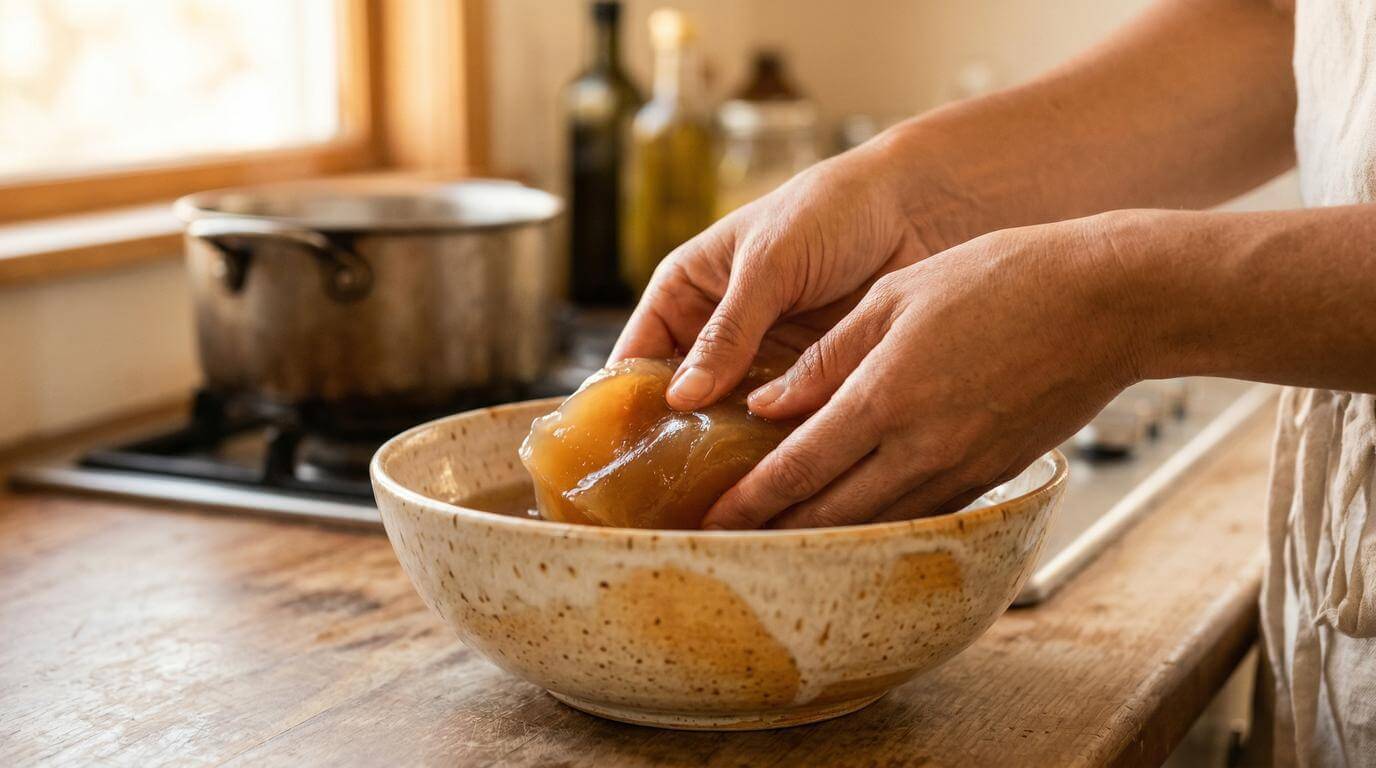
Collagen is the primary structural protein in tendons, ligaments, and cartilage. Supplementing with collagen peptides or gelatin (which is partially hydrolyzed collagen) provides the specific amino acids, glycine, proline, and hydroxyproline, that serve as building blocks for connective tissue.
Research published in the American Journal of Clinical Nutrition demonstrated that 15 grams of vitamin C-enriched gelatin consumed 60 minutes before exercise increased collagen synthesis markers (specifically PINP, a procollagen biomarker) by approximately twofold compared to exercise alone.
Practical protocol:
- 15 grams of collagen peptides or gelatin
- Combined with 50 mg of vitamin C
- Consumed 30-60 minutes before training or rehabilitative exercise
- Target the exercise toward the joint or tendon you want to support
Omega-3 Fatty Acids
Chronic low-grade inflammation contributes to cartilage degradation and tendon pathology. Omega-3 fatty acids (EPA and DHA) from fish oil or algae support the resolution of inflammation and have shown modest benefits for joint comfort in clinical trials.
A meta-analysis in the Annals of the Rheumatic Diseases found that omega-3 supplementation (2-3 g EPA/DHA daily) reduced joint pain and stiffness scores in patients with rheumatoid arthritis and osteoarthritis.
Glucosamine and Chondroitin
Evidence for glucosamine and chondroitin is mixed. Some large trials (the GAIT trial published in the New England Journal of Medicine) found no significant benefit over placebo for overall knee OA, while subgroup analyses suggested possible benefit for moderate-to-severe cases. They are generally well-tolerated and some patients report subjective improvement.
Training Strategies for Joint Protection
Load Management
The most effective joint protection strategy is intelligent load management:
- Increase weekly training volume by no more than 10% per week
- Include tendon-specific loading: heavy slow resistance training (3-5 second eccentrics) has evidence for both prevention and treatment of tendinopathy
- Warm up with graduated loading before working sets
- Monitor for pain: a 0-2 out of 10 pain level during exercise is generally acceptable; above that, reduce load
Movement Quality
Poor biomechanics increase stress on joint structures. Common issues include:
- Knee valgus (caving inward) during squats and lunges
- Excessive forward lean shifting load to the lower back
- Shoulder impingement patterns during overhead pressing
- Running with excessive stride length increasing impact forces
Exercise Selection
Not all exercises impose equal joint stress:
- Closed-chain exercises (squats, push-ups) generally distribute load across joints more evenly than open-chain exercises (leg extensions, flyes)
- Partial range of motion can reduce joint stress during flare-ups while maintaining training stimulus
- Swimming and cycling provide cardiovascular benefits with minimal joint impact
Peptide Therapy for Joint Health
BPC-157
BPC-157 has demonstrated robust effects on connective tissue healing in preclinical studies. Proposed mechanisms include:
- Upregulation of growth hormone receptors in injured tissue
- Promotion of angiogenesis (new blood vessel formation) to improve nutrient delivery
- Modulation of nitric oxide pathways that support tissue repair
- Anti-inflammatory effects that do not suppress the productive phases of healing
CJC-1295/Ipamorelin for Connective Tissue
Growth hormone promotes collagen synthesis throughout the body. By increasing GH output through CJC-1295/Ipamorelin therapy, patients may support the baseline rate of connective tissue turnover and repair. This is particularly relevant for older adults experiencing age-related declines in GH and connective tissue quality.
Hyaluronic Acid
While not a peptide, injectable hyaluronic acid (viscosupplementation) improves synovial fluid quality and has evidence for reducing OA symptoms in certain joints, particularly the knee. It is often used alongside other interventions as part of a comprehensive joint preservation strategy.
Key Takeaways
- Joint tissues adapt more slowly than muscle, load progressions must account for this
- Collagen peptides with vitamin C before exercise support connective tissue synthesis
- Omega-3 fatty acids help manage chronic joint inflammation
- Heavy slow resistance training supports tendon health and resilience
- BPC-157 shows promise for accelerating tendon and ligament repair
- CJC-1295/Ipamorelin may support connective tissue maintenance through enhanced GH signaling
- Prevention through load management and movement quality is far more effective than treatment after damage occurs
References
- Shaw G, et al. Vitamin C-enriched gelatin supplementation before intermittent activity augments collagen synthesis. *Am J Clin Nutr.* 2017 Jan. PMID 27852613. [https://pubmed.ncbi.nlm.nih.gov/27852613/](https://pubmed.ncbi.nlm.nih.gov/27852613/)
- Senftleber NK, et al. Marine Oil Supplements for Arthritis Pain: A Systematic Review and Meta-Analysis of Randomized Trials. *Nutrients.* 2017 Jan. PMID 28067815. [https://pubmed.ncbi.nlm.nih.gov/28067815/](https://pubmed.ncbi.nlm.nih.gov/28067815/)
- Fendri T, et al. Progressive tendon-loading eccentric exercise therapy in athletes with patellar tendinopathy. *J ISAKOS.* 2026 Mar. PMID 41905494. [https://pubmed.ncbi.nlm.nih.gov/41905494/](https://pubmed.ncbi.nlm.nih.gov/41905494/)
- Mayfield CK, et al. Injectable Peptide Therapy: A Primer for Orthopaedic and Sports Medicine Physicians. *Am J Sports Med.* 2026 Jan. PMID 41476424. [https://pubmed.ncbi.nlm.nih.gov/41476424/](https://pubmed.ncbi.nlm.nih.gov/41476424/)
Stay informed
Weekly research updates and health guides. No spam.
References
- Shaw G, et al. Vitamin C-enriched gelatin supplementation before intermittent activity augments collagen synthesis. Am J Clin Nutr. (2017).
- Senftleber NK, et al. Marine Oil Supplements for Arthritis Pain: A Systematic Review and Meta-Analysis of Randomized Trials. Nutrients. (2017).
- Fendri T, et al. Progressive tendon-loading eccentric exercise therapy in athletes with patellar tendinopathy. J ISAKOS. (2026).
- Mayfield CK, et al. Injectable Peptide Therapy: A Primer for Orthopaedic and Sports Medicine Physicians. Am J Sports Med. (2026).
Ready to get started?
Check if you qualify for a personalized treatment plan.
Check Your Eligibility →Continue reading
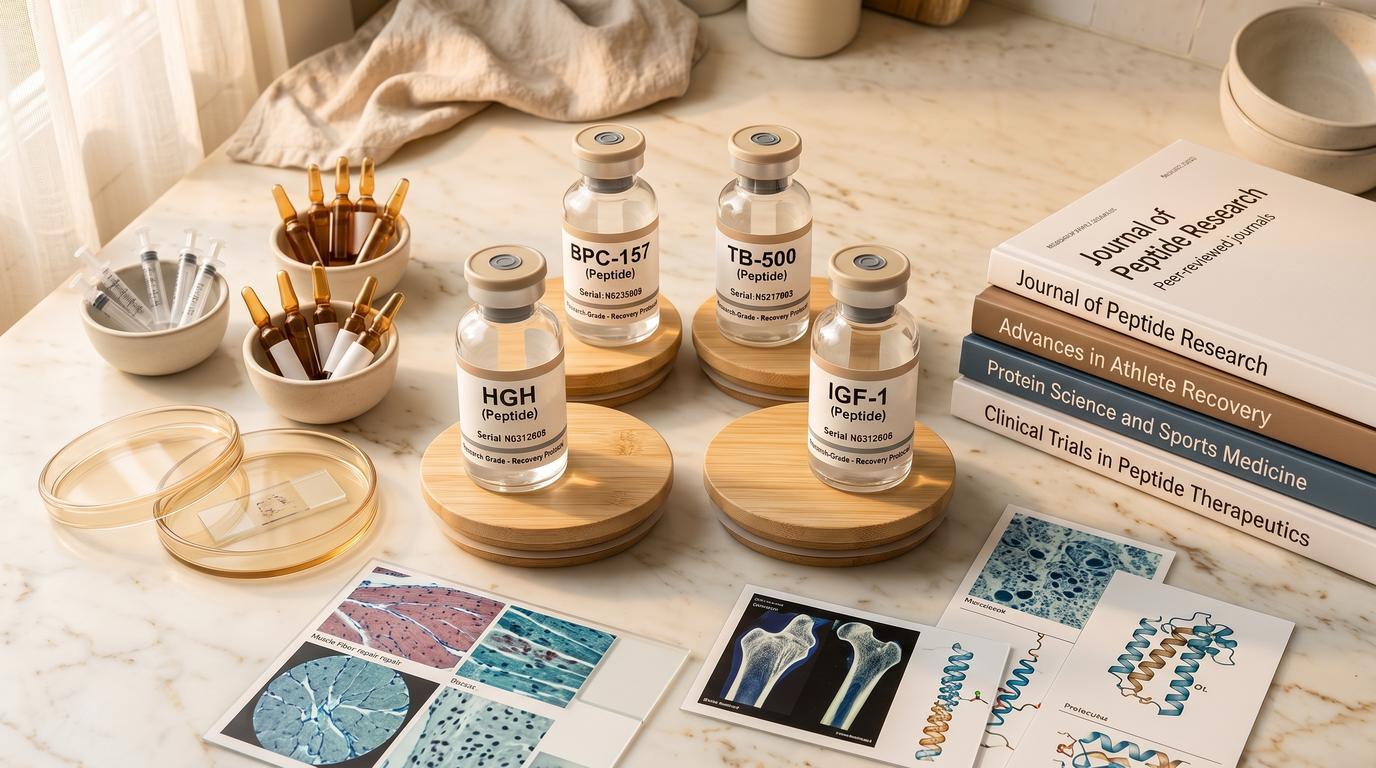
Peptide Therapy for Athletes: Recovery, Performance, and What the Research Shows

TB-500 (Thymosin Beta-4): What the Research Says About Tissue Repair