How Telehealth Weight Loss Programs Work: A Realistic Look at Online GLP-1 Treatment
Weight loss medication is now available without a referral, a specialist appointment, or months of waiting. For people who qualify, the entire process from initial intake to medication delivery can ha
In this article
*Compounded semaglutide and compounded tirzepatide are not FDA-approved. This article is for informational purposes only and does not constitute medical advice. Individual results vary. Consult a licensed healthcare provider before starting, stopping, or adjusting any medication or treatment plan. Care at Prescriva is delivered by independently licensed providers, not by Prescriva LLC, doing business as Prescriva, which is a management services organization.*
---
Weight loss medication is now available without a referral, a specialist appointment, or months of waiting. For people who qualify, the entire process from initial intake to medication delivery can happen entirely online in a matter of days. That shift represents a genuine change in how weight loss care is delivered, and it raises a reasonable question: how does this actually work?
This article explains the telehealth weight loss model from the ground up. What the programs include, how the medical process works, what medication you actually receive, how to evaluate whether a provider is legitimate, and what to expect month to month.
---
What Is a Telehealth Weight Loss Program?
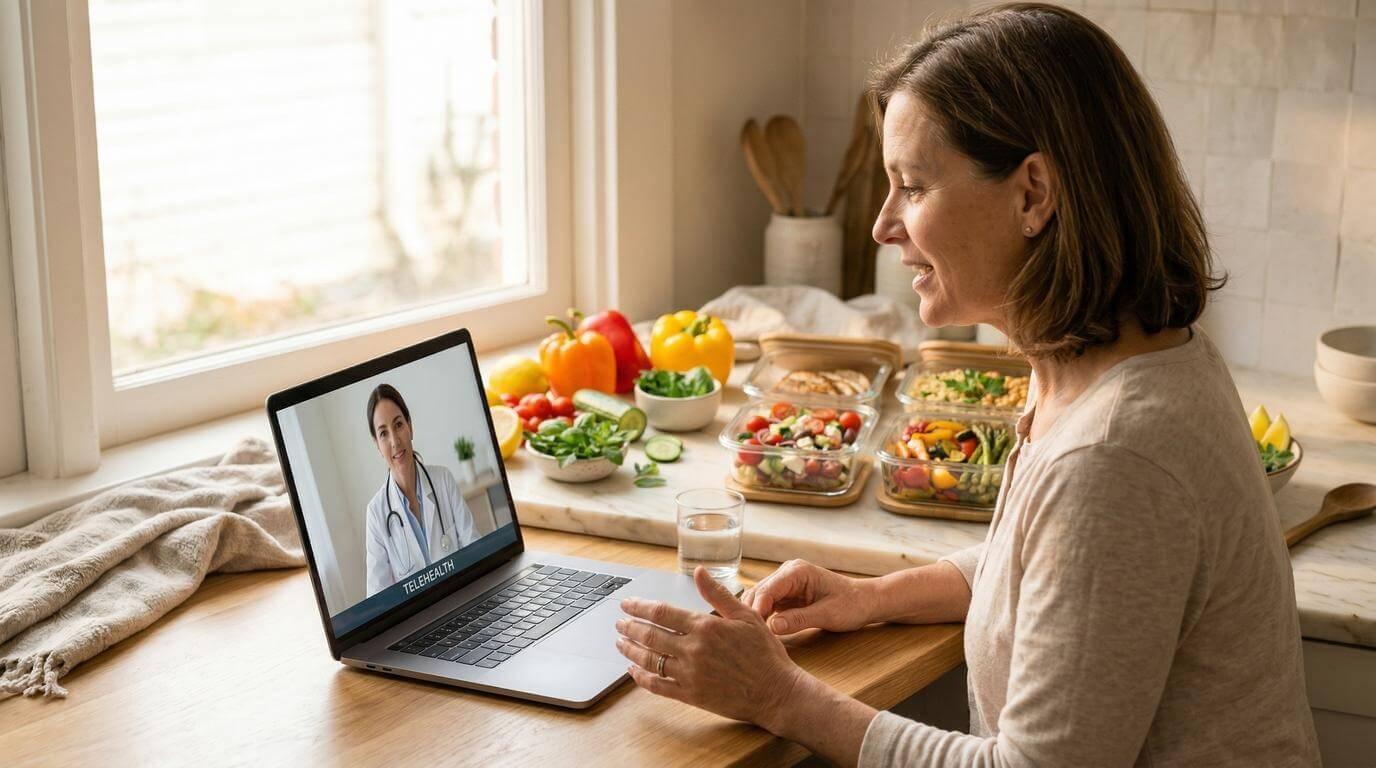
A telehealth weight loss program combines three things: licensed physician oversight, prescription medication, and coordinated delivery, all handled remotely.
The term "telehealth" is sometimes misread as shorthand for "less medical." That is not accurate. Licensed physicians make prescribing decisions. A compounding pharmacy fills the prescription. The difference from a traditional in-person model is logistical, not clinical.
These programs are specifically different from meal-replacement services, app-based coaching platforms, or over-the-counter supplement programs. The distinguishing feature is that a licensed healthcare provider evaluates your medical history, determines whether prescription medication is appropriate, and maintains ongoing clinical oversight of your care.
The medication at the center of most telehealth weight loss programs today is a GLP-1 receptor agonist: either semaglutide (the active ingredient in Ozempic and Wegovy) or tirzepatide (the active ingredient in Mounjaro and Zepbound). These are not supplements. They are prescription medications with substantial clinical trial data behind them.
---
The GLP-1 Medication Piece
GLP-1 stands for glucagon-like peptide-1, a hormone the body produces naturally after eating. GLP-1 receptor agonists mimic that hormone's effects: they slow gastric emptying, reduce appetite, and improve blood sugar regulation. The result is a meaningful reduction in caloric intake, often without significant hunger.
The clinical evidence here is substantial. In the STEP 1 trial, once-weekly semaglutide produced an average weight loss of approximately 15 percent of body weight over 68 weeks in adults with overweight or obesity. That study involved nearly 2,000 participants and set a new benchmark for what pharmacological weight loss treatment could achieve (Wilding JPH et al., N Engl J Med, 2021; PMID: 33567185).
Tirzepatide, which targets two receptors (GLP-1 and GIP), has shown even stronger results in some populations. The SURMOUNT-1 trial found weight reductions averaging 20 percent or more at the highest dose over 72 weeks (Jastreboff AM et al., N Engl J Med, 2022; PMID: 35658024).
Compounded vs. Brand-Name
Most telehealth weight loss programs use compounded versions of semaglutide or tirzepatide rather than the brand-name products. Here is why that distinction matters:
Brand-name GLP-1 medications (Ozempic, Wegovy, Mounjaro, Zepbound) cost between $900 and $1,300 per month without insurance. Most commercial insurance plans do not cover them for weight loss. For the majority of patients, the brand-name route is simply not financially viable.
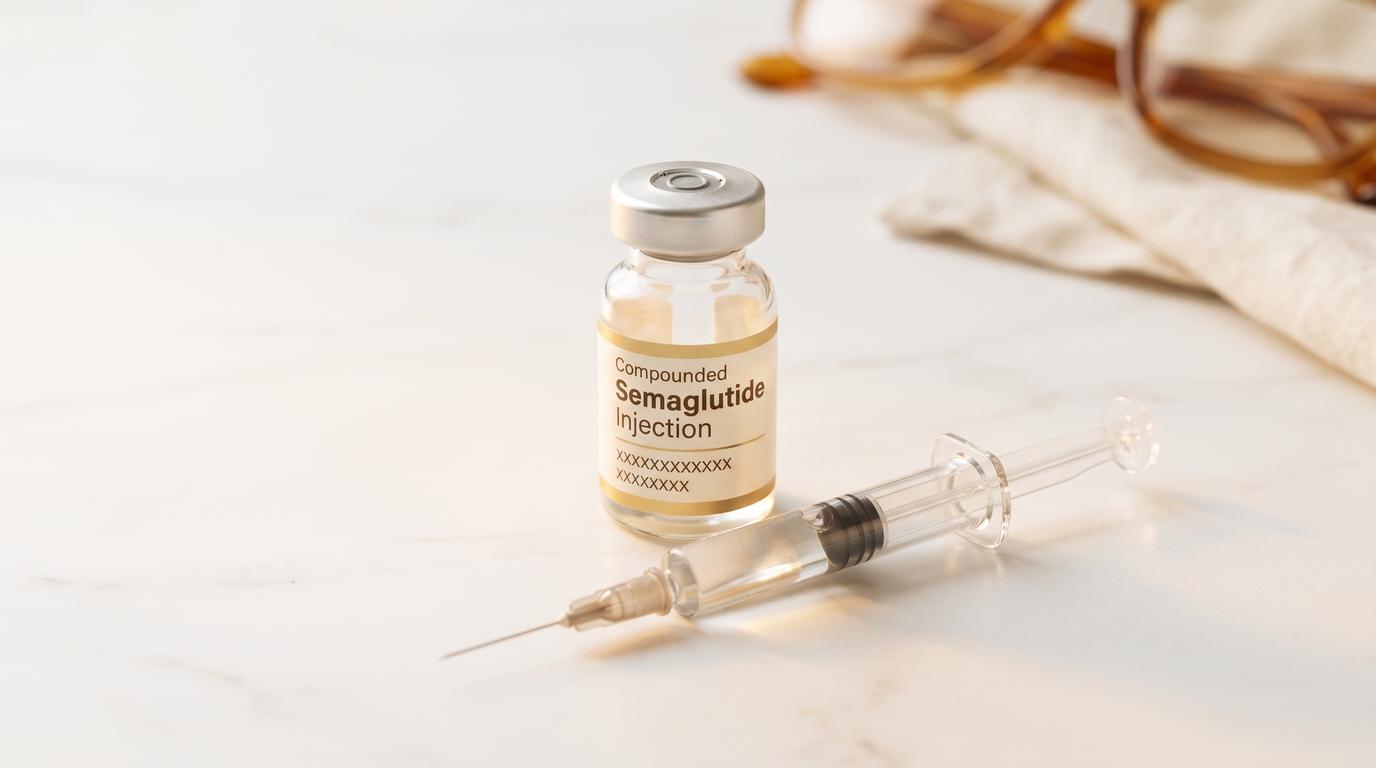
Compounded semaglutide and compounded tirzepatide are patient-specific formulations prepared by licensed 503A compounding pharmacies operating under state pharmacy board oversight. They are not FDA-approved and are not equivalent to branded products. Program pricing typically ranges from $150 to $350 per month depending on dose and provider, which reflects the lower overhead of the compounding pharmacy model rather than any equivalence to branded medications.
One important clarification: compounded GLP-1 medications are not generics. They are custom-prepared formulations by licensed pharmacists. The terms "generic Ozempic" or "generic Wegovy" are inaccurate and legally significant. What you receive from a telehealth program using a licensed pharmacy is a compounded preparation, not a generic drug.
Compounded semaglutide and tirzepatide require a valid prescription from a licensed physician. There is no legitimate path to obtaining them without one.
---
How the Process Works: Step by Step
Understanding the actual sequence demystifies why telehealth programs can move quickly while still being clinically sound.
Step 1: Complete an Online Health Intake
The process begins with a detailed medical intake form. This is not a perfunctory sign-up questionnaire. A comprehensive intake collects your current height, weight, BMI, blood pressure history, existing medical conditions, current medications, relevant family history, and weight loss goals. Most platforms take 10 to 20 minutes to complete.
This intake serves the same clinical function as an in-person patient history. It is the foundation on which a licensed physician makes a prescribing decision.
Step 2: Physician Review
After you submit your intake, a licensed US physician (or in some states, a nurse practitioner or physician assistant under physician oversight) reviews your information. This review is where actual clinical judgment happens. The provider evaluates whether you meet medical criteria for GLP-1 therapy, identifies any contraindications, and determines which medication and starting dose makes sense for you.
Turnaround time varies by program, but same-day or next-business-day review is common at established telehealth providers.
Step 3: Medical Consultation
Most programs include a consultation step, either an asynchronous message exchange or a brief video call. This is where you can ask questions and where the provider can clarify anything from your intake before issuing a prescription.
This step matters. If a program skips it entirely and moves directly from intake to prescription without any provider interaction, that is a flag worth noting.
Step 4: Prescription Issued
If the physician determines you are a good candidate, they write a prescription for the appropriate GLP-1 medication and starting dose. This is a real prescription, issued by a licensed physician, subject to the same legal and ethical obligations as any prescription written in a clinic.
Step 5: Pharmacy Fulfillment and Shipping
The prescription goes to a licensed compounding pharmacy, which prepares your medication and ships it directly to your home. GLP-1 medications for injection are typically shipped cold-pack in a discreet package, with instructions included. Oral formulations, where available, ship similarly.
Delivery timelines vary but generally run between 3 and 7 business days from prescription issuance.
Step 6: Ongoing Monitoring and Dose Titration
This is where many people are surprised by how much ongoing care is actually involved. GLP-1 medications are not set-and-forget prescriptions. They start at a low dose and are gradually increased over months, a process called titration. The purpose is to minimize side effects (primarily nausea and GI discomfort) while optimizing weight loss.
A legitimate program includes regular check-ins, at minimum monthly, to assess how you are tolerating the medication, whether dose adjustment is needed, and how your progress is tracking. These touchpoints are clinically necessary, not just administrative.
A 2026 retrospective cohort study published in *Diabetes, Obesity and Metabolism* found that patients enrolled in a digital weight loss service with structured ongoing engagement achieved significantly better outcomes on both GLP-1 and dual GIP/GLP-1 receptor agonists compared to those with minimal digital support (Johnson H et al., Diabetes Obes Metab, 2026; PMID: 41145379). Ongoing care is not optional, clinically speaking.
---
Do You Qualify?
Eligibility for GLP-1 medication is determined by a licensed physician based on your specific medical history. What follows are the criteria most commonly used in clinical practice, mirroring FDA-approved labeling for the brand-name equivalents:
Typical eligibility thresholds:
- BMI of 30 or higher (classified as obesity), or
- BMI of 27 or higher with at least one weight-related condition such as type 2 diabetes, hypertension, high cholesterol, or obstructive sleep apnea
- Personal or family history of medullary thyroid carcinoma (MTC)
- History of multiple endocrine neoplasia syndrome type 2 (MEN2)
- Personal history of pancreatitis
- Current pregnancy or breastfeeding
- Certain gastrointestinal conditions that could be exacerbated
*Eligibility is determined by a licensed healthcare provider. This article does not determine or predict whether you will qualify.*
---
What Ongoing Care Actually Looks Like
After the first shipment arrives, the real work of the program begins.
Most programs structure ongoing care around monthly check-ins. These can be asynchronous (a short survey or message exchange) or synchronous (a brief video call). The purpose is to assess tolerability, progress, and dose adjustment needs.
Dose titration follows a standard schedule: starting doses are low and increase gradually over months. For semaglutide, the typical starting dose is 0.25mg weekly for the first four weeks, with increases every four weeks based on tolerance and response. Tirzepatide follows a similar escalation pattern. Rushing this process increases GI side effects without meaningfully improving outcomes.
By month two or three, most patients notice meaningful appetite reduction. Weight loss typically follows. The timeline varies based on individual metabolism, adherence, lifestyle factors, and dose achieved.
GLP-1 medications work best alongside dietary changes and regular movement. They reduce the physiological drive to overeat; they do not replace intentional nutrition decisions. Programs that help patients integrate behavioral strategies alongside medication tend to produce more durable results. For guidance on exercise during treatment, [see our article on exercise and GLP-1 medications](/resources/exercise-on-glp1-medications).
---
How to Evaluate a Telehealth GLP-1 Provider
Not all telehealth weight loss programs are equivalent. The differences matter for both your safety and your outcomes.
What legitimate programs include
Licensed US physicians making prescribing decisions. The prescribing provider should be a licensed medical professional in your state: an MD, DO, NP, or PA operating within a compliant prescribing relationship. Algorithms do not prescribe medication.
Licensed compounding pharmacies. The pharmacy should be a 503A compounding pharmacy licensed in your state (or a 503B outsourcing facility). PCAB accreditation is an additional quality marker. Ask which pharmacy is fulfilling your prescription.
Transparent pricing. No surprise fees. You should know before you commit what the telehealth consultation costs, what the medication costs, and how refills are priced.
Ongoing clinical supervision. Dose titration and monitoring are medically necessary. If a program ships you medication and then disappears, that is not adequate care.
HIPAA-compliant data handling. Your health information deserves the same protections online that you expect in a clinic.
Red flags
"No prescription required." This language is not legally accurate for GLP-1 medications. Walk away.
No physician consultation before dispensing. A physician must evaluate you before prescribing. Any program that skips this step is not operating legally.
Overseas pharmacy fulfillment. Your medication should come from a licensed US compounding pharmacy.
"Research chemicals" or "for research use only" framing. This language is a compliance workaround, not a legitimate clinical model.
Vague pharmacy sourcing. If a program cannot clearly name or describe the pharmacy filling your prescription, ask before proceeding.
---
What Does It Cost?
The cost advantage of telehealth programs using compounded GLP-1 medications is real and substantial.
Brand-name GLP-1 medications retail between $900 and $1,300 per month without insurance. Insurance coverage for weight loss indications is inconsistent and often denied.
Compounded semaglutide and tirzepatide through telehealth programs typically cost $150 to $350 per month depending on dose, provider, and whether consultation fees are bundled.
Total program cost should be understood as medication plus the telehealth provider fee. Many programs bundle these; others charge separately. Confirm before signing up.
Insurance rarely covers compounded medications. Some plans cover brand-name GLP-1 medications with prior authorization for qualifying diagnoses (type 2 diabetes more reliably than obesity). If your insurance covers brand-name GLP-1s, that path may be worth exploring through your in-network providers. For cost comparisons, see our guides on [compounded semaglutide cost](/resources/compounded-semaglutide-cost-2026) and [compounded tirzepatide cost](/resources/compounded-tirzepatide-cost-2026).
---
A Note on the Telehealth Model
The telehealth delivery model does not change the clinical standard of care. What changes is access: geographic access, scheduling access, and financial access. For many people, the in-person alternative has not been a realistic option, not because they would not qualify, but because the system was not set up to serve them.
The research suggests that digital care delivery can be equally effective when structured correctly. The 2026 analysis by Johnson and colleagues found that structured digital engagement meaningfully enhanced outcomes for patients on GLP-1 medications, compared to less supported approaches. The mechanism appears to be accountability and dose optimization, both of which require ongoing provider contact.
That finding reinforces a straightforward point: the model only works if the ongoing care piece is real. A telehealth program that hands you medication and disappears is not delivering the model at its best.
---
Is This Right for You?
That question belongs with a licensed healthcare provider, not an article. What this article can offer is a clear picture of how the model works so you can evaluate it with accurate expectations.
Telehealth weight loss programs using GLP-1 medications are a legitimate, clinically grounded approach to weight management. They are not a shortcut. They involve real physician oversight, real prescription medication, and real ongoing care requirements. They are also, for many people, the most accessible path to evidence-based weight loss treatment that actually exists.
If you want to explore whether you qualify, the starting point is a medical evaluation.
---
Ready to explore your options? [Check your eligibility at Prescriva](/assessment).
*This article is for informational purposes only and does not constitute medical advice. Compounded semaglutide and compounded tirzepatide are not FDA-approved. Individual results vary. Consult a licensed healthcare provider before starting any medication.*
---
Sources
- Wilding JPH, Batterham RL, Calanna S, et al. Once-Weekly Semaglutide in Adults with Overweight or Obesity. *N Engl J Med.* 2021;384(11):989-1002. [PMID: 33567185](https://pubmed.ncbi.nlm.nih.gov/33567185/)
- Jastreboff AM, Aronne LJ, Ahmad NN, et al. Tirzepatide Once Weekly for the Treatment of Obesity. *N Engl J Med.* 2022;387(3):205-216. [PMID: 35658024](https://pubmed.ncbi.nlm.nih.gov/35658024/)
- Johnson H, et al. Digital engagement enhances dual GIP/GLP-1 receptor agonist and GLP-1 receptor agonist efficacy: A retrospective cohort analysis of a digital weight loss service on outcomes and safety. *Diabetes Obes Metab.* 2026. [PMID: 41145379](https://pubmed.ncbi.nlm.nih.gov/41145379/)
Stay informed
Weekly research updates and health guides. No spam.
References
- Wilding JPH, Batterham RL, Calanna S, et al. Once-Weekly Semaglutide in Adults with Overweight or Obesity. N Engl J Med. (2021).
- Jastreboff AM, Aronne LJ, Ahmad NN, et al. Tirzepatide Once Weekly for the Treatment of Obesity. N Engl J Med. (2022).
- Johnson H, et al. Digital engagement enhances dual GIP/GLP-1 receptor agonist and GLP-1 receptor agonist efficacy: A retrospective cohort analysis of a digital weight loss service on outcomes and safety. Diabetes Obes Metab. (2026).
Ready to get started?
Check if you qualify for a personalized treatment plan.
Check Your Eligibility →