GHK-Cu: What the Research Shows About This Copper Peptide
GHK-Cu is one of the most studied naturally occurring peptides in human biology. It is a small copper-binding tripeptide that your body produces, and its concentration in the bloodstream drops signifi
In this article
GHK-Cu is one of the most studied naturally occurring peptides in human biology. It is a small copper-binding tripeptide that your body produces, and its concentration in the bloodstream drops significantly as you age. That pattern of natural decline combined with a growing body of research on what the peptide does at a cellular level has made GHK-Cu a subject of serious scientific interest across dermatology, wound care, and longevity research.
This article is a research overview, not clinical guidance. GHK-Cu is not approved by the FDA for any medical indication. This content is provided for educational purposes only and does not constitute medical advice. Consult a licensed healthcare provider before considering any peptide or supplement.
---
What Is GHK-Cu?
GHK-Cu is glycyl-L-histidyl-L-lysine complexed with a copper ion. The tripeptide portion (GHK) was first identified in human plasma by researcher Loren Pickart in 1973. In a series of early experiments, Pickart observed that aged liver tissue regenerated significantly faster when exposed to young human plasma than to old plasma, and he traced that regenerative signal to the GHK peptide.
The compound naturally occurs in several places in the body: plasma, saliva, and urine. Blood plasma levels at approximately 200 nanograms per milliliter in young adults drop to around 80 nanograms per milliliter by age 60. This roughly 60% decline parallels the slowing of tissue repair, skin renewal, and other regenerative processes that characterize normal aging.
The copper component matters. GHK has a very high affinity for copper (II) ions, and the GHK-Cu complex appears to be more biologically active than the peptide alone in several studied pathways. Copper is an essential trace mineral involved in collagen cross-linking, antioxidant defense (as a cofactor for superoxide dismutase), and angiogenesis. The peptide is thought to act partly as a carrier that delivers copper to tissues where it is needed.
---
How It Works: The Copper and Collagen Connection
The mechanism of GHK-Cu involves several overlapping biological pathways, which is one reason it has attracted attention across such different research areas.
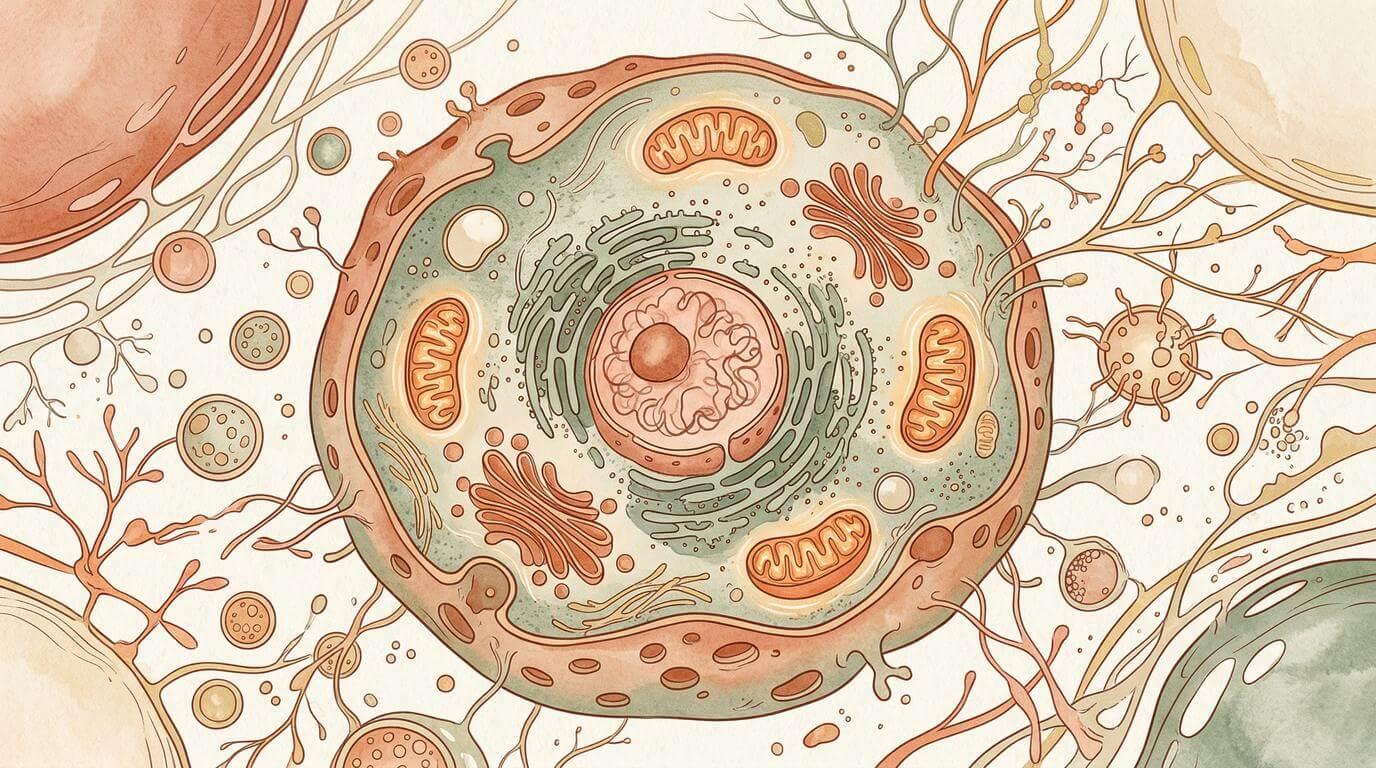
The primary documented effect is stimulation of collagen and elastin synthesis in fibroblasts. Fibroblasts are the skin cells responsible for producing the structural proteins that give skin its firmness and elasticity. In tissue culture studies, GHK-Cu exposure increases fibroblast proliferation, upregulates collagen I and III production, and promotes synthesis of glycosaminoglycans (the hydrating molecules that support skin structure).
Pickart's 2008 review in the *Journal of Biomaterial Science Polymer Edition* documented that GHK-Cu chemotactically attracts macrophages and mast cells to wound sites, promotes capillary formation (angiogenesis), reduces inflammation, and simultaneously accelerates breakdown of damaged collagen while stimulating synthesis of new collagen (PMID: [18644225](https://pubmed.ncbi.nlm.nih.gov/18644225/)). This dual activity, clearing old tissue while building new, is a hallmark of effective wound healing and distinguishes GHK-Cu from simpler pro-collagen agents.
More recent work has focused on GHK-Cu's antioxidant activity. The compound appears to activate the Nrf2 pathway, one of the cell's primary defenses against oxidative stress, and to modulate NF-kappaB signaling, which drives inflammatory cascades. A 2020 study published in *Life Sciences* found that GHK-Cu reduced pulmonary fibrosis markers in bleomycin-treated mice by inhibiting oxidative stress and inflammation through Nrf2, NF-kappaB, and TGF-beta/Smad signaling pathways (PMID: [31809714](https://pubmed.ncbi.nlm.nih.gov/31809714/)).
---
Wound Healing: The Research Base
Wound healing is the area with the longest and most consistent body of supporting research for GHK-Cu.
Animal studies have repeatedly demonstrated accelerated wound closure, increased collagen deposition, and stronger wound tensile strength following GHK-Cu treatment. A 2005 study published in the *Journal of Biomedical Materials Research B* evaluated a biotinylated GHK peptide incorporated into a collagen matrix for dermal wound treatment in rats, finding enhanced wound contraction, increased cell proliferation, elevated antioxidant enzyme activity, and a ninefold increase in copper concentration at the wound site compared to collagen alone (PMID: [15803494](https://pubmed.ncbi.nlm.nih.gov/15803494/)).
More recent research has explored advanced delivery vehicles for the peptide. A 2023 study in *Acta Biomaterialia* developed a photo-crosslinkable hyaluronic acid hydrogel embedded with GHK-Cu nanofibers. The formulation promoted fibroblast proliferation, reduced inflammation, stimulated vascular endothelial growth factor (VEGF) expression for new blood vessel formation, and produced denser, more organized collagen in the dermis compared to controls. The authors described the combined peptide-nanofiber-hydrogel system as "a cost-effective alternative to growth factors" for tissue regeneration (PMID: [37832839](https://pubmed.ncbi.nlm.nih.gov/37832839/)).
It is worth noting that most of the wound healing data comes from in vitro (cell culture) and animal models. Controlled clinical trials in humans are limited, and the field awaits more rigorous randomized controlled trial data to confirm these findings in patient populations.
---
Skin Anti-Aging Evidence
The application of GHK-Cu that has received the most commercial attention is topical skin care. Cosmetic researchers have examined its effects on the specific markers of skin aging: collagen loss, reduced elasticity, fine lines, and uneven pigmentation.
Pickart's 2015 review in *Biomedical Research International* summarized the accumulated cosmetic research, noting that GHK-Cu "tightens loose skin, improves skin elasticity and firmness, reduces fine lines and deep wrinkles, improves skin clarity, and reduces photodamage and hyperpigmentation" based on published clinical observations and trial data (PMID: [26236730](https://pubmed.ncbi.nlm.nih.gov/26236730/)). The review also documented effects across other tissue types, including stomach and intestinal lining, bone, and hair follicles, consistent with GHK-Cu's broader role in tissue maintenance.
At the cellular level, two Korean research groups have investigated how GHK-Cu affects basal skin stem cells. A 2009 study published in *Archives of Dermatological Research* found that GHK-Cu treatment increased expression of integrin alpha6 and beta1, adhesion proteins that are markers of basal keratinocyte health, and elevated p63 positivity, a marker associated with skin stem cell preservation (PMID: [19319546](https://pubmed.ncbi.nlm.nih.gov/19319546/)). A 2012 follow-up study in the *Journal of Peptide Science* confirmed that even copper-free GHK (the peptide without the copper complex) increased stemness and proliferative potential in epidermal basal cells, suggesting the tripeptide sequence itself carries some of this activity (PMID: [23019153](https://pubmed.ncbi.nlm.nih.gov/23019153/)).
These findings suggest GHK-Cu does not simply stimulate existing fibroblasts but may also help maintain the reservoir of skin stem cells responsible for long-term tissue renewal.
---

---
Hair Follicle Research
Pickart's research program included investigation of GHK-Cu's effects on hair follicles, which are structurally similar to wound healing environments in their reliance on angiogenesis, stem cell activity, and extracellular matrix remodeling.
His 2008 tissue remodeling review noted that GHK-Cu stimulates hair transplant success and may enlarge hair follicle size (PMID: [18644225](https://pubmed.ncbi.nlm.nih.gov/18644225/)). The 2015 *Biomedical Research International* review similarly included hair follicle regeneration as one of the compound's documented repair activities (PMID: [26236730](https://pubmed.ncbi.nlm.nih.gov/26236730/)).
The mechanistic basis for follicle effects likely involves the same pathways active in wound healing: improved blood supply through VEGF-driven angiogenesis, reduced local inflammation, and enhanced fibroblast and keratinocyte activity around the follicle. However, dedicated randomized controlled trials evaluating GHK-Cu specifically for hair loss in humans are limited. Most of the supporting data is observational or derived from the broader wound healing and skin regeneration literature.
---
Gene Expression: The 4,000-Gene Finding
One of the most discussed claims in the GHK-Cu literature involves its apparent effects on gene expression at a large scale.
A 2015 analysis published in *Biomedical Research International* used publicly available gene expression databases (including Affymetrix microarray data) to assess which human genes respond to GHK exposure. The researchers concluded that GHK is "capable of up- and downregulating at least 4,000 human genes," with effects that appeared to shift gene expression patterns from those associated with disease or aging toward healthier states (PMID: [26236730](https://pubmed.ncbi.nlm.nih.gov/26236730/)).
A companion analysis published in the same journal in 2014 found that GHK-associated gene expression changes showed significant overlap with gene signatures for improved wound healing, reduced cancer progression, and restoration of healthy cellular function in COPD-affected lung tissue (PMID: [25302294](https://pubmed.ncbi.nlm.nih.gov/25302294/)).
A 2018 review in the *International Journal of Molecular Sciences* updated this analysis in the context of newer genomic data, concluding that GHK "stimulates blood vessel and nerve outgrowth, increases collagen, elastin, and glycosaminoglycan synthesis, promotes wound healing, and demonstrates anti-cancer activities and anti-inflammatory actions" in ways consistent with broad genomic effects (PMID: [29986520](https://pubmed.ncbi.nlm.nih.gov/29986520/)).
These gene expression analyses are primarily bioinformatic: they compare GHK-influenced gene lists against disease-associated gene databases. This approach can generate compelling hypotheses, but it is not the same as a controlled clinical trial demonstrating that GHK supplementation prevents or reverses a specific condition in humans. The genomic data is hypothesis-generating, not confirmatory.
---
Broader Research Areas
Research interest in GHK-Cu has expanded beyond its dermatological origins.
Lung and COPD
Pickart and colleagues analyzed published gene expression data from chronic obstructive pulmonary disease (COPD) patients and found that GHK-associated gene sets appeared to partially counteract the gene expression patterns seen in damaged lung tissue. The 2020 *Life Sciences* study directly tested GHK-Cu in a mouse model of pulmonary fibrosis and found protective effects against bleomycin-induced lung damage through anti-inflammatory and antioxidant mechanisms (PMID: [31809714](https://pubmed.ncbi.nlm.nih.gov/31809714/)). Human clinical trial data for respiratory applications is not yet available.
Nervous System Research
A 2017 analysis in *Brain Sciences* examined how GHK gene expression effects overlap with pathways relevant to neurological aging. The researchers found that GHK activates antioxidant and anti-inflammatory pathways, increases nerve growth factor production, and modulates genes associated with conditions including Alzheimer's and Parkinson's disease (PMID: [28212278](https://pubmed.ncbi.nlm.nih.gov/28212278/)). This remains early-stage research without clinical trial data in humans.
---
Safety Profile
GHK-Cu has been used in topical cosmetic formulations for decades, and its safety profile in that context is well-established. Dermal application at typical cosmetic concentrations does not appear to cause systemic effects or serious adverse events based on published safety data and long commercial use.
For injectable or systemic administration, the safety data is more limited. The compound is a naturally occurring human peptide, and copper is an essential nutrient, but the safety profile of injected GHK-Cu at various doses has not been established in controlled human trials.
Copper toxicity is a known risk with excessive systemic copper supplementation, though the small doses involved in GHK-Cu research contexts are far below toxic thresholds. People with Wilson's disease, a genetic disorder causing abnormal copper accumulation, should exercise caution with any copper-containing compound.
---
Regulatory Status
GHK-Cu is not approved by the FDA for any medical indication. This applies to both topical and injectable forms.
In the context of cosmetic products, GHK-Cu and related copper peptide formulations are legal as cosmetic ingredients in the United States, subject to standard cosmetic safety requirements. They are widely sold in over-the-counter skincare products.
For compounded injectable preparations, the legal framework is more complex. GHK-Cu does not appear on the FDA's current 503A bulks list of approved compounding ingredients, which limits the legal pathway for licensed compounding pharmacies to prepare injectable versions. Practitioners interested in the research should consult with a licensed pharmacist and legal counsel regarding current compounding regulations, which are subject to ongoing change.
Prescriva does not sell, prescribe, or provide GHK-Cu in any form. This article is intended solely to summarize published scientific research.
---
The Longevity Angle
The gradual decline of GHK-Cu levels with age is well-documented. Plasma GHK levels drop from roughly 200 ng/mL in early adulthood to around 80 ng/mL by age 60, a decline that parallels reduced wound healing speed, slowed skin cell turnover, and increased tissue fragility.
This pattern of natural decline has made GHK-Cu interesting to longevity researchers studying what Pickart called "resetting" of aging gene expression patterns. The hypothesis is that maintaining or restoring GHK-Cu activity could help preserve the tissue repair capacity that naturally diminishes with age.
The honest assessment: the mechanistic and genomic case for GHK-Cu's relevance to aging biology is compelling and backed by decades of rigorous basic science. What is missing is the clinical trial evidence in healthy aging adults to show that interventions raising GHK-Cu levels translate to measurable health benefits. The research on wound healing and skin regeneration provides proof of concept, but clinical longevity trials do not yet exist.
For related reading on how researchers are approaching the biology of aging, see the overviews of [epitalon and telomere research](/resources/epitalon-longevity-peptide-research) and [thymosin alpha-1 and immune aging](/resources/thymosin-alpha-1-immune-health-research).
---
Disclaimer
*This article is for educational and research purposes only. GHK-Cu (glycyl-L-histidyl-L-lysine copper complex) is not approved by the FDA for any medical indication. Prescriva does not sell, prescribe, or provide GHK-Cu. This content does not constitute medical advice, diagnosis, or a recommendation to use any specific compound. Compounded medications are not FDA-approved drugs. Individual results vary. Always consult a licensed healthcare provider before considering any peptide therapy or making changes to your health regimen. Clinical research cited in this article was conducted in specific laboratory, animal, or human study populations and may not apply to your individual circumstances. Blue Oak Services LLC dba Prescriva is a management services organization and does not practice medicine or make clinical decisions.*
Stay informed
Weekly research updates and health guides. No spam.
Ready to get started?
Check if you qualify for a personalized treatment plan.
Check Your Eligibility →